
While the massive rise in GLP-1 weight loss jabs has forced a massive pivot toward high-protein nutrition to fight muscle loss, it has simultaneously triggered a fierce cultural backlash over the alarming return of the ultra-thin, 1990s ‘heroin chic’ aesthetic.
Remember the 1990s? It was the era of low-rise jeans, slip dresses, and a highly criticized fashion aesthetic known as “heroin chic”—a look defined by an impossibly thin, gaunt frame, pale skin, and dark under-eye circles. For years, we collectively agreed that pushing women toward such extreme, unhealthily emaciated body standards was a toxic mistake we would never repeat.
Yet, walk into any office or scroll through your social media feeds today, and you might feel a sudden wave of deja vu. The rapid explosion of weekly weight loss injections has completely transformed the conversation around our bodies, shifting the focus from slow, steady wellness to incredibly rapid physical transformations.
The numbers tell a massive story. According to recent data from Euromonitor International, the percentage of US consumers taking prescription weight loss medications skyrocketed from 10% in 2024 to a staggering 18% recently. This sudden surge has completely upended both the food market and our cultural conversations around body image.
But beneath the surface of this medical breakthrough lies a brewing storm. As millions of women watch those around them rapidly shrink, a deeply unsettling question is echoing across online communities: Are these medical advancements accidentally reviving the exact same toxic body standards we fought so hard to escape?
The Pivot to “GLP-1 Nutrition”
To understand why this is happening, we first have to look at how these medications actually work. GLP-1 (Glucagon-Like Peptide-1) agonists mimic a natural gut hormone that tells your brain you are full, drastically slowing down digestion and wiping out “food noise.” Because users find themselves eating significantly smaller portions, the sheer volume of food they consume plummets.
This has sparked an urgent medical issue: when you barely eat, your body doesn’t just burn fat—it burns muscle. Clinical data compiled by nutrition experts at Ingredion shows that up to 39% of the total weight lost on semaglutide can be lean body mass (muscle), compared to just 20-30% through traditional diet and exercise.
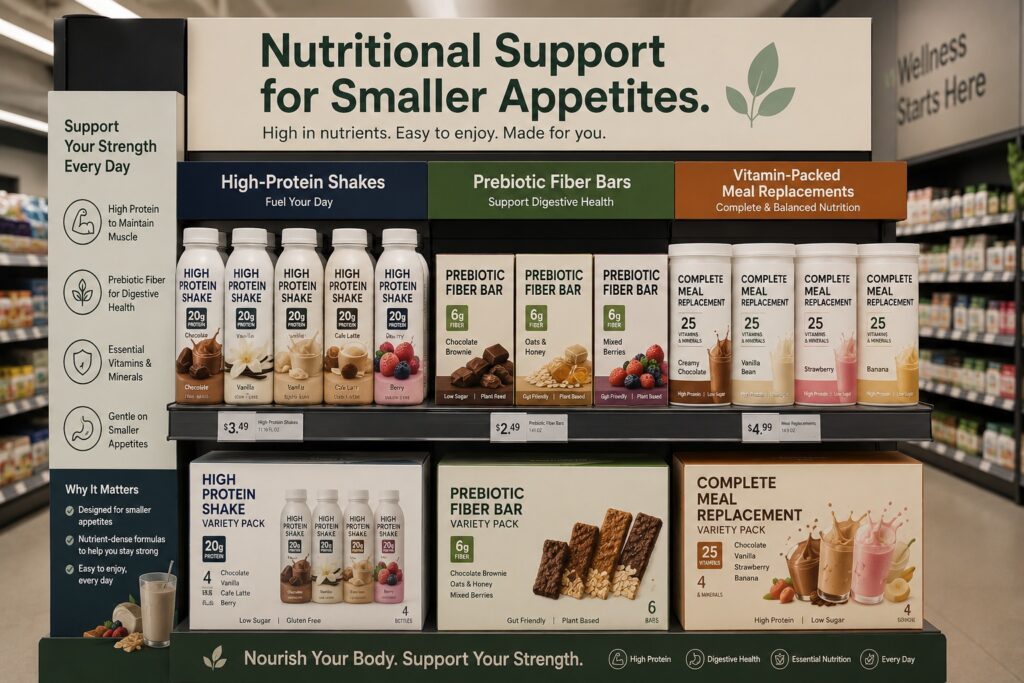
To combat this rapid muscle loss and avoid severe GLP-1 nutrient deficiency, a major shift in the food industry has emerged. Walk down any grocery aisle and you will see a massive wave of products specifically formulated as high-protein foods for weight loss.
Brands are entirely reformulating their products to pack more protein, prebiotic fiber, and essential vitamins into tiny, highly concentrated portions. The goal is simple: ensure that even if a user only manages a few bites of food, those bites are densely packed with the nutrients required to keep their bones, muscles, and hair from thinning out.
The View from the Trenches: What Women Are Saying
But while scientists and food executives focus heavily on protein counts and muscle preservation, everyday women are dealing with a completely different reality. On popular online forums like Reddit’s r/AskWomenOver30 and r/EatingDisordersOver30, the emotional toll of this era is laid bare.
For women who lived through the original 90s and early 2000s diet culture, the constant workplace and social chatter about rapid weight loss is acting as a massive psychological trigger. Many express a profound sense of anxiety as they watch friends, colleagues, and family members visually transform almost overnight.
One highly upvoted comment on a recent discussion thread perfectly captured the community’s collective anxiety:
“Everybody around me is losing weight, and it feels like the early 2000s all over again, where being incredibly skinny was the only thing that mattered. It makes it so much harder to accept your own natural shape.”
Another user shared a deeply concerning interaction from her workplace, noting that a colleague on a GLP-1 medication openly admitted she wanted to lose enough weight until she looked “sickly thin.” These raw, honest conversations suggest that for some, the ultimate goal of these medications isn’t metabolic health at all—it is the pursuit of an extreme, fragile physical frame.
Wait, Is This Actually ‘Heroin Chic’ 2.0?
However, before we label this entire movement as a simple carbon copy of the 1990s, we need to address a critical counterargument. Is it fair to compare a highly regulated medical treatment for a chronic metabolic disease to a toxic, drug-fueled fashion trend?
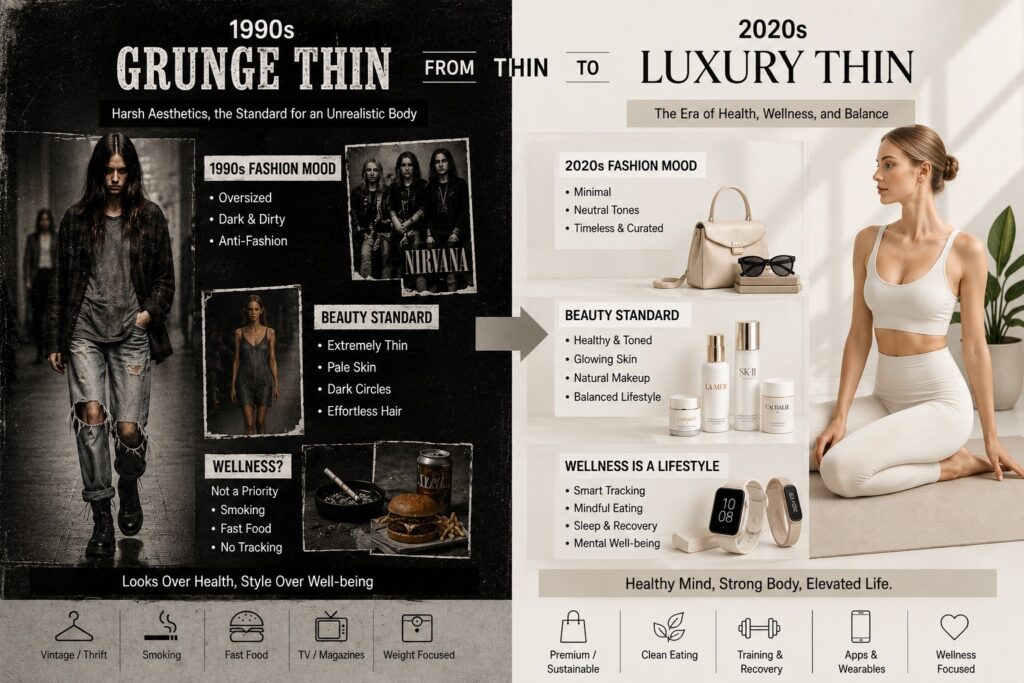
Many users on these exact same forums argue that the two eras are fundamentally distinct. The original 1990s aesthetic was entirely unkempt, rebellious, and explicitly celebrated a look of physical exhaustion and neglect.
The current body image controversy looks very different under the microscope. Today’s ultra-thin look isn’t grunge—it is hyper-manicured, highly expensive, and treated as the ultimate display of luxury and wealth. It is paired with meticulous skincare routines, pristine manicures, cosmetic fillers, and high-end athleisure wear.
Furthermore, proponents of the medication point out that for those dealing with clinical obesity, these injections are a genuine lifesaver, dramatically improving cardiovascular health and reducing long-term disease risks. The problem, critics argue, isn’t the medicine itself—it is how society weaponizes it.
The Slippery Slope of “Luxury Thinness”
The real danger of the current GLP-1 diet trends arises when the medication moves out of the medical clinic and into the hands of individuals who are already visibly slim. Because these treatments are incredibly expensive without insurance coverage, achieving an ultra-lean frame has rapidly become a glaring status symbol.
When a powerful appetite suppressant is used purely to drop a few vanity sizes, it completely distorts our collective perception of what a normal, healthy human body looks like. It normalizes severely disordered eating patterns, making it incredibly easy to mask a lack of nutrition under the trendy guise of “wellness.”
This brings us to the ultimate paradox of the modern weight loss movement. We have access to the most sophisticated medical technology and highly advanced, nutrient-dense engineering in human history, yet we are using them to chase a regressive, decades-old beauty standard.
The medicine can successfully regulate your blood sugar and quiet your appetite, but it cannot fix a culture that continuously demands women take up less physical space. As we navigate this massive technological shift, the real challenge won’t just be balancing our daily protein intake—it will be protecting our collective mental health from a familiar, dangerous obsession.
References
- Morning Consult (Consumer Profiles): Who Is the GLP-1 Consumer? A Data-Driven Profile
- Innova Market Insights (Food Industry Trends): GLP-1 Effect: Redefining Food, Weight and Health in the US
- Euromonitor International (Market Stats): GLP-1 Medications Reshape the US Weight Loss Market
- Ingredion Nutrition Center (Muscle Loss & Protein Data): The GLP-1 effect: Reformulating for high-protein, nutrient-packed demand
Disclaimer: This content is for informational purposes only and is not intended as medical advice, diagnosis, or treatment. Always seek the advice of a qualified healthcare provider with any questions you may have regarding a medical condition.