
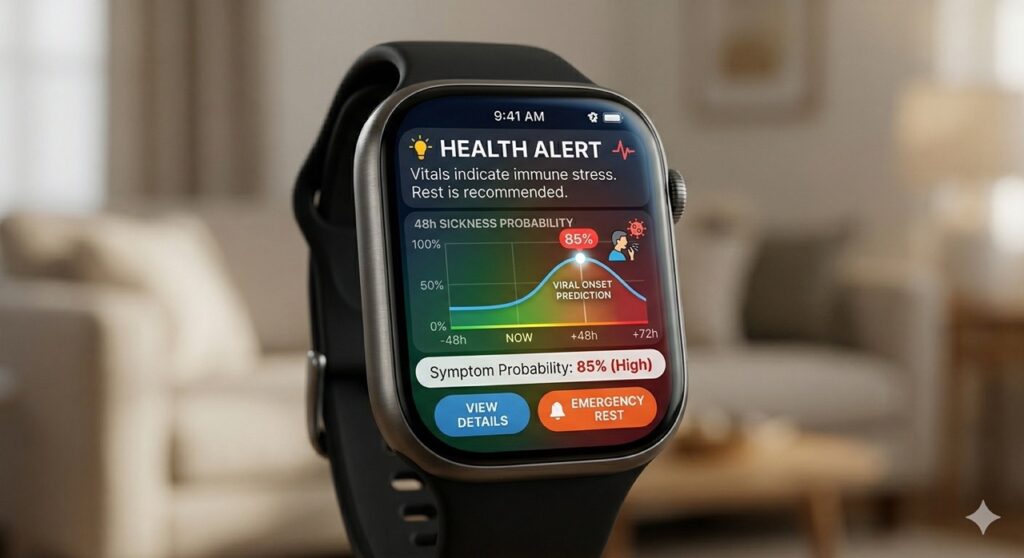
The End of the “Surprise” Fever
We’ve all been there: waking up with a scratchy throat and a heavy head, wishing we had known sooner. In the past, we were victims of our biology, reacting only when the fever hit.
But as we navigate 2026, the phrase “coming down with something” is becoming a relic of the past. Thanks to the latest generation of AI-integrated wearables, your watch might know you’re sick before you do.
The shift from reactive to proactive health management isn’t just a luxury; it’s a scientific breakthrough in personal data.
The Science: It’s All in the Baselines
The breakthrough in 2026 isn’t just about measuring a single temperature spike. It’s about Bio-Predictive AI—a system that understands your body’s unique “normal” better than you do.
As of early 2026, devices like the Apple Watch Series 11 and Oura Ring Gen 4 have refined their algorithms to detect microscopic shifts. The most critical metric is Heart Rate Variability (HRV).
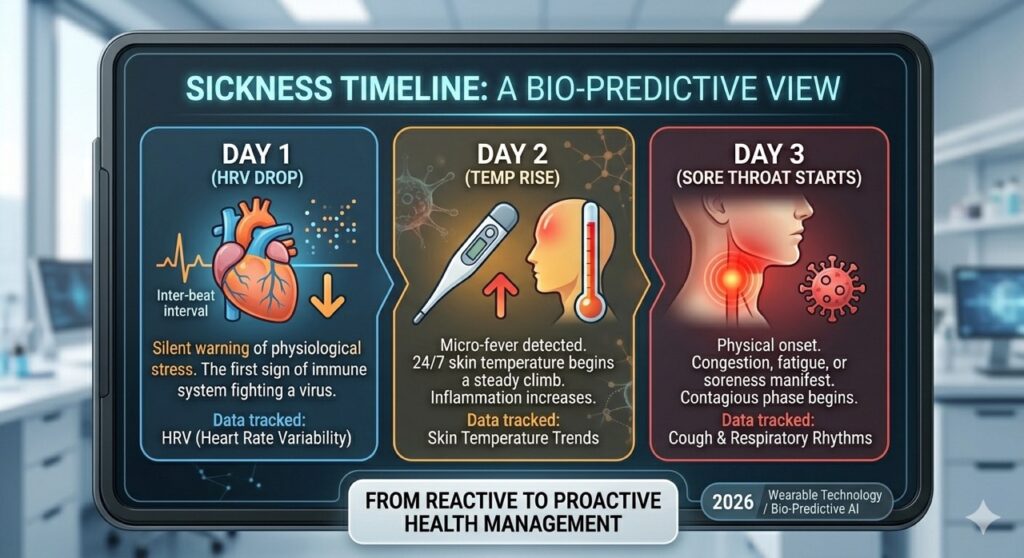
A sudden, sharp drop in your HRV is often the first “silent” alarm that your immune system is fighting an invader. This happens long before you feel the first sniffle.
Precision Tracking: Beyond the Thermometer
Newer sensors in 2026 now track 24/7 skin temperature with a staggering 0.1°C precision. This allows AI to identify “micro-fevers” that occur nearly two days before a cough starts.
Furthermore, AI models can now detect subtle “shortness of breath” patterns during sleep. This change in respiratory rate is a leading indicator of respiratory viral infections like the latest flu strains or COVID-25.
You might wonder: “Can’t these sensors be wrong? What if I just had a stressful day or a glass of wine?”
The 2026 AI models solve this by cross-referencing multiple data points—if your HRV drops but your temperature is stable, it flags “Stress.” If both deviate, it flags “Viral Risk.”
The 48-Hour Head Start: Why Every Second Counts
Recent clinical data published in early 2026 shows that these devices can now predict viral onset with 85% accuracy. This gives you a 48-hour window before physical symptoms manifest.
What can you actually do with those two extra days? The benefits go far beyond just buying tissues.
Early intervention is key; starting zinc, elderberry, or prescribed antivirals is most effective at the very start of the viral replication cycle. You can effectively “blunt” the illness before it peaks.
Strategic Isolation and Rest Optimization
By knowing you are contagious before you are symptomatic, you can protect your family and coworkers. Strategic isolation—masking or working from home—becomes a data-driven choice rather than a guess.
Your wearable can even suggest an “Emergency Rest Day.” Data shows that resting during the 48-hour window can potentially shorten the duration of your illness by up to 50%.
But to gain this 48-hour advantage, you need the right hardware. Not all sensors are created equal in the 2026 market.
The Top Players in 2026: Pricing & Tech Specs
| Device | Price (USD) | Key “Sickness Edge” Feature |
|---|---|---|
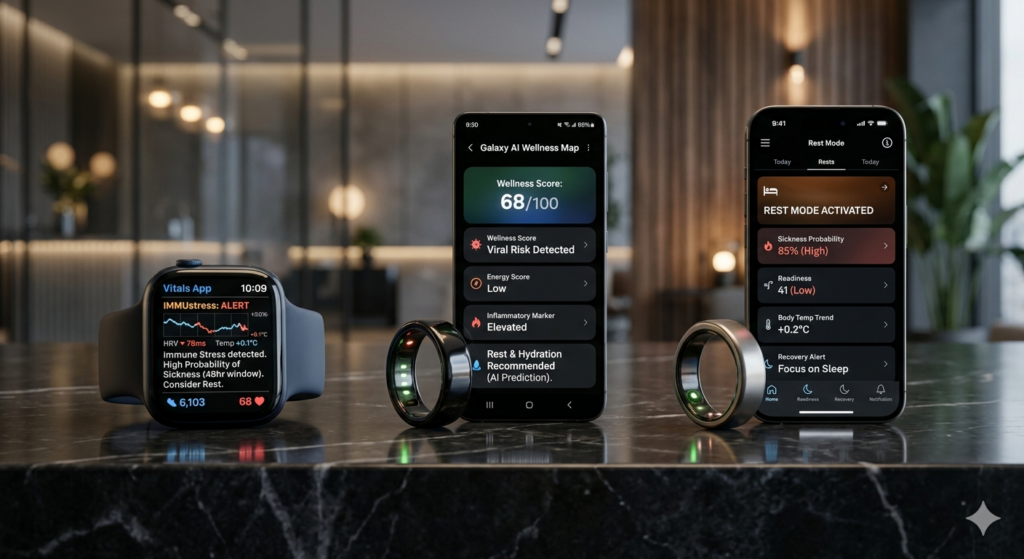
| Apple Watch Series 11 | $399+ | Vitals App with S10 Neural Engine for 15% baseline deviation alerts. |
| Samsung Galaxy Ring 2 | $399.99 | Galaxy AI Energy Scores with medical-grade inflammatory markers. |
| Oura Ring Gen 4 | $349 – $499 | Rest Mode that triggers automatically based on high sickness probability. |
| Whoop 5.0 | $239 (Annual) | Micro-Illness Probability metrics with 50-hour warning windows. |
Is 24/7 Monitoring Worth the Privacy?
A common objection in 2026 remains: “Do I want a tech giant knowing every heartbeat?” It’s a valid concern regarding data sovereignty.
Most 2026 flagship devices now utilize On-Device Processing. This means your “Sickness Probability” is calculated locally on your watch’s chip, not in the cloud, ensuring your health data stays yours.
The tradeoff for this privacy is a level of health autonomy we’ve never seen before. We are no longer victims of surprise illnesses; we are informed managers of our own biology.
From Reactive to Proactive
The “Common Cold” may not be extinct yet, but our relationship with it has fundamentally shifted. In 2026, we have moved from asking “Why am I sick?” to saying “I’m glad I saw this coming.”
If your ring or watch tells you to take it easy today, listen to it. Your 48-hour future self—the one who avoids a week in bed—will thank you for it.
Source: Global Health Tech Journal, February 2026; Wearable AI Clinical Trials (WA-2026).
Disclaimer: This content is for informational purposes only and is not intended as medical advice, diagnosis, or treatment. Always seek the advice of a qualified healthcare provider with any questions you may have regarding a medical condition.