
Have you ever noticed that after eating a bag of chips and a soda, you feel kind of… foggy? Or maybe a little more irritable than usual? That’s not just in your head — literally. Scientists are now finding that food and mental health are way more connected than we used to think, and there’s a whole new field of research called nutritional psychiatry dedicated to figuring out exactly how.
So let’s answer the big question: can what you eat actually cause depression and anxiety? Short answer — it’s complicated, but the evidence is growing, and it’s honestly pretty fascinating. Let’s break it down in plain, easy language, using real research and real people’s stories.

What Is the Gut-Brain Connection, Anyway?
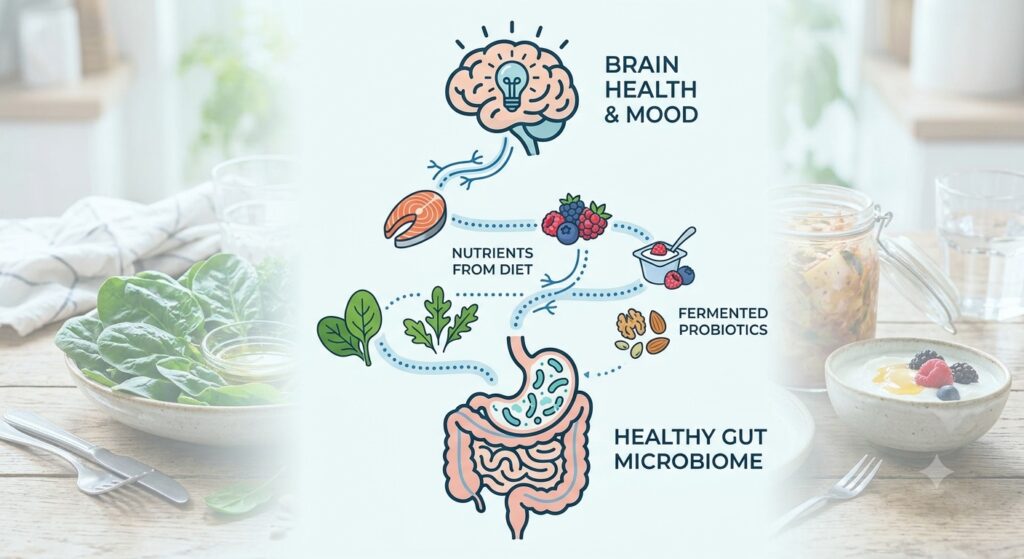
Here’s something wild: about 90% of your body’s serotonin — the chemical that helps you feel calm and happy — isn’t made in your brain. It’s made in your gut. This is part of what scientists call the gut-brain connection (or gut-brain axis), and it’s basically a two-way communication highway between your digestive system and your brain.
Your gut is home to trillions of bacteria, collectively called your microbiome. These little guys aren’t just helping you digest food — they’re also producing neurotransmitters (brain chemicals) like serotonin, dopamine, and GABA, all of which affect your mood, sleep, and stress levels. When your gut bacteria are out of balance (something researchers call “dysbiosis”), it can mess with these signals and contribute to inflammation, which has been linked to depression and anxiety.
Harvard Health has explained that inflammation in the gut can change how serotonin and other brain chemicals get made, and that this can throw off the whole communication system between your gut and brain. Basically, your stomach isn’t just a food processor — it’s practically a second brain.
What Does the Science Actually Say About Nutrition and Depression?
This is where it gets really interesting. Researchers have been studying nutrition and depression for years now, and a few patterns keep showing up.
1. Ultra-processed foods and mood A large systematic review covering over 380,000 people found that eating more ultra-processed foods (think fast food, packaged snacks, sugary cereals, soda) was linked to higher rates of both depression and anxiety symptoms. Other large studies, including one following more than 180,000 people, found similar results — people who ate the most ultra-processed food had a noticeably higher risk of anxiety than those who ate the least.
2. The Mediterranean diet and depression On the flip side, a well-known clinical trial (called the SMILES trial) tested whether switching to a Mediterranean-style diet — lots of vegetables, fruit, whole grains, olive oil, and fish — could actually treat depression. The results showed a real improvement in depressive symptoms for people who made the switch, compared to a control group.
3. A big meta-analysis from the University of Manchester Researchers reviewed 16 randomized trials with almost 46,000 participants and found that basically any kind of dietary improvement — whether it was for weight loss, cutting fat, or boosting nutrients — helped reduce depression symptoms. One of the study authors, Dr. Joseph Firth, pointed out that people don’t need some super specific or trendy diet; simple, consistent changes are what actually help.
So yes — there’s real, peer-reviewed science behind the idea that food affects mood. It’s not just wellness-influencer talk.
Nutrient Deficiency and Depression Symptoms: What’s the Link?
Your brain needs specific nutrients to function properly, and when you’re missing them, your mental health can take a hit. Some of the most-studied nutrient deficiency and depression symptoms connections include:
- Omega-3 fatty acids (found in fish, walnuts, flaxseed): Low levels have been linked to higher rates of depression. This is one of the most researched areas in omega-3 and mental health — omega-3s help build brain cell membranes and reduce inflammation, and some clinical guidelines now even recommend them as an add-on treatment alongside therapy or medication for mood disorders.
- Vitamin D: Often called the “sunshine vitamin,” low vitamin D has been associated with worse mood and higher depression risk, especially in places with long winters.
- B vitamins (especially B12 and folate): These help your body produce neurotransmitters. Deficiency has been tied to fatigue, brain fog, and depressive symptoms.
- Magnesium: Involved in over 300 processes in your body, including stress regulation. Low magnesium has been connected to anxiety and irritability.
- Iron: Low iron (anemia) can cause tiredness and low mood that’s sometimes mistaken for depression.
This is a big part of why vitamin deficiency and mental health keeps coming up in nutrition psychiatry research — it’s not that food is “curing” mental illness, but missing key nutrients can genuinely make symptoms worse.
Foods That Help With Anxiety and Depression
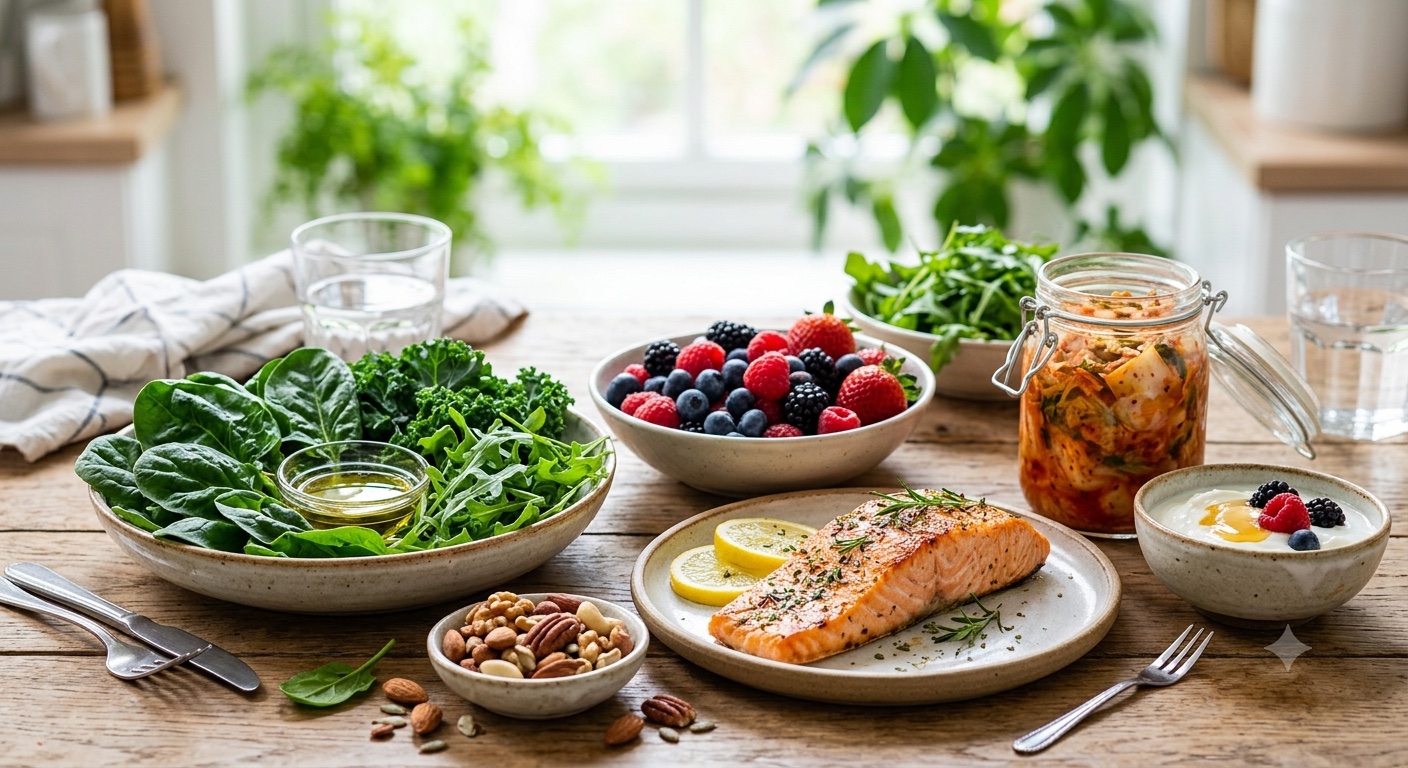
If you’re wondering what to actually put on your plate, here are some of the most research-backed foods that help with anxiety and depression:
- Fatty fish (salmon, sardines, mackerel) — rich in omega-3s
- Leafy greens and colorful vegetables — packed with folate, magnesium, and antioxidants
- Berries — recent research has actually spotlighted berries specifically for their role in brain health and mood support
- Fermented foods (yogurt, kimchi, kefir) — support a healthy gut microbiome, tying back into the gut microbiome and mood connection
- Nuts and seeds — good source of magnesium and healthy fats
- Whole grains — help keep blood sugar stable, which matters because blood sugar crashes can trigger anxiety-like symptoms
Real People, Real Experiences
It’s not just clinical trials — everyday people are noticing this connection too. On online communities like Anxiety and Depression Support (a peer support forum), members regularly swap notes on this exact topic. One member described cutting back on fried food, sugar, and heavily processed snacks while adding more greens, poultry, and omega-3-rich foods like seafood, and said they noticed a real improvement over time. Another member shared that cutting caffeine and added sugar helped clear their brain fog and made it easier to notice and manage their anxiety instead of feeling completely overwhelmed by it.
Of course, these are personal experiences, not scientific proof — and people in these same threads are honest that it’s hard to separate the effect of diet from other lifestyle changes happening at the same time, like better sleep or more structure. But it lines up with what the bigger studies are finding.
Wait — Does Poor Diet Actually Cause Anxiety?
Here’s the honest, important caveat: most of this research shows a strong association, not proof that bad food directly causes depression or anxiety in every single case. Scientists describe the relationship as “bidirectional” — meaning poor diet can worsen mood, but feeling depressed or anxious can also make people crave more processed, sugary comfort food, which can create a bit of a loop. It’s chicken-and-egg in some cases.
So the honest answer to “does poor diet cause anxiety?” is: it can be a real contributing factor for a lot of people, especially over the long term, but it’s rarely the only cause. Genetics, life circumstances, sleep, stress, and access to mental health care all matter too. Food is one important piece of a much bigger puzzle — not a magic fix.
How Does Diet Affect Mental Health, Practically Speaking?
If you want to try applying any of this to your own life, you really don’t need to overhaul everything overnight. Based on what the research actually supports:
- Start small — swap one processed snack a day for a whole-food option
- Add fish or plant-based omega-3s (like walnuts or flaxseed) a couple times a week
- Try to eat something with fiber and protein at breakfast to avoid blood sugar crashes
- Add one fermented food into your week for gut health
- Don’t skip meals for long stretches — that alone can trigger irritability and anxiety-like symptoms
- Pair diet changes with sleep and movement, since research shows the combo works better than diet alone
And if you’re struggling with your mental health, food changes are a helpful support tool — but they’re not a replacement for talking to a doctor, counselor, or trusted adult if things feel heavy or hard to manage.
The Bottom Line
The science on food and mental health has moved way past “eat your veggies” advice. There’s real, growing evidence that what we eat can shape our mood, energy, and even our risk for anxiety and depression over time — through pathways like the gut-brain connection, inflammation, and nutrient levels. It’s not the whole story, but it’s a piece worth paying attention to.
Sources
- Harvard Health — How the gut-brain connection influences mood
- US Right to Know — Ultra-processed foods: increased risk of depression and anxiety
- Food & Function (2023) — Association of ultra-processed food consumption with incident depression and anxiety
- Malay Mail / University of Manchester meta-analysis — Healthy diet link to reduced symptoms of depression
- Wikipedia — Nutritional psychiatry (SMILES trial and Mediterranean diet research)
- Frontiers in Behavioral Neuroscience (2025) — Positioning berries in nutritional psychiatry
- PMC — The Bidirectional Relationship Between the Gut Microbiome and Mental Health
- HealthUnlocked, Anxiety and Depression Support community — What foods or diet changes have helped with your anxiety?
- HealthUnlocked, Anxiety and Depression Support community — How my anxiety got significantly better
Disclaimer: This content is for informational purposes only and is not intended as medical advice, diagnosis, or treatment. Always seek the advice of a qualified healthcare provider with any questions you may have regarding a medical condition.