
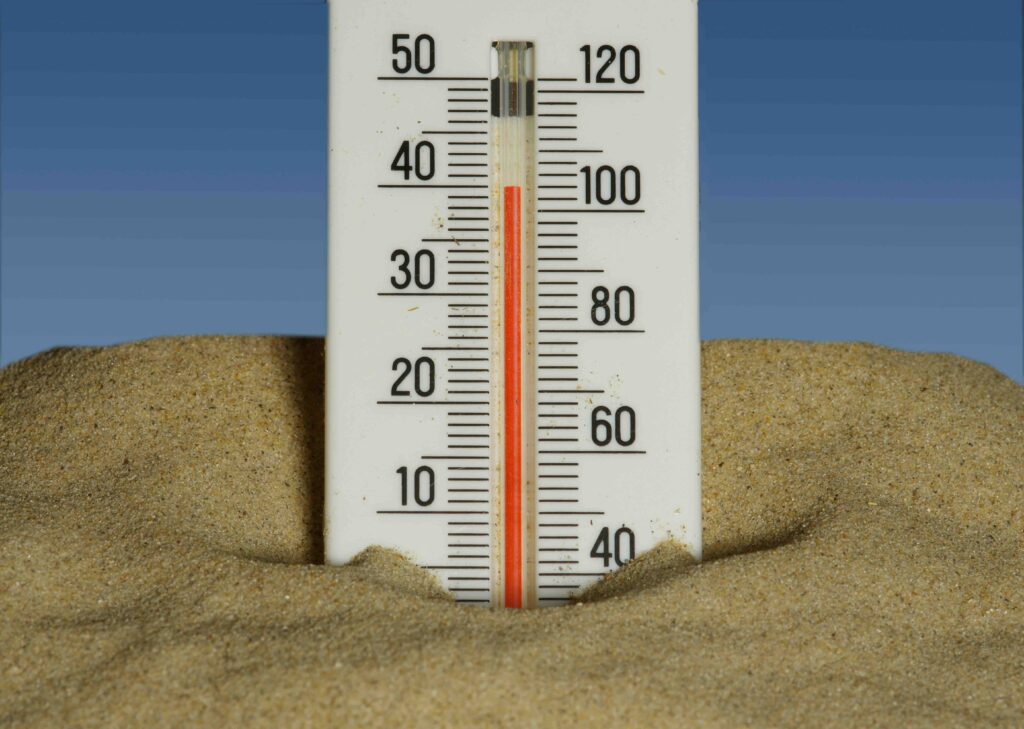
Okay, real talk: it’s been a brutal summer. If you’ve been anywhere near the news lately, you’ve probably seen headlines about record heat wave August 2026 conditions baking huge parts of the U.S. Las Vegas hit 115°F, Phoenix pushed past 116°F, and even places like Montana and the Dakotas got slapped with extreme heat warnings. It’s a lot.
And here’s the thing nobody really talks about enough: when it’s this hot outside, your body isn’t just “uncomfortable.” It’s actually under serious stress. Two of the scariest things that can happen — heat stroke and a heart attack — can look eerily similar in the moment. Confusing the two, even for a few minutes, can be dangerous. So let’s break it down in plain English, no medical-school vocabulary required.
Why This Actually Matters Right Now
This isn’t just a “be careful out there” article for the sake of it. The 2026 heat wave has been historic. Cities across the Western U.S. have been flirting with all-time temperature records, and earlier this summer a heat dome over the eastern half of the country tied or broke temperature records in cities like Washington D.C. and Atlantic City, New Jersey. Emergency rooms have been busier than usual, and hospitals have been leaning on things like cooling centers and even cold water immersion (more on that below) to treat patients fast.
So yeah — knowing the difference between “I’m just really overheated” and “this might be a heart attack” could genuinely save someone’s life this summer, including maybe yours.
First, What’s Actually Happening Inside Your Body?
Let’s keep this simple. Your body is basically a machine that likes to stay around 98.6°F (37°C). When it gets way too hot outside — especially if it’s humid, since sweat can’t evaporate as easily — your body has to work overtime to cool itself down.
Heat exhaustion is your body’s first warning sign. It’s like your internal thermostat waving a yellow flag. Heat stroke is the red flag — it means your body’s cooling system has basically shut down, and your internal temperature is climbing dangerously high (typically above 104°F/40°C).
A heart attack, on the other hand, isn’t really about temperature at all. It happens when blood flow to part of your heart gets blocked, usually by a clot, and your heart muscle starts to struggle. Heat can trigger a heart attack in someone who already has heart problems, since extreme heat puts extra strain on your cardiovascular system — but the actual “problem” is happening inside a blood vessel, not your temperature control system.
The tricky part? Both conditions can cause confusion, nausea, dizziness, and shortness of breath. That’s where things get scary and mix-ups happen.
Heat Exhaustion vs. Heat Stroke: What’s the Difference?
Think of heat exhaustion as heat stroke’s “little sibling” — it’s less dangerous, but if you ignore it, it can turn into the real deal.
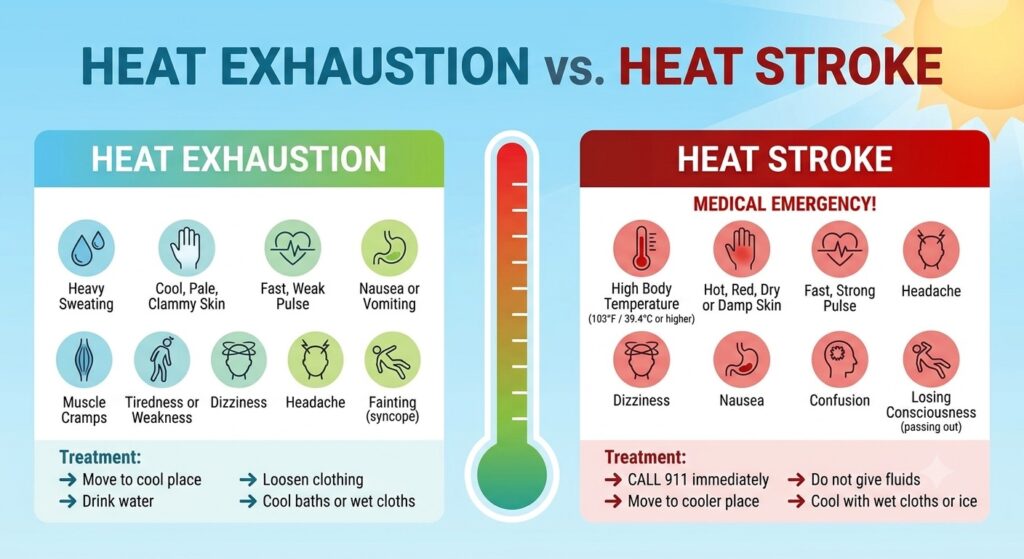
Heat exhaustion looks like:
- Heavy sweating
- Cool, pale, or clammy skin
- Feeling dizzy, tired, or weak
- Headache
- Nausea
- Fast, weak pulse
Heat stroke warning signs look like:
- Hot, red, dry skin (sweating often stops completely)
- Confusion, slurred speech, or acting “off”
- A fast, strong pulse
- Body temperature over 104°F (40°C)
- Throbbing headache
- Loss of consciousness or seizures
If someone stops sweating in extreme heat and their skin feels hot and dry instead of clammy, that’s a major red flag for heat stroke — it means their body has completely lost the ability to cool itself down.
So… Heat Stroke or Heart Attack? Here’s How to Actually Tell
This is the part everyone actually came here for, so let’s get into it.
It’s more likely heat stroke if:
- The person has been in a hot environment (outside, a car, a gym without AC) for a while
- Their skin is hot and dry, not sweaty
- They seem confused or disoriented rather than in pain
- Their body temperature is clearly very high
It’s more likely a heart attack if:
- There’s chest pain, pressure, or a squeezing feeling that doesn’t go away
- Pain spreads to the arm, jaw, neck, or back
- They break out in a cold sweat (not hot, dry skin)
- They have a history of heart disease
Here’s the honest truth though: these conditions can absolutely overlap, and it’s genuinely hard to tell them apart in the moment — even for people close to the situation. Someone with existing heart disease could have a heart attack that gets triggered by extreme heat. And on the flip side, heat stroke and a heart attack share some symptoms like shortness of breath, nausea, and confusion.
Doctors also point out that heart attack symptoms aren’t always the “classic” chest-clutching moment you see in movies. Some people, especially women, experience subtler signs like fatigue or indigestion instead of dramatic chest pain — which makes the confusion with heat exhaustion even easier.
Bottom line: if you’re not 100% sure which one it is, don’t try to diagnose it yourself. Call 911 (or your local emergency number) immediately. Both conditions are genuine emergencies, and getting help fast matters way more than figuring out the exact label.
Signs of Dehydration You Shouldn’t Ignore
Dehydration is basically the fuel that makes both heat exhaustion and heat stroke worse, so it’s worth knowing the early warning signs before things escalate:
- Feeling really thirsty (by the time you’re thirsty, you’re already a bit behind)
- Dark yellow urine
- Dry mouth or lips
- Headache
- Feeling tired or dizzy, especially when standing up
- Fewer bathroom trips than usual
If you notice these signs, don’t wait — get somewhere cool and start drinking water right away.
“This Kind of Heat Can Kill You” — What People on the Ground Are Saying
It’s not just doctors sounding the alarm — first responders are seeing it firsthand too. During a previous severe U.S. heat wave, paramedic supervisor John Hamilton told CBS News that EMS transports and serious heat-related injuries spiked dramatically compared to the year before, adding bluntly that “this kind of heat can kill you.”
Online, the reaction has been similar. In community discussions and local news comment sections during this year’s heat wave, a common thread keeps popping up: people underestimating how fast things can go from “a little dizzy” to a full-blown emergency, especially for outdoor workers, older relatives, and pets. The consistent advice from EMS workers, nurses, and everyday commenters who’ve been through it? Don’t tough it out. If something feels seriously wrong, get help — don’t wait to see if it passes.
How Hospitals Are Actually Treating Severe Heat Stroke
This part is genuinely fascinating. When someone comes into the ER with severe heat stroke, doctors don’t mess around with slow methods — they often go straight to cold water immersion. Basically, the patient gets placed into a tub or bag of cold water (sometimes with ice), because water pulls heat out of the body way faster than air or cooling blankets ever could. Research shows this method is one of the most effective cooling options available, largely because water conducts heat roughly 24 to 25 times better than air. The goal is to bring the body’s core temperature down as quickly and safely as possible, since the longer someone stays overheated, the more damage it can do to organs like the brain, kidneys, and liver.
You obviously can’t (and shouldn’t) recreate a full medical cold-water-immersion protocol at home. But the underlying principle is genuinely useful: if someone is dangerously overheated, cool water on the skin — a cold shower, wet towels, or sitting in a kiddie pool — works faster than just sitting in front of a fan.
Best Ways to Cool Down Body Fast (That Actually Work)
If you or someone nearby is starting to overheat, here’s what actually helps:
- Get out of direct heat immediately — shade, air conditioning, anywhere cooler
- Apply cool water to the skin — a damp cloth, a cold shower, or even just running water over your wrists and neck
- Focus on pulse points — putting cold packs or wet towels on the neck, armpits, and groin cools the blood fastest, since major blood vessels run close to the skin there
- Sip water slowly — don’t chug it, and skip alcohol or caffeine, which make dehydration worse
- Loosen or remove excess clothing
- Use a fan on damp skin — the combo of moving air and evaporating water speeds up cooling
Heat Wave Safety Tips for Everyone (Especially Older Adults)
Extreme heat isn’t equally risky for everyone. Older adults, people with heart or lung conditions, young kids, and outdoor workers face the highest risk — mainly because their bodies are less efficient at regulating temperature or recognizing thirst.
How to prevent heat stroke in elderly family members and friends:
- Check in on them daily during heat waves (a quick call or text counts)
- Make sure their AC actually works — fans alone often aren’t enough once it’s over 95°F
- Encourage regular water intake even if they don’t feel thirsty
- Watch for confusion or unusual behavior, which can be an early heat stroke sign that’s easy to miss in older adults
- Help them plan errands for early morning or evening, avoiding the 11am–4pm peak heat window
General heat wave safety tips for everyone:
- Check the heat index (not just the temperature) before heading outside — humidity makes heat way more dangerous
- Wear light-colored, loose clothing
- Never leave kids or pets in a parked car, even “just for a minute”
- Know where your nearest cooling center is if your AC goes out
- Look out for neighbors, especially elderly ones living alone
When to Call 911 — Don’t Second-Guess This One
Call emergency services immediately if someone:
- Has a body temperature over 103°F (39.4°C)
- Has hot, dry skin or stops sweating in extreme heat
- Becomes confused, combative, or loses consciousness
- Has chest pain, especially with sweating, nausea, or arm/jaw pain
- Has a seizure
While you wait for help, move them somewhere cool and start cooling their skin with water. Don’t give them anything to drink if they’re not fully alert — they could choke.
The Takeaway
Extreme heat isn’t just an inconvenience — during weather like we’re seeing in the 2026 heat wave, it’s a genuine health emergency for a lot of people. Heat stroke and heart attacks can look scarily similar in the moment, but the biggest thing to remember is this: you don’t need to correctly diagnose which one it is. If something seems seriously wrong in extreme heat, treat it like the emergency it is — cool the person down, call for help, and let the professionals sort out the details.
Stay hydrated, check on the people you love, and don’t underestimate this summer’s heat. It’s earned the caution.
Sources
- St. Mary’s Regional Medical Center — Heat Stroke vs. Heart Attack
- Doctors Hospital of Laredo — Heat Stroke vs. Heart Attack
- Avive AED — Can Heat Stroke Cause Cardiac Arrest?
- Healthline — Stroke vs. Heart Attack
- AARP — Can Heat Cause a Heart Attack or Stroke?
- NBC News — Heat wave brings record temps and a heightened wildfire risk to parts of the Western U.S.
- Wikipedia — 2026 North American Heat Wave
- Fox Weather — Will 2026 Be the Hottest Year Ever?
- PMC (National Library of Medicine) — Safety and Efficacy of Cold-Water Immersion in Older Heat Stroke Patients
- PMC — Severe Heat Stroke Resuscitation Using a Body Bag
- CBS News — Central and Western States Brace for Dangerous Heatwave
- PBS NewsHour / The Conversation — What to Know About Heat Stroke Symptoms
- American Hospital Association — Preparing for Extreme Heat: 6 Best Practices for Hospitals
Disclaimer: This content is for informational purposes only and is not intended as medical advice, diagnosis, or treatment. Always seek the advice of a qualified healthcare provider with any questions you may have regarding a medical condition.