
A new 2026 study found 81% of toddler foods are ultra-processed and half fail WHO nutrition standards. Here’s what parents need to know.
Picture this: you’re standing in the baby food aisle, tired, running late, and you grab a fruit pouch with a smiling cartoon apple on the front that says “no artificial flavors!” You toss it in the cart feeling like a responsible parent. Sound familiar?
Well, here’s the uncomfortable truth. A brand-new study just found that most of what’s sitting on that shelf — the pouches, the puffs, the little turkey sticks — isn’t as wholesome as the packaging wants you to believe. Researchers looked at nearly 2,800 toddler food products and found that 81% of them are considered “ultra-processed.“ That’s not a small number. That’s 4 out of every 5 products marketed specifically to your baby or toddler.
Let’s break down exactly what this ultra-processed toddler food study found, why it matters, and — most importantly — what you can actually do about it without losing your mind at the grocery store.
What the Study Actually Found
This isn’t some random internet claim. The research was presented at NUTRITION 2026, the big annual conference held by the American Society for Nutrition (ASN), which took place July 25–28 in National Harbor, Maryland. The study was led by Erin A. Hudson, a PhD candidate at the University of Texas at Austin, along with Dr. Marissa Burgermaster.
Here’s how they did it: the team walked through 21 grocery stores in Austin, Texas, and photographed every single product marketed to kids between 6 and 36 months old. They skipped things like infant formula, purees, and drinks, and focused only on packaged toddler snacks — the pouches, bars, puffs, and finger foods parents grab on a busy Tuesday.
In total, they analyzed 2,783 products. The results were published through ScienceDaily and covered by outlets like CNN and Forbes shortly after the conference:
- 81% of the products were classified as ultra-processed
- 49% — almost half — failed to meet at least one nutrition standard set by the World Health Organization (WHO)
This is exactly the kind of toddler food ultra processed study result that makes you want to go home and dump out your pantry.
Are Baby Food Pouches Ultra-Processed? Here’s the Simple Explanation
You’ve probably heard the term “ultra-processed” thrown around a lot lately, but what does it actually mean? Let’s keep it simple.
Scientists use something called the NOVA food classification system to sort foods into four groups, based on how much they’ve been changed from their natural form:
- Unprocessed or minimally processed — plain fruit, vegetables, eggs, plain yogurt
- Processed culinary ingredients — oil, butter, sugar (the stuff you cook with)
- Processed foods — canned vegetables, fresh bread, cheese
- Ultra-processed foods — products made mostly in a factory, with ingredients you wouldn’t normally find in a home kitchen, like emulsifiers, preservatives, flavor enhancers, and lots of added sugar or salt
So when a study says a food is “ultra-processed,” it doesn’t automatically mean it’s poison — but it usually means the ingredient list is long, the sugar or salt content is high, and there isn’t much real nutrition packed inside.
According to the study, the biggest offenders in the toddler aisle were fruit pouches, oat bars, peanut and cheese puffs, and turkey sticks — foods that look “healthy” on the front label but are often loaded with sugar or sodium once you flip the package over.
The Numbers Behind the Headline
The “81%” number gets all the attention, but the breakdown is even more useful for parents trying to shop smarter. Out of the 2,783 products checked, here’s what failed WHO’s nutrition guidelines:
- 25% had too much sodium (salt)
- 17% had too much added sugar
- 12% had too much energy density (basically, too many calories packed into a small serving)
- 11% had too much fat
This lines up with something a lot of parents already suspect: toddler snacks high in sugar and sodium are everywhere, even in products that are marketed as “healthy” or “made for babies.” The scary part is that there’s currently no U.S. law requiring toddler food companies to meet any of these nutrition thresholds. Anyone can slap “toddler-approved” on a box.
Why This Actually Matters for Your Kid’s Health
It’s easy to hear a statistic like this and shrug it off — “eh, everything causes something these days.” But nutrition experts say the toddler years matter more than most people realize.
The taste preferences and eating habits your toddler builds between ages 1 and 3 tend to stick around for years, sometimes into adulthood. A diet that’s heavy in ultra-processed food during this window has been linked by researchers to a higher risk of childhood obesity, type 2 diabetes, and even heart problems later in life. It can also crowd out the nutrients — iron, healthy fats, fiber — that toddlers actually need for brain development at this stage.
None of this means one fruit pouch is going to ruin your kid. But when 4 out of 5 products on the shelf fall into this category, it becomes really hard to avoid without knowing what to look for.
The Industry Pushback (and Why the Debate Isn’t Fully Settled)
Like most nutrition stories, this one didn’t go unanswered. When CNN reached out to the Consumer Brands Association, which represents major food companies, a spokesperson pushed back, saying trusted household brands offer parents “safe, affordable and convenient product choices,” and pointed out that there’s currently no single, universally accepted scientific definition of the term “ultra-processed.” They also warned against “cherry-picking data” without full peer review.
That’s a fair point worth mentioning — this research was presented at a conference and hasn’t gone through full peer review yet, so it should be treated as preliminary, even though the sample size (nearly 2,800 products) is fairly large and the methodology has been widely reported by major outlets.
Still, the findings clearly struck a nerve. Parenting communities and social media groups lit up with discussion in the days after the study came out, with plenty of parents saying they had no idea how many “toddler” labeled products would actually fall into the ultra-processed category — especially pouches and snack bars they’d been buying for years thinking they were a healthy grab-and-go option.
How to Read Toddler Food Labels (Without a Nutrition Degree)
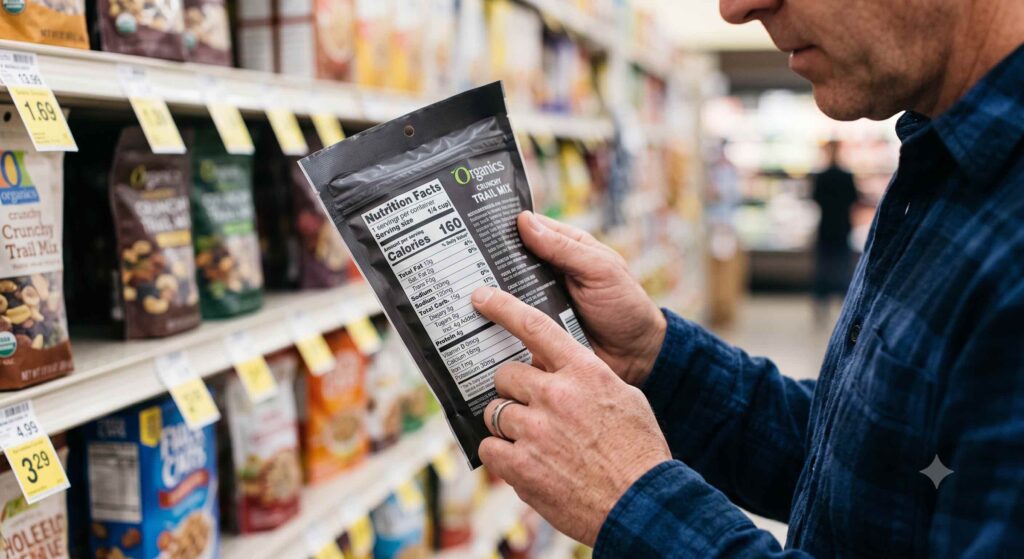
Okay, so now the practical part — because knowing the stats doesn’t help much if you’re still standing in the aisle confused. Here’s a simple, no-jargon way to check a label in about 15 seconds:
- Flip to the ingredient list, not the front of the box. Front labels are marketing. Ingredients don’t lie.
- Count the ingredients. If there are more than 5–7, and you don’t recognize half of them, that’s a red flag.
- Look for added sugar under different names — cane syrup, fruit juice concentrate, and “organic sugar” all still count as added sugar.
- Check the sodium per serving. For toddlers, anything over roughly 140mg per serving starts adding up fast across a day.
- Watch for oils and emulsifiers you can’t picture in your own kitchen — things like “mono- and diglycerides” or “maltodextrin.”
This is the same basic method nutritionists use, just simplified. Once you get used to it, checking baby food pouch ingredients to avoid becomes second nature — you’ll start spotting the same handful of ingredients over and over.
Healthy, Whole-Food Toddler Snack Alternatives
The good news? You don’t need to make everything from scratch or ban snacks forever. A few simple swaps go a long way:
- Plain whole-milk yogurt with mashed fruit instead of flavored yogurt pouches
- Sliced banana, avocado, or steamed sweet potato sticks instead of fruit snacks
- Homemade oat and banana mini-muffins instead of store-bought oat bars
- Cheese cubes or hard-boiled egg instead of cheese puffs
- Air-popped popcorn (for older toddlers past the choking-risk age) instead of packaged crackers
These healthy toddler snack alternatives aren’t about perfection — they’re about shifting the ratio a little bit, so ultra-processed snacks become the occasional treat instead of the daily default.
So… Is My Toddler Eating Too Much Ultra-Processed Food?
Honestly, if you’re buying snacks from a regular grocery store, there’s a very good chance the answer is “probably, at least sometimes” — and that’s true for the vast majority of parents, not just you. Given that 81% of the products on the shelf fall into this category, it would be almost impossible to avoid it 100% of the time.
The goal isn’t to feel guilty. It’s to get a little more label-literate, mix in more whole foods when you can, and treat pouches and bars as convenience tools rather than the main food group. Small, consistent swaps matter far more than any single “perfect” day of eating.
Bottom Line
This new toddler food ultra processed study is a wake-up call, not a reason to panic.
What percentage of baby food is ultra-processed? According to this research, roughly 4 out of 5 products on store shelves.
But now that you know what to look for — and a few easy clean label toddler snacks swaps — you’re already ahead of where most parents were before this study made headlines.
Sources
- ScienceDaily — “4 in 5 toddler foods are ultra-processed”
- CNN — “4 out of 5 toddler foods are ultraprocessed. Many don’t meet child nutrition standards”
- Forbes — “4 In 5 Toddler Foods Are Ultra-Processed, New Study Finds”
- TechTimes — “Toddler Food Aisle Fails Parents: Half of Products Don’t Meet WHO Nutrition Standards”
- Medical Xpress — “80% of toddler foods on grocery shelves are ultra-processed, audit reveals”
- EurekAlert — ASN official press release
- Plant Based News — “Over 80% Of Toddler Food In Texas Grocery Stores Is Ultra-Processed, Finds Audit”
Disclaimer: This content is for informational purposes only and is not intended as medical advice, diagnosis, or treatment. Always seek the advice of a qualified healthcare provider with any questions you may have regarding a medical condition.