
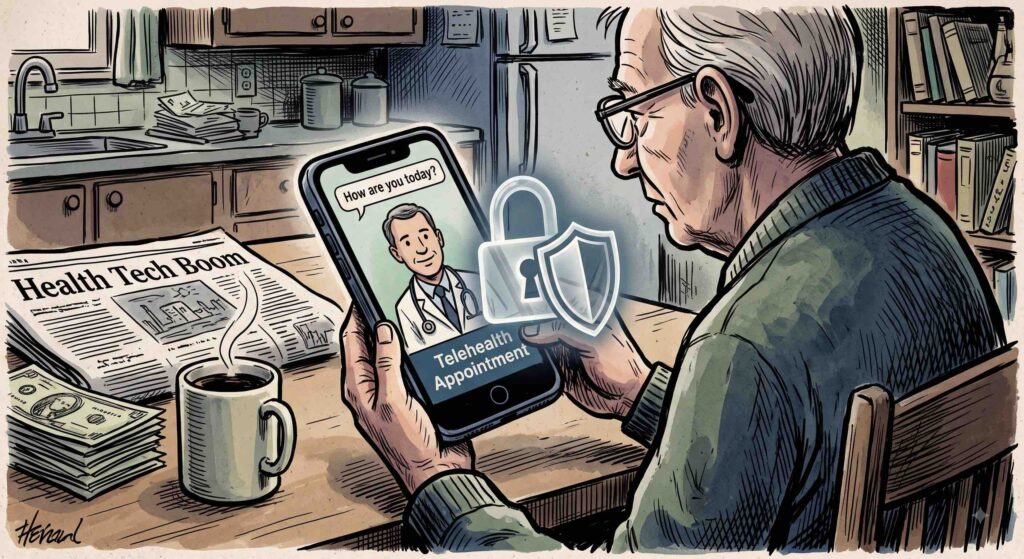
Picture this, you’re dealing with something a little embarrassing — hair loss, weight gain, anxiety, whatever it is — and you don’t want to sit in a waiting room and explain it to a stranger. So you open an app, answer a few questions, and a few days later a pill shows up at your door. No awkward eye contact, no scheduling headache. It feels private. It feels easy.
That’s the exact promise telehealth companies like Hims & Hers have been selling for years. But a new lawsuit from the Federal Trade Commission (FTC) is raising a pretty uncomfortable question: what if “private” wasn’t actually private at all?
If you’ve ever used one of these apps — or you’re thinking about it — this one’s worth five minutes of your time.
Hims & Hers Privacy Lawsuit, Explained
On July 29, 2026, the FTC — joined by the states of Utah and California — filed a lawsuit against Hims & Hers, one of the biggest names in online healthcare. The company sells prescriptions for things like erectile dysfunction, hair loss, weight loss, and mental health medication, all through an app or website, no in-person visit required.
The lawsuit makes two big accusations, and they’re worth breaking down separately because they hit different nerves.
1. Sharing your health info with advertisers. The FTC says Hims & Hers placed tiny bits of tracking code — often called “pixels” — from companies like Meta (Facebook/Instagram), Snap, Microsoft, Pinterest, Reddit, and X onto its website. These trackers are normally used so a company can show you targeted ads. The problem, according to the FTC, is that this code allegedly picked up and passed along details tied to people’s health conditions — even though Hims & Hers had promised users their information was “100 percent online, private, and secure” and would only be seen by medical providers.
In plain English: if you filled out a form about your erectile dysfunction or your depression, the FTC alleges that information (or data connected to it) may have quietly traveled to ad platforms without you really knowing.
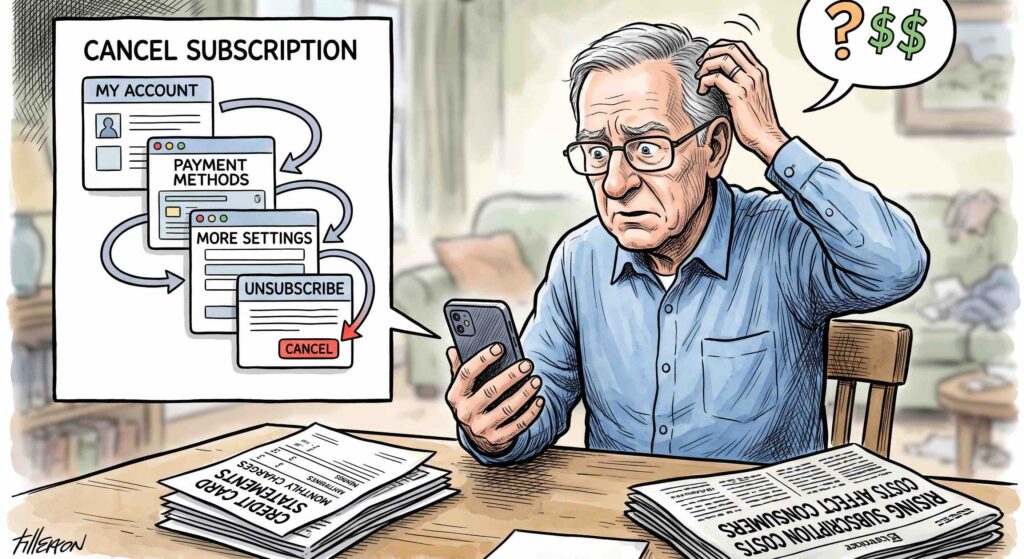
2. Making it hard to say no (or to cancel). The second part of the lawsuit isn’t about data at all — it’s about money. The FTC claims many customers were charged and signed up for a recurring subscription right after filling out a medical intake form, before they ever actually talked to a doctor. And once people wanted out, the FTC says the cancellation process was confusing and buried deep in the account settings, not something you could do in one or two clicks.
Hims & Hers has pushed back hard. In a public statement, the company said the lawsuit ignores three years of evidence it handed over during the FTC’s investigation and called the case an attempt to “generate headlines” rather than genuine consumer protection. The company says it stands by its privacy practices and will fight the claims in court. So to be clear — right now these are allegations, not a proven verdict. But the details in the complaint, and the sheer number of consumer complaints behind it, are enough to make anyone pause.
Telehealth Data Sharing Risks: Why This Matters Beyond One Company
Here’s the thing — this isn’t really just a “Hims & Hers problem.” It’s a telehealth industry problem, and honestly, kind of an entire internet problem.
Most websites use some form of tracking pixel to understand who’s visiting and what they’re clicking on. That’s normal for, say, a shoe store. But health information is treated differently under privacy law because it’s so sensitive — it can affect your job, your insurance, your relationships, even how people see you. When health-related tracking data ends up flowing to advertising companies, it stops being just “marketing data” and starts being something a lot more personal.
The FTC has been circling this exact issue for a while. This isn’t Hims & Hers’ first rodeo, either — the company had already been under a formal FTC probe into its cancellation practices since around mid-2025, and reporting at the time noted the investigation focused on whether it was unreasonably hard for people to cancel. So the July 2026 lawsuit was, in a sense, the other shoe dropping.
If you use any telehealth service — not just Hims & Hers — it’s worth asking:
- Does this company clearly say who it shares data with?
- Is there tracking code (ad pixels) running on the page where I enter medical info?
- Can I actually find the “cancel” button without a scavenger hunt?
Hims & Hers Billing Complaints: The Pattern Behind the Headlines
This part of the story didn’t come out of nowhere. Consumer complaints filed with the FTC paint a pretty consistent picture. According to reporting based on FTC complaint records, thousands of complaints have piled up over the past several years, and the most common one is simple: people were charged for a subscription they didn’t think they’d signed up for, and couldn’t get a refund when they asked.
Some real examples from complaint records show a pattern — one customer described being charged for a second six-month supply of medication she never intended to reorder, and had to request a refund and confirmation that the account was truly closed. Another customer said an “auto-order” they thought was cancelled kept charging them months later, at a moment when the extra charge was genuinely a financial hardship.
And this frustration isn’t limited to Hims & Hers, either. Subscription cancellation headaches have become such a widespread issue that the FTC introduced a broader “click to cancel” rule requiring companies to make cancelling a subscription just as easy as signing up for one. Online communities like Reddit are full of people sharing similar stories about subscriptions of all kinds — gym memberships, streaming services, and yes, telehealth apps — being far easier to join than to leave.
How to Cancel a Hims & Hers Subscription (If You’re Dealing With It Right Now)
If you’re currently a subscriber and this article has you rethinking things, here’s the general approach that tends to work, based on advice from consumer advocates covering these exact situations:
- Log into your account directly (not just the app) and look under “Account” or “Subscription” settings — cancellation options are sometimes only available on the website, not the mobile app.
- Search for the exact process — a quick search like “how to cancel [company name] subscription” often surfaces step-by-step guides from people who’ve done it before you.
- Get everything in writing. If you cancel by chat or email, ask for a confirmation number or screenshot the conversation.
- Escalate if you’re stuck. If customer service isn’t helping, consumer advocates suggest posting about the issue publicly (tagging the company) or filing a complaint with the FTC, your state attorney general, or the Better Business Bureau — this is actually how a lot of these patterns get discovered in the first place.
Is Telehealth Safe for Privacy? The Honest Answer
Telehealth itself isn’t the villain here — for a lot of people, especially in rural areas or those dealing with sensitive conditions, it’s genuinely been a huge improvement in access to care. The issue isn’t “telehealth is bad,” it’s that the industry grew incredibly fast, and privacy protections didn’t always keep pace with the business model.
A few general safety habits are worth adopting no matter which app you use:
- Read the privacy policy summary (yes, actually skim it) before entering medical details.
- Check whether the company discloses third-party advertising partners.
- Use a separate email for health-related sign-ups so it’s easier to track what you’ve subscribed to.
- Set a calendar reminder before any “free trial” or “first month” period ends.
Quick FAQ
Does Hims & Hers share my health data with Meta? That’s exactly what the FTC alleges — that tracking pixels from Meta, Snap, and other ad-tech companies were placed on the site and may have captured health-related information, despite the company’s privacy promises. Hims & Hers denies wrongdoing and says it’s defending itself in court.
What happens when a telehealth company gets sued by the FTC? It usually plays out over months or years. The company can settle (often agreeing to change practices and sometimes pay a fine) or fight the case in court, which can take a long time. In the meantime, the company usually keeps operating normally — a lawsuit doesn’t shut a business down overnight.
Why is the Hims & Hers subscription hard to cancel? Based on the complaints and the lawsuit itself, the friction seems to come from cancellation options being buried in account menus, only available on the website (not the app), and not clearly explained at sign-up. This is a common complaint pattern across many subscription-based businesses, not unique to this one company.
The Bottom Line
Telehealth made getting care easier, and that’s genuinely a good thing. But “easy” and “private” aren’t always the same word, and this lawsuit is a reminder to actually read the fine print before you hand over sensitive health information to an app — any app. Whether or not the allegations against Hims & Hers hold up in court, the bigger lesson applies everywhere: check who’s watching, and know exactly how to walk away before you sign up.
Sources
- FTC and States Act Against Hims & Hers for Deceptive and Unlawful Privacy Practices — Federal Trade Commission
- FTC sues Hims & Hers for allegedly sharing patients’ medical data with advertisers Meta and Snap — TechCrunch
- The FTC is suing the popular telehealth company Hims & Hers — NPR
- FTC sues Hims alleging deceptive business practices — STAT News
- Hims and Hers shares fall 10% as FTC sues company over data, billing practices — CNBC
- Hims & Hers Responds to FTC Lawsuit — Hims Inc. Investor Relations
- ‘They Are Thieves’: FTC Complaints About Hims & Hers Detail Surprise Charges — Gizmodo
- FTC Probing Complaints About Hims’ Cancellation Practices — Bloomberg (via TipRanks)
- Is There an Easier Way to Cancel Subscriptions? — Nasdaq/NerdWallet
- FTC sues Hims & Hers for sharing health data with Big Tech — The Register
Disclaimer: This content is for informational purposes only and is not intended as medical advice, diagnosis, or treatment. Always seek the advice of a qualified healthcare provider with any questions you may have regarding a medical condition.