
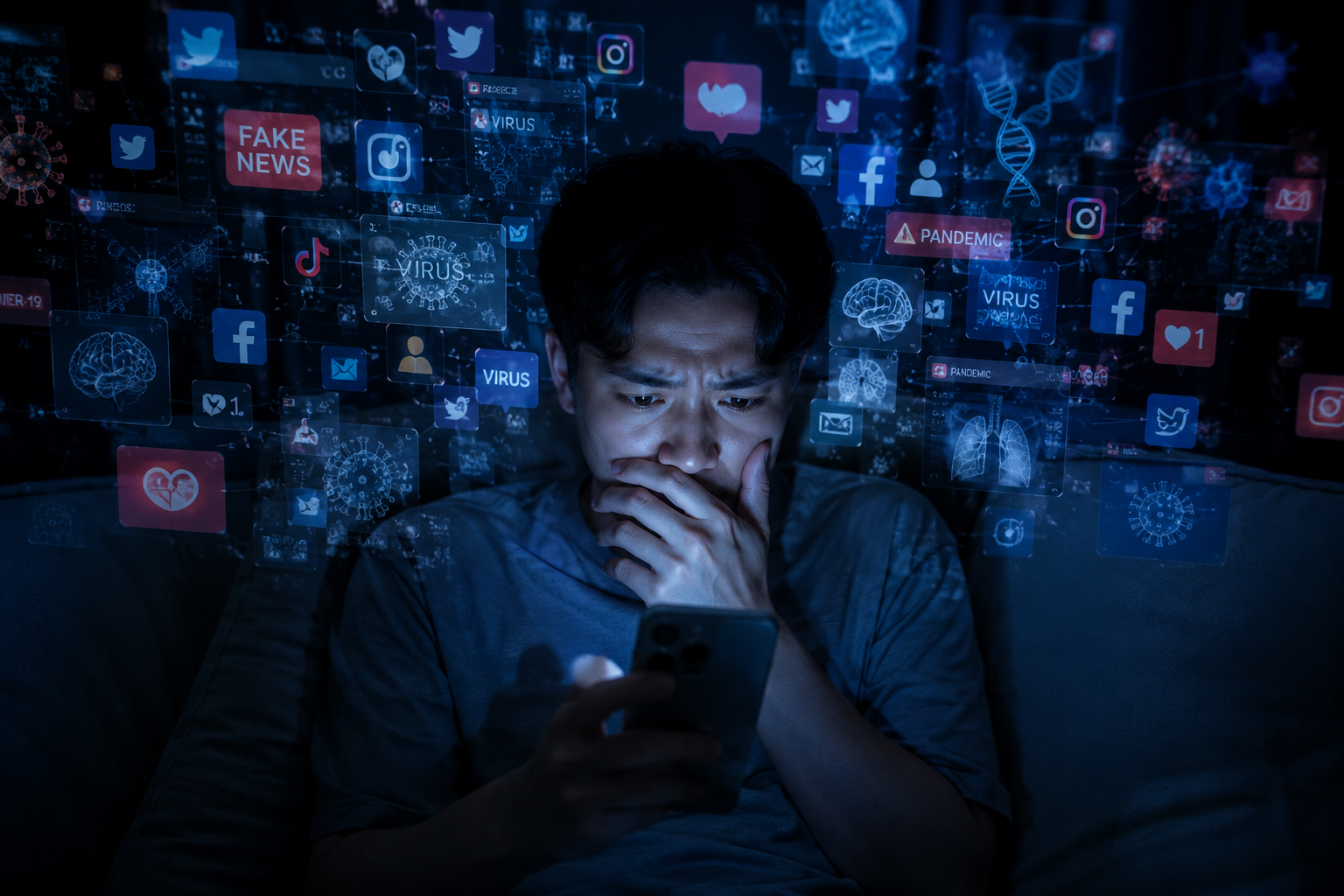

Digital hypochondria is reaching record levels in 2026, driving a massive shift from private Google searches to collective peer support in mental health communities.
The 2026 Surge: More Than Just “Doctor Google”
Have you ever felt a minor twitch and ended up convinced you had a rare neurological disorder after five minutes on the internet? You are not alone; in fact, you are part of a global phenomenon known as Digital Hypochondria (or Cyberchondria).
According to a scoping review published in January 2026, the prevalence of cyberchondria in the general population now ranges between 30.7% and 55.6%. This represents a significant jump from early 2020 levels, fueled by a relentless 24/7 digital news cycle and AI-generated health misinformation.
The digital behavioral health market is mirroring this distress, projected to grow at a CAGR of 20% this year alone. As individuals find themselves trapped in “reassurance-seeking loops,” the traditional search engine is being replaced by a more human alternative.
From Search Engines to Support Groups
In May 2026, the global online therapy and support market reached an estimated valuation of $12.73 billion. This growth isn’t just in paid apps; it is happening in the trenches of Reddit and Discord.
Communities like r/HealthAnxiety have seen a massive influx of users who find that static medical articles only heighten their fear. They are looking for “lived experience”—someone to tell them, “I felt that too, and I was fine.”
Recent discussions on platforms like Reddit (May 2026) regarding localized outbreaks, such as the Hantavirus scare, show that users now prioritize “peer-vetted” information over official government bulletins. This shift marks a fundamental change in how we consume health data.
The Double-Edged Sword: Does It Actually Help?
Wait—isn’t talking about your symptoms with other anxious people like pouring gasoline on a fire? This is the primary criticism from traditional psychologists who warn against “co-rumination.”
You might argue that these groups only provide temporary relief while reinforcing the habit of checking one’s body. While that is a valid concern, the 2026 data suggests a more nuanced reality.
Peer support, when moderated correctly, acts as a bridge to professional care for those who are otherwise too paralyzed by stigma to seek help. However, the line between “support” and “obsession” remains dangerously thin for many.
Digital Wellness Trends: The 2026 Pivot
As we move through 2026, a new “gentle” approach to Digital Wellness is emerging. We are seeing a move away from “symptom checking” and toward “nervous system regulation.”
Holistic rituals like breathwork, sound healing, and digital detoxes are becoming standard features in mental health communities. The focus is shifting from “What is wrong with my body?” to “How can I calm my mind?”
AI-powered therapy apps are also integrating “Cyberchondria blockers” that detect when a user is spiraling into health-related searches. These tools suggest a 5-minute walk or a meditation session before allowing the search to continue.

Navigating the New Frontier
The rise of Digital Hypochondria is a mirror of our hyper-connected, high-stress era. While Online Support Groupsoffer a sanctuary, they require a high level of digital literacy to navigate safely.
The key to Anxiety relief online in 2026 isn’t finding more information—it’s finding the right community that encourages you to step away from the screen. Are you using your community to heal, or just to hide from your fears?
The answer to that question will define your mental health in the digital age.
[Sources & References]
- PMC (PubMed Central): “Prevalence and Associated Factors of Cyberchondria: A Scoping Review” (Published Jan 22, 2026).
- Imperial College London: “Children’s extended social media use linked to increased depression and anxiety” (Published March 23, 2026).
- Coherent Market Insights: “Online Therapy Services Market Size and Analysis, 2026-2033” (Updated May 2026).
- Accor Limitless Wellness Report: “14 Wellness Trends to Try in 2026” (Jan 2026).
- Reddit (r/HealthAnxiety & r/AutismInWomen): User sentiment analysis on Hantavirus and health scares (May 2026).
Disclaimer: This content is for informational purposes only and is not intended as medical advice, diagnosis, or treatment. Always seek the advice of a qualified healthcare provider with any questions you may have regarding a medical condition.