
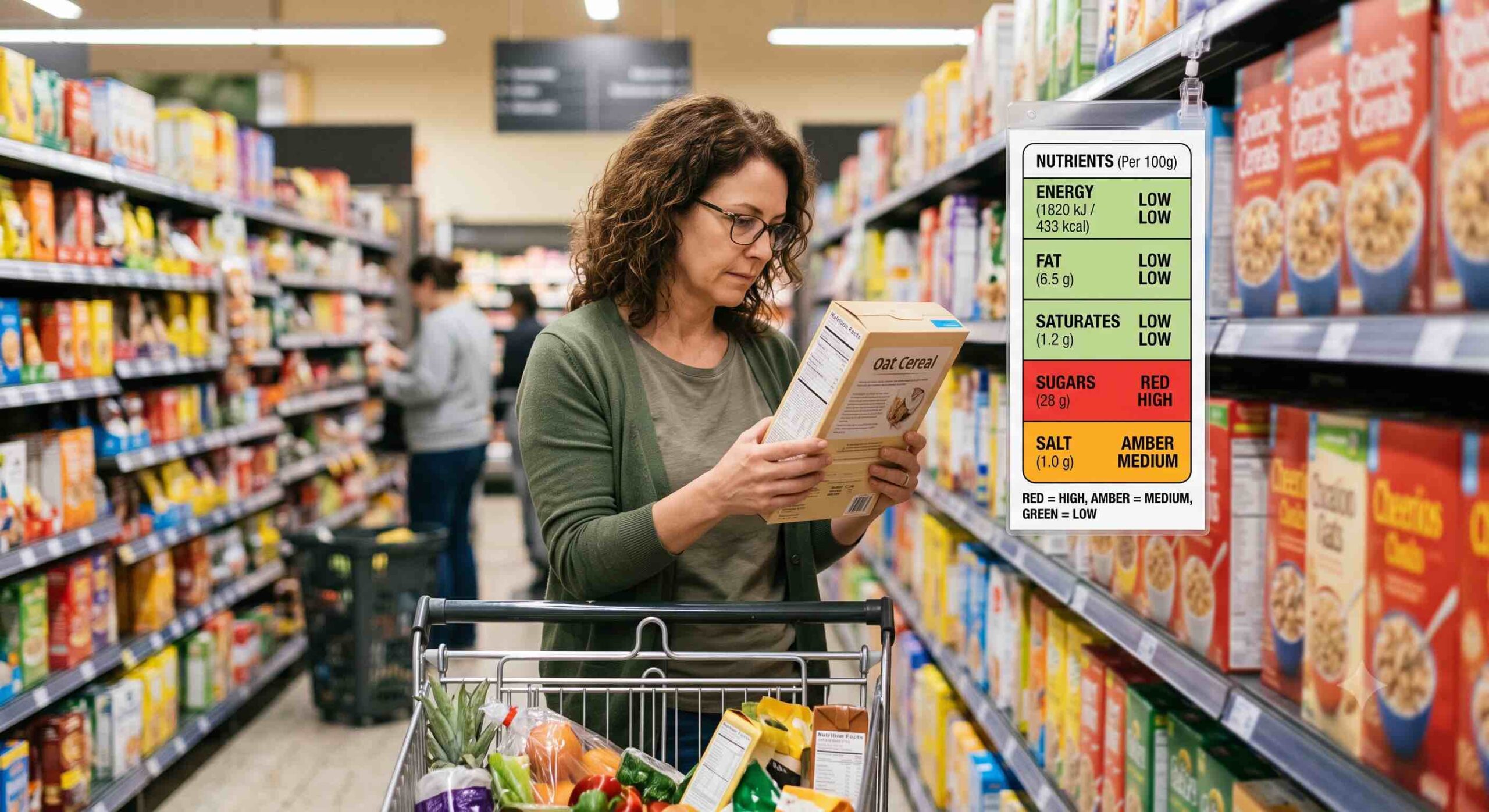
Ever stood in the cereal aisle, flipped a box around, and just… given up?
You see a wall of words you can’t pronounce, shrug, and toss it in the cart anyway because at least it says “made with real fruit” on the front. Yeah, we’ve all been there.
The good news is you’re about to get a lot better at this — and honestly, so is the whole country, because the FDA is finally catching up too.
Why This Is Suddenly a Big Deal
For years, “ultra-processed food” (UPF) has been one of those terms nutritionists throw around without ever really defining it. That’s about to change.
The FDA and USDA spent 2025 collecting public input on how to officially define UPFs, and by early August 2026, the FDA had sent a draft definition — called a “white paper” — to the White House’s Office of Management and Budget for review, a step that could shape future food labeling and industry reformulation even though it doesn’t create binding regulations on its own.
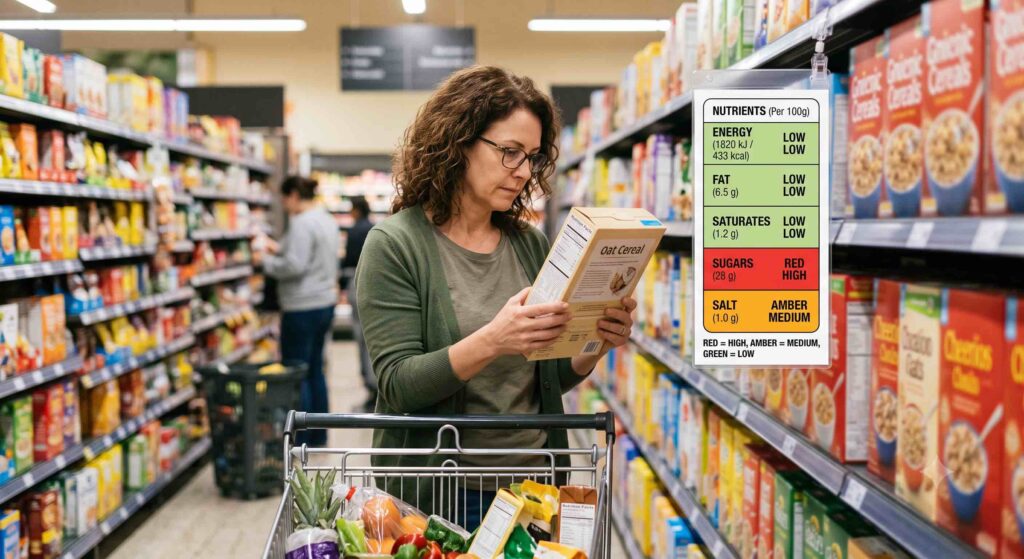
Health Secretary Robert F. Kennedy Jr. has been pushing hard for what’s called a “traffic-light” labeling system — basically red, yellow, and green symbols on the front of packages so you can tell at a glance whether something is loaded with sugar, salt, or saturated fat, an approach he says he wants to roll out once the federal UPF definition is finalized.
Meanwhile, individual states aren’t waiting around. Texas already has a rule in the works requiring warning labels on foods containing certain additives, and companies selling into Texas may need to display a specific front-of-pack warning once that rule takes effect.
On the federal side, more than 5,000 public comments poured into the FDA and USDA during the comment period, showing just how much this issue has caught fire, with health advocacy groups pushing the agencies to move fast while food industry groups argue the proposed definitions are too broad.
Okay, But What Actually Counts as “Ultra-Processed”?
Here’s the simplest way to think about it. Most of the proposed U.S. definitions build on something called the NOVA classification system, which was originally developed by researchers in Braziland sorts all food into four groups based on how much industrial processing it’s gone through. The last group — NOVA 4 — is the one we’re talking about, and it covers stuff like soda, packaged snacks, instant noodles, and reconstituted meat products.
In plain English: if a food went through a factory process that added ingredients you’d never find in a home kitchen — like emulsifiers, industrial preservatives, or lab-made flavor compounds — it’s probably ultra-processed. According to the FDA’s own estimates, this isn’t some rare category either. Roughly 70% of the American food supply is considered ultra-processed, and kids get more than 60% of their daily calories from these foods. That’s the scale of the problem regulators are trying to tackle.
5 Ways to Spot Ultra-Processed Food in the Aisle
You don’t need a nutrition degree to get good at this. Here’s what to actually look for:
1. Flip the package and count the ingredients. If the list is long and reads like a chemistry class, that’s your first red flag. A jar of peanut butter with two ingredients (peanuts, salt) is not the same product as one with eight.
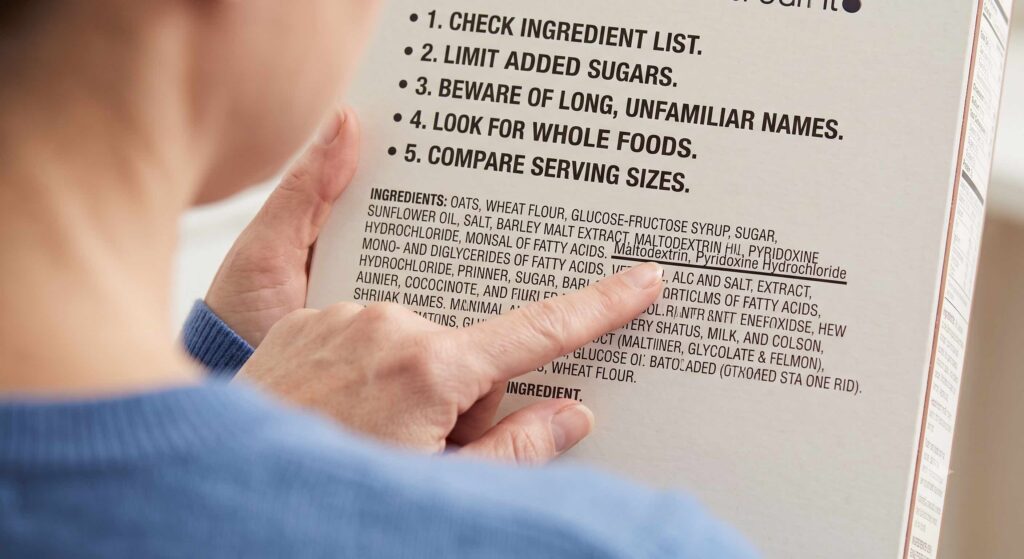
2. Watch for words you can’t picture in your kitchen. Things like “maltodextrin,” “hydrolyzed protein,” or “mono- and diglycerides” are processing markers, not food you’d cook with at home.
3. Don’t trust the front of the box. Claims like “natural,” “multigrain,” or “made with real fruit” are marketing language, not nutrition facts — always check the back label to see what’s really inside.
4. Notice sneaky “healthy” categories. This one surprises people. Even foods that seem wholesome can be UPF-heavy. In one recent industry analysis of grocery products, 86% of yogurts on shelves qualified as ultra-processed, and only 2% met the “healthy” nutrition criteria — mostly because of added sugar, saturated fat, and thickeners. Flavored or carbonated waters had a similar pattern, with 85% landing in the ultra-processed category, largely due to added flavoring.
5. Check for a long shelf life relative to how “fresh” it looks. If a product looks like it should spoil in days but sits on a non-refrigerated shelf for months, preservatives are doing a lot of quiet work.
Real Examples People Are Talking About
This isn’t just theoretical. Lawsuits are already testing what “ultra-processed” means in the real world.
In one case working through the courts, a plaintiff argued he’d regularly eaten 179 different ultra-processed products over more than a decade and that they were sold without adequate warnings — though the court found the claims didn’t show a specific product caused his health issues, just a general increased risk.
Separately, a New York lawsuit challenged a quick bread mix for claiming “no artificial preservatives” while containing silicon dioxide, which the plaintiff argued functions as an ultra-processing marker, and a California case made a similar argument about a kimchi product’s sorbitol content undercutting its “naturally fermented” claim.
On the policy side, longtime food-labeling advocate Sarah Sorscher, from the Center for Science in the Public Interest, has pointed out that food companies have deflected mandatory labeling efforts beforeby promoting a voluntary front-of-package system back when regulators first pushed for something similar — which is part of why this new round of FDA action is being watched so closely by both nutrition advocates and the food industry.
Building Your Own Clean Eating Grocery List
Once you get the hang of spotting UPFs, building a cleaner grocery list gets a lot easier. A few practical habits:
- Shop the edges of the store first. Produce, dairy, and meat sections tend to have less processed options than the center aisles.
- Pick short-ingredient versions of pantry staples. Bread, pasta sauce, and yogurt all have “simple” versions if you look — same food, way fewer additives.
- Batch-cook a few staples. Rice, beans, and roasted vegetables made at home skip the preservatives entirely and are usually cheaper per serving anyway.
- Keep a small “watch list” on your phone. Jot down 5–6 ingredient names you now recognize as processing markers (thickeners, artificial dyes, high-fructose corn syrup) so you can scan for them fast.
The Bottom Line
We’re not at the finish line yet — the FDA’s new definition is still a white paper under government review, not a finalized rule, and any front-of-pack warning label system is still months (maybe longer) away from actually showing up on shelves.
But the direction is pretty clear: ultra-processed food is getting a real, official definition for the first time, and once that happens, spotting it on the label is only going to get easier. Until then, the five habits above will get you most of the way there — no chemistry degree required.
Sources
- FDA’s UPF definition may lack legal force, but not policy impact — Dairy Reporter
- Kennedy signals new course for food labels as FDA nears definition for ultra-processed food — Food Navigator USA
- Ultra-Processed Foods Face Rising Scrutiny — O’Melveny
- FDA weighs competing definitions for ultra-processed foods — Food Navigator
- What Counts as Ultra-Processed Food? One Expert Panel Has An Answer — Yahoo Health
- Food Safety Changes You Can Expect In 2026 — Tasting Table
- Ultraprocessed Foods in the U.S.: Recommended Definitions and Policies — Healthy Eating Research
- Summer So Far: Key Food Regulatory + Litigation Developments Roundup — Morrison Foerster
Disclaimer: This content is for informational purposes only and is not intended as medical advice, diagnosis, or treatment. Always seek the advice of a qualified healthcare provider with any questions you may have regarding a medical condition.