
The multi-billion-dollar beauty industry is officially abandoning traditional wrinkle-masking “anti-aging” products in favor of biotech-driven skin longevity and AI-tailored diagnostics that actively regenerate skin cells from within.
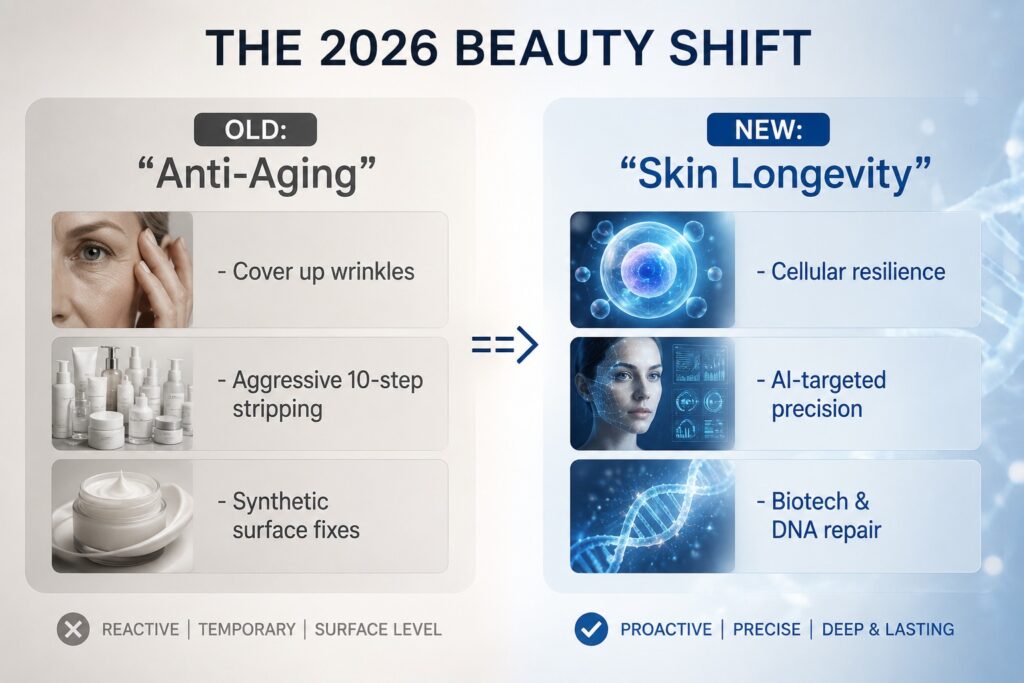
The era of chasing a flawless, unmoving face is officially over. Today, American women are moving away from aggressive 10-step routines that strip the skin barrier, shifting toward a smarter, more permanent goal: durability.
According to a global consumer aesthetic survey, a staggering 84% of patients now actively seek treatments that work directly with their body’s natural regenerative processes rather than relying on temporary superficial fixes.
The modern consensus across skincare forums is clear—we no longer want to aggressively fight time; we want to give our cells the biological tools to outsmart it.
The Death of Anti-Aging and the Rise of Cellular Energy
For decades, premium skincare relied on single hero ingredients pushed at harsh, maximum concentrations to burn off the top layer of your skin. This aggressive method often left the skin chronically inflamed, inadvertently accelerating the deep biological aging process beneath the surface.
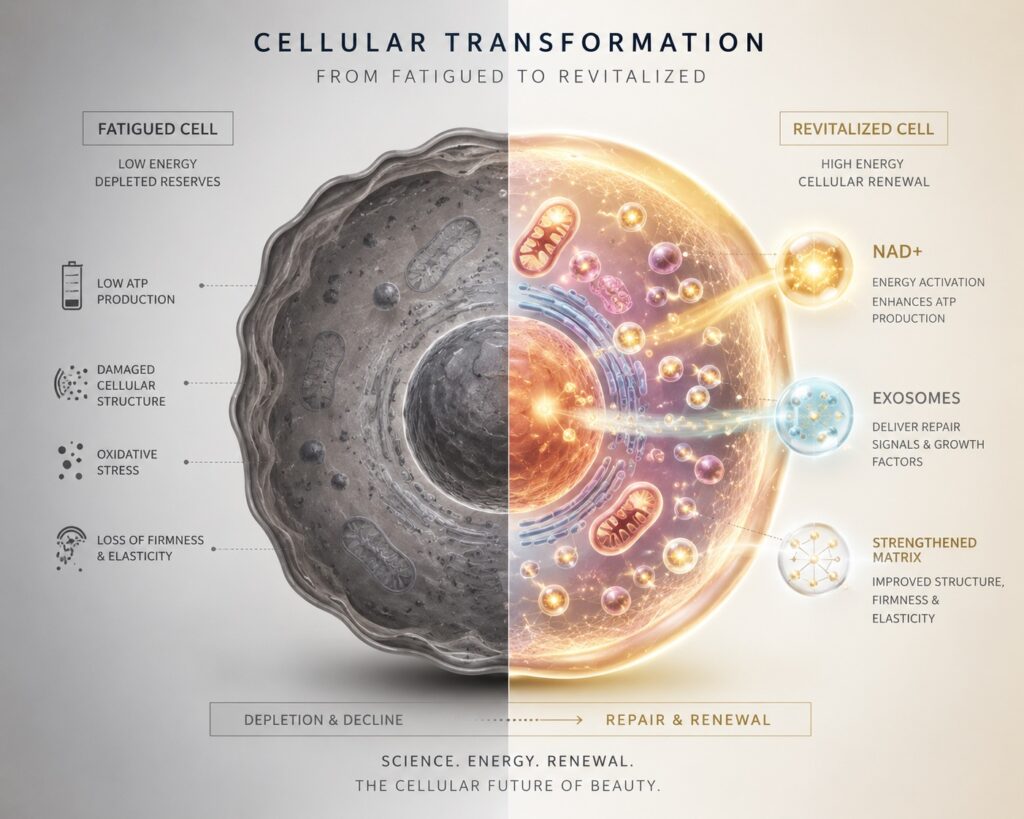
Skin longevity treats the skin as a dynamic, complex living organ that requires cellular energy to repair its own DNA structure. In 2026, premium clinical formulations are shifting their focus to NAD+ boosters, vegan PDRN (nucleotides), and plant-derived exosomes that directly target mitochondrial renewal.
By restoring the cell’s underlying metabolic health, these advanced bio-tech molecules allow the skin to naturally bounce back from daily UV damage and environmental stress. The ultimate goal here is not an artificial frozen perfection, but a dense, highly durable skin architecture that functions like a much younger organism.
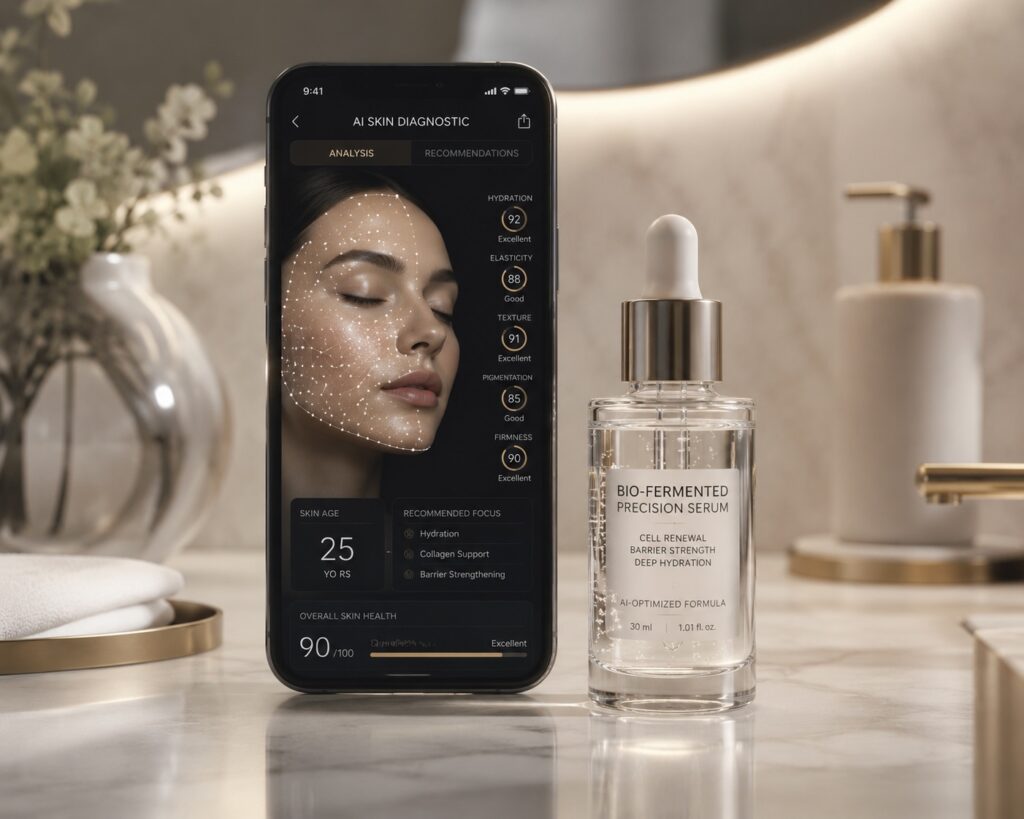
AI Skin Diagnostics: The End of Skincare Guesswork
You have likely wasted hundreds of dollars on highly praised, viral luxury creams that simply did absolutely nothing for your specific face. The global AI skin analysis instrument market is skyrocketing, projected to reach a massive $2.54 billion, because it solves this exact frustration.
Major beauty conglomerates are heavily investing in this space; for instance, The Estée Lauder Companies recently introduced an expert-validated AI model trained on diverse, multi-ethnic datasets to explicitly measure “perceived skin age” and customize product regimens. Simultaneously, tech showcases feature advanced AI Beauty Mirrors that utilize sophisticated computer vision to track microscopic changes in your hydration, skin density, and redness in real time.
Instead of guessing what your skin barrier needs on any given morning, an algorithm analyzes your personal smartphone selfie against local humidity and UV indices to prescribe a hyper-personalized dose. This data-driven precision ensures you apply exactly what your living cells require to regenerate, completely eliminating expensive product waste.
“Isn’t This Just a Marketing Rebrand of Old Anti-Aging Creams?”
The Skeptic’s View: It is completely natural to look at the phrase “skin longevity” and wonder if it is just a clever, corporate buzzword designed to sell us the exact same retinols and moisturizers under a fancy new medicalized label.
The critical difference lies in proven multi-pathway formulation and cellular depth. Traditional anti-aging creams almost exclusively focus on surface-level correction—using harsh exfoliants or heavy silicones to temporarily fill lines and reflect light.
In sharp contrast, authentic skin longevity brands focus entirely on the 96% of the skin structure that sits quietly below the visible surface. Clinical data from dermatological trials reveals that pairing advanced molecular defense serums with smart-blend daily protection can reduce measured epigenetic skin age by up to eight years within just three months of consistent use.
This is achieved by using time-release polymer microcapsules and biomimetic lipid networks that carefully bypass the dead outer stratum corneum to deliver active repair factors deep into the living dermis. You are not simply moisturizing dead cells; you are fundamentally changing how your new cells are born.
What American Women Are Actually Saying: The Reddit Verdict
The shift from superficial vanity to strict biotech efficacy is deeply reflected in real-world consumer discussions across major American online beauty spaces.
| Source Platform | Top Upvoted Consumer Perspectives & Real Sentiments |
| r/SkincareAddiction | “I’m completely done with burning my face off with 12% pure acids just because a TikTok influencer told me to. My routine is now down to three biotech products that actually focus on barrier repair and cellular health, and my redness is completely gone.” |
| r/30PlusSkinCare | “The AI scanning apps were an absolute eye-opener for me. It pointed out deep sun damage and hydration loss that I couldn’t even see in my bathroom mirror yet. I stopped buying generic anti-wrinkle creams and changed to a targeted peptide fluid.” |
The prevailing narrative among modern consumers is a clear demand for transparency, verified scientific data, and minimal, highly intelligent routines that value long-term skin health over theatrical overnight miracles.
Embracing the Future of Bio-Synchronized Beauty
As we move forward, the relationship with our skin is becoming much less adversarial and significantly more collaborative. True radiance is a natural byproduct of structural cell health, steady mitochondrial energy, and an uncompromised, resilient moisture barrier.
By marrying advanced artificial intelligence with precision biotechnology, we can finally stop chasing unrealistic, youthful illusions and start supporting our biology with absolute scientific confidence. The future of a healthy, glowing complexion is no longer about fighting the natural aging process—it is about empowering your cells to live beautifully and endure for longer.
References
- Personal Care Insights (Dec 2025): Trend report on Neuro-Skin Aging and the widespread rise of biotechnology as an industry standard.
- Research and Markets (May 2026): Global AI Skin Analysis Instruments Market Report, tracking the rapid rise to a $2.54 billion valuation.
- Global Market Insights (May 2026): Personalized Skincare Market Size and corporate investments by Estée Lauder and Beiersdorf in longevity science.
- The Serum Revolution / UL Prospector (March 2026): Technical brief on multi-pathway water dynamics, NAD+ boosters, and biomimetic delivery systems.
Disclaimer: This content is for informational purposes only and is not intended as medical advice, diagnosis, or treatment. Always seek the advice of a qualified healthcare provider with any questions you may have regarding a medical condition.