
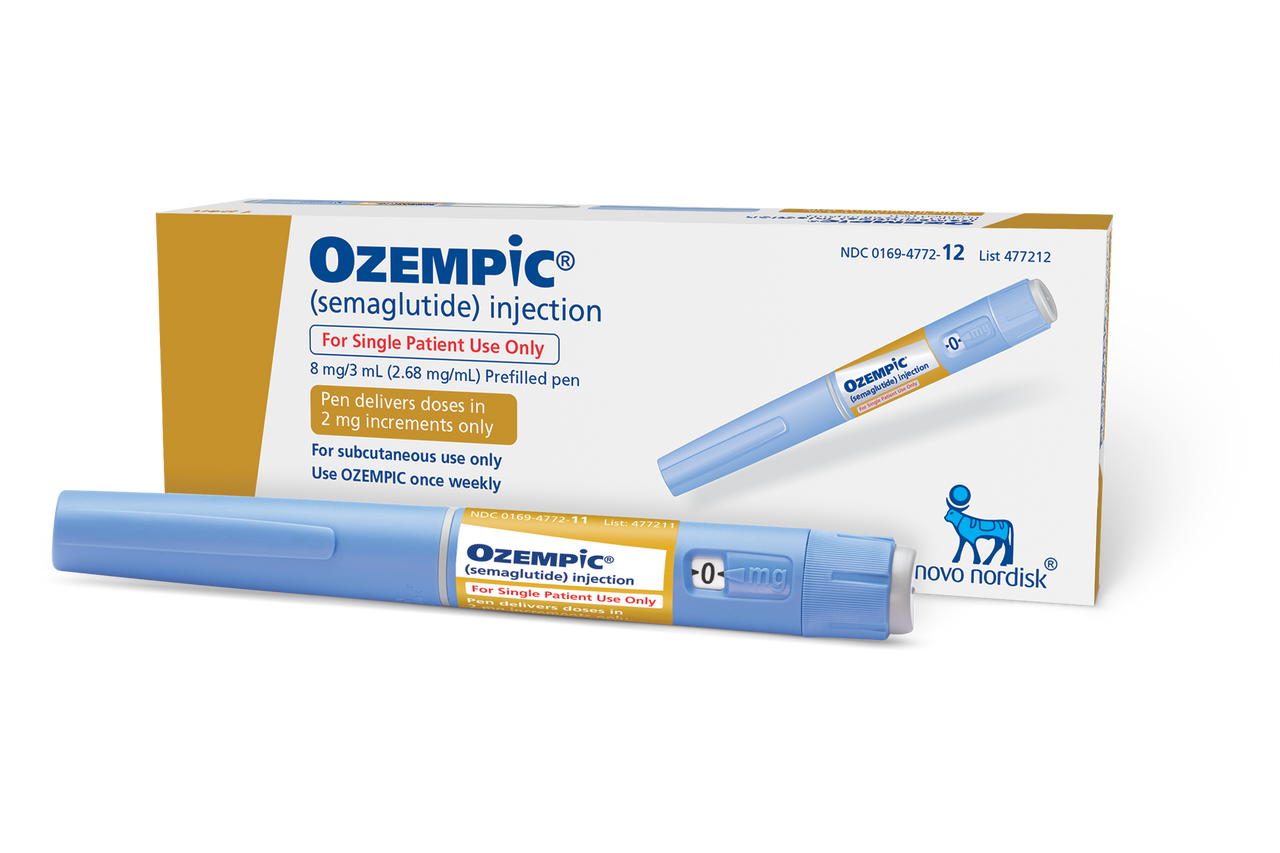
If you’ve been anywhere near the internet lately, you’ve probably seen the headlines: “Ozempic might slow down aging!” It sounds like something out of a sci-fi movie, right? A weight-loss drug that also messes with your biological clock?
Well, here’s the good news — this isn’t clickbait made up out of thin air. There’s an actual peer-reviewed study behind it, published by researchers at UC San Diego. But (and this is a big but) the real story is a little more nuanced than “Ozempic = fountain of youth.” Let’s break it down in plain English, no lab coat required.
Wait, What Even Is Biological Aging?
Okay, quick science lesson, but I promise it’s easy. You have two “ages”: your chronological age (the number on your birthday cake) and your biological age (how old your cells and organs actually act). Some 50-year-olds have the cells of a 40-year-old. Some don’t. That difference is driven by stuff like inflammation, stress, diet, and genetics.
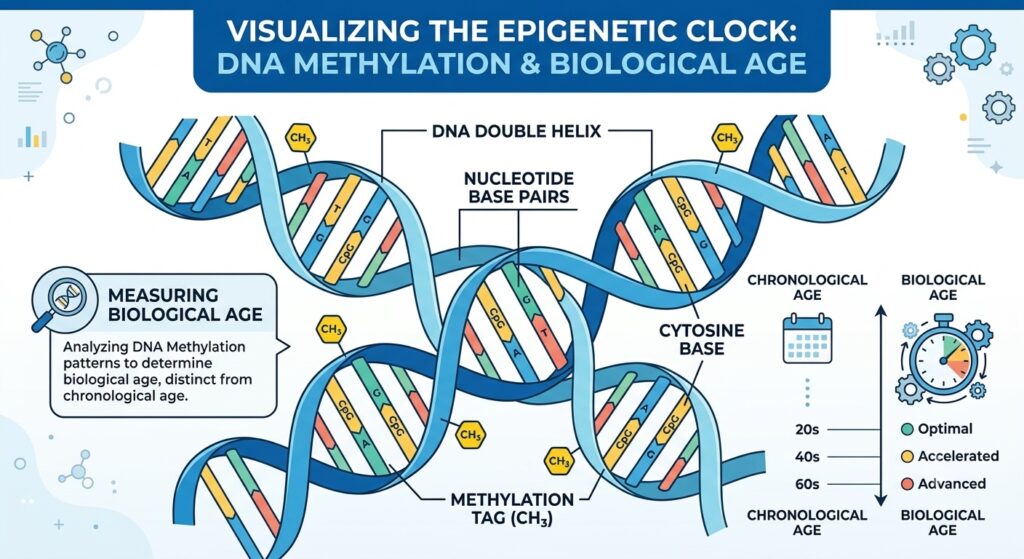
Scientists measure biological age using tools called epigenetic clocks. Think of them like a odometer for your DNA. As you age, tiny chemical tags attach to your DNA in predictable patterns — a process called DNA methylation. Researchers can read these tags the same way a mechanic reads mileage on a car, and get a pretty accurate estimate of how “worn down” your body really is.
This is where the keyword of the day comes in: epigenetic clock semaglutide research is exactly what let scientists test whether semaglutide (the active ingredient in Ozempic and Wegovy) actually changes this “mileage” reading.
So What Did the Study Actually Find?
Here’s the setup. Researchers at UC San Diego, led by Michael J. Corley, went back and re-analyzed data from an existing clinical trial. This wasn’t a brand-new experiment — it was a post hoc analysis, meaning they took data that already existed and asked a new question of it. The original trial had enrolled 108 adults living with HIV who also had a condition called lipohypertrophy (basically, fat buildup in specific areas of the body, which is common in people with HIV). Half the group got weekly semaglutide injections for 32 weeks, and the other half got a placebo.
The team then ran several epigenetic clocks on the participants’ blood samples to check their biological age before and after treatment. And here’s what they found: people who received semaglutide showed a pace of biological aging that was about 9% slower, based on one of the clocks called DunedinPACE. That clock also showed meaningfully slower biological processes tied to overall mortality risk and age-related disease, using a separate tool called PCGrimAge.
What’s really interesting is that this wasn’t just one organ system improving. The strongest effects showed up across markers linked to inflammation, brain, heart, blood, kidneys, liver, and metabolism — basically hinting that semaglutide’s influence might be systemic, touching a lot of different parts of the body at once. This is exactly the kind of GLP-1 aging research that scientists have been chasing for years but never had solid clinical proof for — until now.
The findings were officially published in the journal Nature Communications, which matters a lot in the science world because it means the study went through rigorous peer review before publication.
The 3.1-Year Number You’ve Probably Seen Floating Around
You may have also seen articles claiming Ozempic “reversed aging by 3.1 years.” That number comes from a related, earlier analysis of the same underlying trial data, led by a diagnostics company called TruDiagnostic. Their researcher, Varun Dwaraka, described the pattern to New Scientist by saying semaglutide might not just slow aging, but partially reverse it in some people.
That version of the analysis first circulated as a preprint (meaning it hadn’t been peer-reviewed yet at the time), so it’s worth treating that specific “3.1 years” figure with a bit more caution than the peer-reviewed Nature Communications numbers, even though it points in the same direction.
There’s also a smaller, related pilot study — published separately in the journal npj Aging — that looked at a different group of people with HIV and fatty liver disease. In that study, semaglutide slowed the pace of biological aging in 42% of participants, based on the same DunedinPACE clock. Not everyone responded the same way, which is a good reminder that this isn’t a guaranteed, one-size-fits-all effect.
But Before You Get Too Excited…
Here’s where we have to pump the brakes a little. This is genuinely exciting early research, but it comes with some real limitations:
- The sample size was small. We’re talking about 84 to 108 people total, split between two groups. That’s enough for early-stage research, but way too small to draw sweeping conclusions about the general population.
- The participants all had HIV. People living with HIV tend to experience faster biological aging because of chronic inflammation, even when their HIV itself is well controlled. So we don’t yet know if these effects would look the same in someone without HIV.
- No one is claiming this is an anti-aging pill. The lead researcher was careful to clarify that the team isn’t saying semaglutide reverses aging or makes people younger — just that it may be slowing down some of the biological processes tied to aging. And no health agency anywhere has approved semaglutide for “anti-aging” use. If you see an ad or influencer claiming otherwise, that’s marketing, not science.
What the Internet Is Saying
Online reaction has been a real mixed bag — equal parts excitement and eye-rolling.
A lot of health and science communities online lit up the moment the study dropped, with plenty of people joking that Ozempic is turning into an actual “wonder drug” after already being linked in earlier research to lower dementia risk and heart benefits. At the same time, more skeptical commenters have pointed out (correctly) that this is one small study in a specific patient group, and that “biological age” science itself is still evolving as a field — so it’s smart to enjoy the headline without betting your retirement fund on it.
There’s also a fun side conversation happening alongside all this: the so-called “Ozempic face” phenomenon, where people using the drug for weight loss sometimes look more tired or aged in the face. Dermatologists have clarified that this isn’t the drug accelerating skin aging — it’s simply a side effect of rapid fat loss in the face, similar to what happens with weight loss from any cause.
So somewhat ironically, the same drug getting headlines for potentially slowing aging at the cellular level has also been blamed (a bit unfairly) for making faces look older. Aging science is complicated like that.
The Bottom Line
So, can semaglutide slow biological aging? Based on this new research, the honest answer is: maybe, in some ways, for some people — but it’s way too early to call it an anti-aging drug. What we do have is the first solid, peer-reviewed clinical evidence that a GLP-1 drug can measurably shift markers of biological aging, which is a genuinely big deal for a field that’s mostly worked with animal studies until now.
The bigger studies — testing broader populations without HIV, over longer time periods — are the ones that will really tell us whether this becomes a mainstream health story or just a fascinating footnote. For now, if you’re on semaglutide for diabetes or weight management, this research is an interesting bonus finding.
It’s not, and shouldn’t be treated as, a green light to start taking it purely to chase a younger biological age.
Sources
- UC San Diego – “New study shows popular GLP-1 weight loss drug may slow biological aging”
- Today at UC San Diego – “Study: Popular GLP-1 Drug May Slow Down Biological Aging”
- ScienceDaily – “Popular weight-loss drugs Ozempic and Wegovy may slow biological aging”
- Medical News Today – “Semaglutide and aging: New study finds benefits beyond weight loss”
- DistilInfo – “Semaglutide May Slow Biological Aging, Study Finds”
- Popular Mechanics (via AOL) – “Scientists Say Ozempic Could Reverse Your Biological Age by 3.1 Years”
- MedPath News – “Ozempic Shows Anti-Aging Effects in First Clinical Trial”
- NCBI/PMC – “Semaglutide Slows Epigenetic Aging in People with HIV-associated lipohypertrophy” (full study)
- NCBI/PMC – “Epigenetic Aging and Treatment Response to Semaglutide in the SLIM LIVER Study”
- AOL Health – “Worried about ‘Ozempic face?’ Here’s what to know”
Disclaimer: This content is for informational purposes only and is not intended as medical advice, diagnosis, or treatment. Always seek the advice of a qualified healthcare provider with any questions you may have regarding a medical condition.