
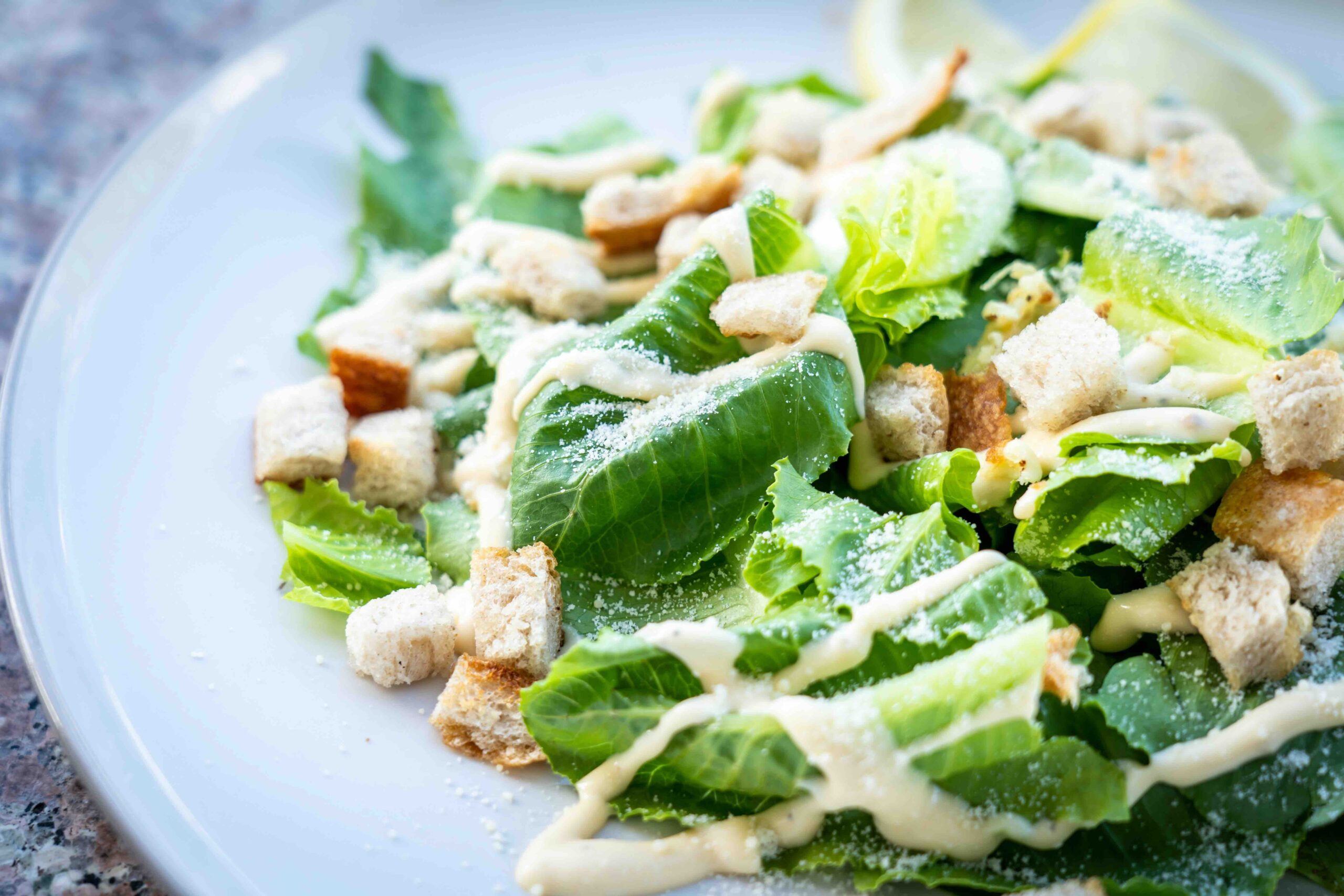
There is something almost reassuring about a summer salad.
A bowl of crisp lettuce, fresh herbs, cucumbers, berries, and other colorful produce seems like the opposite of risky eating. It is cold, fresh, simple, and healthy.
But the growing number of Cyclospora infections reported in parts of the United States in the summer of 2026 is a reminder of an uncomfortable truth: food does not have to look spoiled, smell strange, or taste bad to make someone sick.
Cyclospora is a microscopic parasite that can cause an intestinal illness called cyclosporiasis. According to the Centers for Disease Control and Prevention, people can become infected by consuming food or water contaminated with the parasite.
Recent cases have drawn particular attention in Michigan and other states. Health officials are investigating clusters of illnesses, but as of early July 2026, there is an important distinction that consumers should understand: not every reported case has been proven to come from one nationwide source.
That uncertainty may be frustrating. It is also exactly why basic Summer Salad Hygiene matters.
The question is not whether Americans should stop eating salads.
They should not.
The better question is simpler: How can we continue eating fresh produce while reducing the risk of foodborne illness?
The answer begins with understanding what Cyclospora is — and what washing vegetables can and cannot do.
What Is Cyclospora?
Cyclospora cayetanensis is a microscopic parasite that infects the human small intestine.
The illness it causes is known as cyclosporiasis.
People generally become infected after consuming food or water contaminated with the parasite. Cyclospora has previously been associated with fresh produce, including leafy greens, herbs, and berries.
One reason the parasite can be difficult for consumers to understand is that contaminated food may appear completely normal.
A strawberry can look perfect.
A bowl of lettuce can smell fresh.
Cilantro can be bright green and crisp.
None of these qualities can tell you whether microscopic contamination is present.
According to the CDC, one of the most common symptoms of cyclosporiasis is frequent, sometimes explosive, watery diarrhea. Other possible symptoms include:
- Loss of appetite
- Weight loss
- Stomach cramps
- Bloating
- Increased gas
- Nausea
- Fatigue
Some people may also experience vomiting, body aches, headaches, or fever.
Without treatment, symptoms may last for weeks or even longer. They can also appear to improve and then return.
This is one reason Cyclospora deserves more attention than its relatively unfamiliar name might suggest.
Why Are People Talking About the CDC Cyclospora Outbreak in 2026?
Cyclospora cases typically receive more attention during warmer months.
In 2026, the issue became especially prominent after health officials reported increasing numbers of infections in several states.
The CDC reported 145 domestically acquired cases with illness onset between May 1 and June 16 across 17 states, according to a July 2026 local news report citing federal data. Twenty people were hospitalized among cases for which hospitalization information was available, and no deaths had been reported.
Michigan separately experienced a particularly sharp rise in reported infections. By July 6, ABC News reported that cases in the state were approximately 13.5 times higher than average.
But this is where careful reporting matters.
The existence of cases in multiple states does not automatically prove that every patient was infected by the same food.
Health authorities investigate clusters, interview patients, study what they ate, and look for connections between illnesses. Until that work identifies a common source, consumers should be careful about assuming that one particular salad ingredient, grocery store, restaurant, or company is responsible.
As of early July 2026, the source behind the growing number of cases had not been fully identified.
That leaves consumers in a familiar but uncomfortable position: concerned enough to want to take action, but without a single food to avoid.
The most practical response is not panic.
It is better food hygiene.
Can Washing Vegetables Remove Cyclospora?
This may be the most important question for anyone worried about eating fresh produce.
The answer requires some nuance.
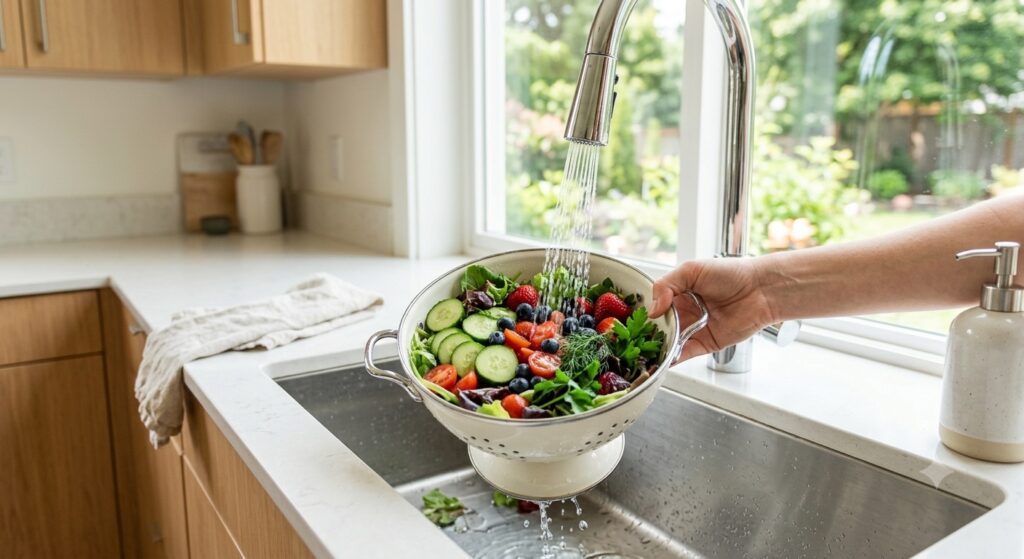
Washing fruits and vegetables under running water is an important food safety practice and is recommended by public health authorities.
But washing does not guarantee that every Cyclospora parasite will be removed.
That distinction matters.
Think of washing produce as a way to reduce risk rather than create perfect protection.
Running water can help remove dirt and some contaminants from the surface of fruits and vegetables. Firm produce, such as cucumbers and melons, can be scrubbed with a clean produce brush.
However, the CDC notes that no washing method completely eliminates the risk of Cyclospora contamination.
In other words:
Wash your produce.
But do not assume that washing makes contaminated produce completely safe.
Both statements can be true at the same time.
How to Clean Vegetables Safely
So, what should you actually do when preparing a summer salad?
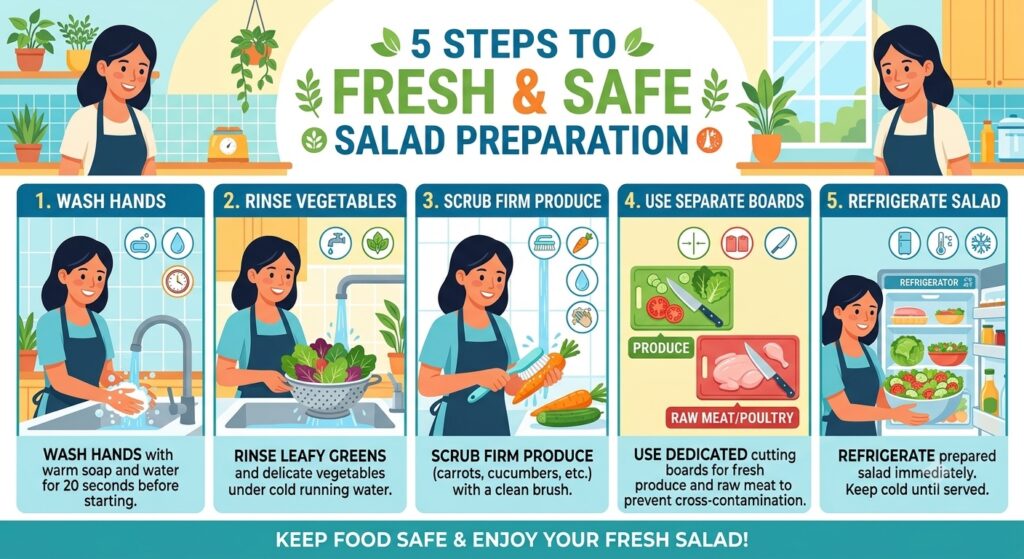
The CDC recommends following basic safe food handling practices.
1. Wash Your Hands First
Before touching fresh fruits and vegetables, wash your hands with soap and water.
This is one of the simplest food safety steps, yet it is easy to skip when making a quick lunch or dinner.
Clean hands help prevent additional contamination during food preparation.
2. Wash Produce Under Running Water
Rinse fruits and vegetables thoroughly under clean running water before eating, cutting, or cooking them.
Even produce that will be peeled should generally be washed first.
Why?
Because a knife can carry contamination from the outside surface into the edible portion when you cut through the food.
3. Scrub Firm Produce
Firm fruits and vegetables such as cucumbers and melons can be scrubbed with a clean produce brush.
The key word here is clean.
A dirty kitchen brush or sponge can create another contamination problem rather than solving one.
4. Remove Damaged Areas
Cut away bruised or damaged portions of fruits and vegetables before eating or preparing them.
Damaged areas can provide places where microorganisms are more difficult to remove.
5. Dry Produce With a Clean Towel
After rinsing, dry produce with a clean cloth towel or paper towel.
This can help remove additional material from the surface.
6. Keep Produce Away From Raw Meat
Cross-contamination remains one of the most common problems in home kitchens.
Do not use a cutting board for raw chicken and then immediately chop lettuce on the same unwashed surface.
Wash cutting boards, knives, utensils, countertops, and other food preparation surfaces properly.
7. Refrigerate Cut Produce Promptly
Once fruits and vegetables have been cut, peeled, or prepared, refrigerate them as soon as practical.
Good refrigeration practices are an important part of general food safety.
Should You Wash Vegetables With Soap?
No.
This is one area where more cleaning is not necessarily better.
Consumers should not wash fruits and vegetables with soap, detergent, or household cleaning products.
Produce can absorb residues from products that were never designed to be eaten.
Clean running water remains the standard recommendation for washing fresh fruits and vegetables at home.
The same caution applies to the idea that a special homemade wash can somehow “sterilize” a salad.
Food safety is rarely that simple.
Vinegar, baking soda, and commercial produce washes are frequently discussed online, but consumers should be cautious about claims that these methods can guarantee the removal of disease-causing organisms.
No home washing method should be treated as a promise of complete protection against Cyclospora.
What About “Pre-Washed” Salad Greens?
Pre-washed and ready-to-eat salad products create another common source of confusion.
The best approach is to read the package.
If a packaged salad is labeled “ready-to-eat,” “washed,” or “triple washed,” follow the manufacturer’s preparation and storage instructions.
Consumers sometimes assume that washing something repeatedly must always make it safer.
That is not necessarily true.
Handling ready-to-eat greens in an unclean sink, colander, or kitchen may create new opportunities for cross-contamination.
This illustrates a broader point about Summer Salad Hygiene: food safety depends on the entire preparation process, not just the few seconds when lettuce is under a faucet.
Why Summer Can Be a Difficult Season for Foodborne Illness
Summer changes the way people eat.
We consume more salads.
We eat outdoors.
We attend picnics and barbecues.
Food may spend more time outside the refrigerator.
Fresh fruits, herbs, and vegetables appear more frequently on the table.
At the same time, Cyclospora cases in the United States have historically shown seasonal patterns, with increased attention to domestically acquired illnesses during spring and summer.
This does not mean that every summer salad is dangerous.
Far from it.
Fresh fruits and vegetables remain an important part of a healthy diet.
The real lesson is that healthy food and food safety are not opposing ideas.
They belong together.
What Online Communities Get Right — and Wrong — About Washing Produce
Discussions about washing vegetables frequently appear in online communities, including Reddit.
One recurring point in these conversations is worth highlighting: washing produce can reduce contamination, but it does not sterilize food.
That is broadly consistent with public health advice.
Where online discussions become less reliable is when personal experience is presented as scientific proof.
One person may say, “I have never washed my vegetables and I have never gotten sick.”
Another may insist that soaking everything in vinegar is the only safe approach.
Neither statement is a substitute for evidence.
Foodborne illness is particularly vulnerable to this kind of reasoning because people often do not know exactly what made them sick.
Symptoms can appear days after exposure.
Multiple foods may have been eaten during that period.
Some infected people may experience mild symptoms, while others become seriously ill.
The most reliable approach is to use online communities to understand people’s questions and concerns — and use public health agencies and medical evidence to answer them.
Can Cyclospora Spread From Person to Person?
Direct person-to-person transmission is considered unlikely.
There is an important biological reason.
Cyclospora passed in the stool of an infected person is not immediately infectious. The parasite needs time in the environment to become capable of infecting another person.
This makes Cyclospora different from some other gastrointestinal infections that can spread more directly between people.
The major concern is consuming contaminated food or water.
That is why outbreak investigations often focus heavily on supply chains, fresh produce, growing conditions, processing facilities, and food distribution networks.
What Should You Do If You Develop Symptoms?
If you experience persistent watery diarrhea, especially after eating fresh produce or during a known increase in Cyclospora cases, contact a healthcare professional.
Do not assume that prolonged diarrhea is simply a “stomach bug.”
Cyclospora infection can be diagnosed through laboratory testing of stool samples.
It is also important to remember that diarrhea has many possible causes.
Symptoms alone cannot confirm cyclosporiasis.
A healthcare professional can determine whether testing is appropriate and recommend treatment based on the diagnosis and the patient’s medical circumstances.
People experiencing prolonged diarrhea should also pay attention to signs of dehydration.
Older adults, young children, and people with certain health conditions may face greater risks from significant fluid loss.
Contaminated Fruits Prevention Starts Before the Salad Bowl
Consumers naturally focus on washing food because it is the part of the food safety system they can control.
But Cyclospora outbreaks reveal a larger problem.
Contamination can happen long before food reaches a home kitchen.
Fresh produce moves through complicated supply chains.
It is grown, harvested, washed, packed, transported, stored, displayed, purchased, and prepared.
A failure at any point can potentially create a food safety problem.
This is why telling consumers simply to “wash their vegetables better” can be misleading.
Consumers have an important role.
Farmers, food processors, distributors, retailers, restaurants, regulators, and public health agencies do too.
Food safety is a chain.
The person making a salad at home is only the final link.
Should You Stop Eating Summer Salads?
Based on currently available public health guidance, there is no general recommendation that Americans stop eating all fresh produce or summer salads.
The more reasonable response is to stay informed and practice good food hygiene.
Wash fresh fruits and vegetables under running water.
Scrub firm produce with a clean brush.
Keep kitchen tools and surfaces clean.
Prevent cross-contamination.
Store food properly.
Follow official outbreak alerts and recall notices.
And seek medical advice if persistent symptoms develop.
None of these actions can reduce the risk of foodborne illness to zero.
But zero risk has never been a realistic standard for eating.
The goal is informed risk reduction.
The Bigger Lesson From the 2026 Cyclospora Cases
Perhaps the most useful lesson from the current concern over Cyclospora is not about one parasite.
It is about the way we think about food safety.
People tend to divide food into simple categories.
Fresh food is healthy.
Processed food is unhealthy.
Natural food is safe.
Spoiled food is dangerous.
Reality is more complicated.
A fresh, beautiful salad can still carry microscopic contamination.
A vegetable can be nutritious and require careful handling.
Washing produce can reduce risk without eliminating it.
And an increase in reported illnesses can be serious without proving that every case belongs to one nationwide outbreak.
Good public health communication depends on our ability to hold these ideas together.
Consumers do not need panic.
They need accurate information.
They need to understand what health authorities know, what remains uncertain, and what practical steps can reduce risk.
For now, the summer salad does not need to disappear from the American table.
It simply deserves a little more attention before the first bite.
Frequently Asked Questions
What is Cyclospora?
Cyclospora is a microscopic parasite that can cause an intestinal infection called cyclosporiasis.
What are the main symptoms of cyclosporiasis?
The most common symptom is watery diarrhea. Other symptoms can include stomach cramps, bloating, nausea, fatigue, loss of appetite, and weight loss.
Can washing vegetables remove Cyclospora?
Washing produce under running water is recommended and can help reduce contamination, but no washing method can guarantee the complete removal of Cyclospora.
Should I use soap to wash vegetables?
No. Fruits and vegetables should not be washed with soap, detergent, or household cleaning products.
How can I practice better Summer Salad Hygiene?
Wash your hands, rinse produce under running water, scrub firm fruits and vegetables with a clean brush, prevent cross-contamination, keep kitchen surfaces clean, and refrigerate prepared produce properly.
Is every 2026 Cyclospora case part of the same outbreak?
No such conclusion has been established. Health authorities have been investigating multiple cases and clusters, but the existence of infections in different states does not prove that every case comes from one common source.
When should I see a doctor?
Contact a healthcare professional if you experience persistent or severe watery diarrhea, symptoms of dehydration, or other concerning gastrointestinal symptoms.
Final Thoughts
The growing attention surrounding Cyclospora and cyclosporiasis arrives at an awkward moment: the height of summer, when fresh produce is often at its most appealing.
But fear is not a food safety strategy.
Knowledge is better.
The safest approach is to understand the limits of what consumers can control while taking practical precautions where they can.
Wash produce carefully.
Keep kitchens clean.
Avoid cross-contamination.
Watch for official public health updates.
And remember that “fresh” and “safe” are not automatically the same thing.
A good summer salad should still be enjoyed.
It should simply be prepared with the respect that all food deserves.
Sources
- Centers for Disease Control and Prevention (CDC) — Preventing Cyclosporiasis
- Centers for Disease Control and Prevention (CDC) — Cyclosporiasis Surveillance
- Centers for Disease Control and Prevention (CDC) — About Cyclosporiasis
- U.S. Food and Drug Administration (FDA) — Cyclospora and Food Safety
- ABC News — Cases of Parasitic Infection Growing in Two States, July 6, 2026
- NBC Chicago — Reporting on the 2026 Midwest Cyclospora Cases
- Click2Houston — 2026 Cyclospora Cases and Federal Surveillance Data
- Reddit r/AskCulinary — Community Discussion About Washing Fruits and Vegetables
Disclaimer: This content is for informational purposes only and is not intended as medical advice, diagnosis, or treatment. Always seek the advice of a qualified healthcare provider with any questions you may have regarding a medical condition.