In 2026, the medical community is witnessing a historic paradigm shift as FDA-approved psychedelics like Psilocybin and MDMA transition from controversial substances to frontline clinical treatments for treatment-resistant mental health conditions.
The Silent Revolution in Mental Health
For decades, psychiatry has relied on the same classes of SSRIs and SNRIs, which often manage symptoms rather than address the root cause. However, as we move through 2026, the landscape of Mental health innovation has shifted toward a more radical approach.
The buzz on platforms like Reddit’s r/Science and r/TherapeuticPsychedelics isn’t just about “tripping”; it’s about a fundamental rewiring of the brain. Recent global health data suggests that nearly 30% of patients with major depressive disorder do not respond to traditional antidepressants.
This “treatment-resistant” gap is exactly where Psychedelic Therapy is making its clinical mark. But why is the FDA suddenly betting on substances that were once strictly prohibited?
The Science of Neuroplasticity: More Than a Feeling
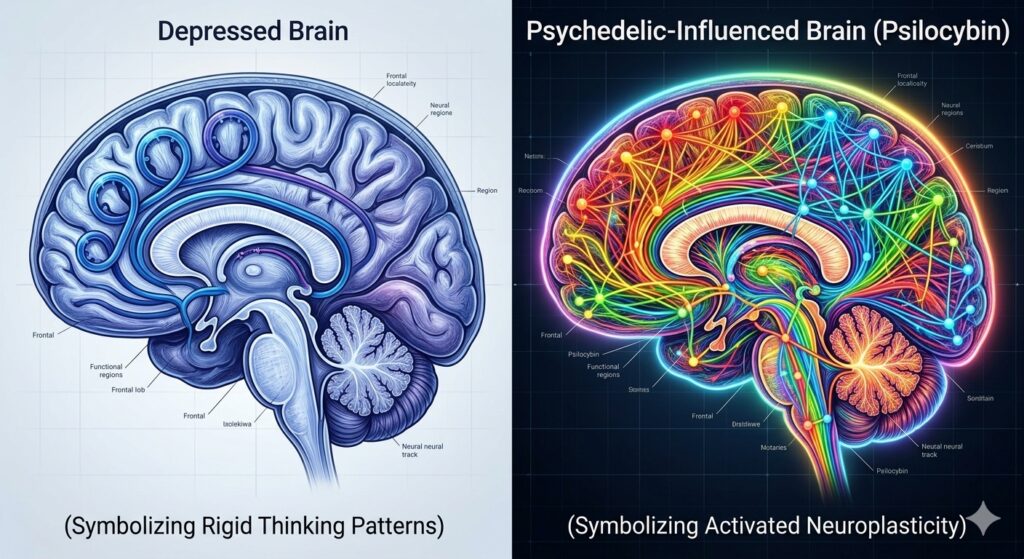
The primary reason for this shift isn’t spiritual—it’s neurological. Unlike traditional pills that must be taken daily, Psilocybin treatment works by inducing a state of heightened Neuroplasticity.
Think of the brain like a snowy hill where paths (habitual thoughts) have become deep ruts. Psychedelics act like a fresh snowfall, allowing the “skier” to create entirely new paths of thinking and behavior.
A 2023 study published in The New England Journal of Medicine demonstrated that a single 25mg dose of psilocybin significantly reduced depression scores for up to 12 weeks. This “one-and-done” or “episodic” model is disrupting the entire pharmaceutical industry’s recurring revenue model.
MDMA-Assisted Therapy: The Gold Standard for PTSD?
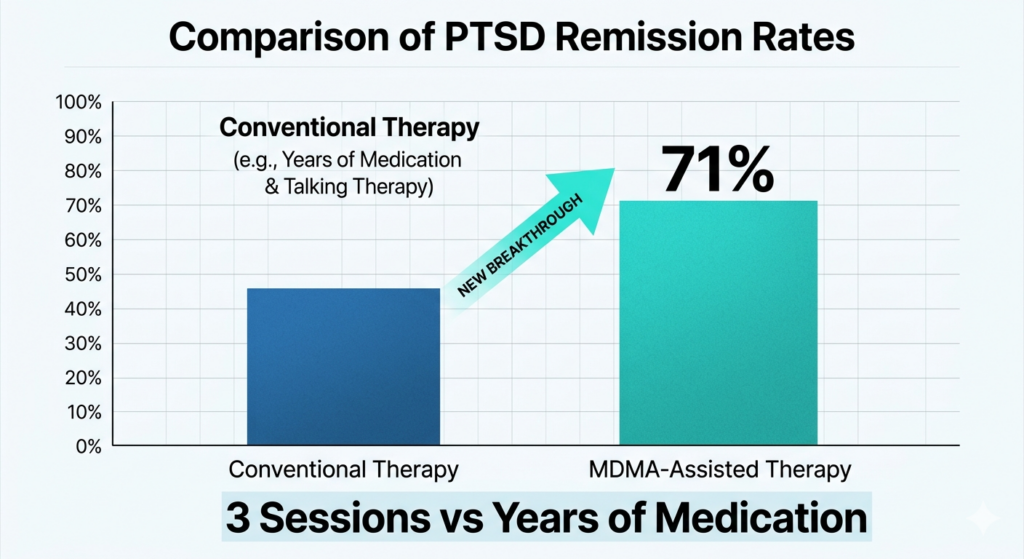
While Psilocybin tackles depression, MDMA is carving a path for trauma. The FDA has been closely monitoring Clinical trials for depression and PTSD, specifically focusing on the MAPS (Multidisciplinary Association for Psychedelic Studies) Phase 3 results.
In these trials, 71% of participants who received MDMA-assisted therapy no longer met the diagnostic criteria for PTSD after three sessions. This isn’t just a slight improvement; it is a clinical remission that was previously thought impossible for chronic sufferers.
On Twitter (X), veterans’ advocacy groups are calling this “the most significant breakthrough in 50 years.” But if it’s so effective, why has it taken until 2026 to see real movement in the legal landscape?
“Isn’t This Just Legalizing Recreational Drugs?”
The most common pushback from skeptics involves the fear of addiction and public safety. People often ask, “Are we just opening the door for everyone to use drugs under the guise of medicine?”
The answer lies in the “Assisted” part of the therapy. These are not take-home prescriptions; they are highly controlled clinical sessions.
In a clinical setting, the substance is a catalyst, but the integration with a licensed therapist is the cure. Patients are monitored for 6-8 hours in a safe environment, ensuring that the “breakthrough” doesn’t become a “breakdown.”

The 2026 FDA Landscape: What’s Actually Approved?
As of early 2026, the status of FDA approved psychedelics is reaching a tipping point. While the bureaucratic process is slow, the “Breakthrough Therapy” designation given to MDMA and Psilocybin has fast-tracked their review.
Financial analysts from Bloomberg and Reuters estimate the psychedelic medicine market could reach $8.1 billion by 2028. This economic pressure, combined with a desperate need for veteran care, is pushing the FDA toward final rescheduling.
But even with approval, there is a massive hurdle that most people aren’t talking about yet. Can you guess what it is?
The Insurance and Accessibility Barrier
Even if the FDA gives the green light, a single session of Psychedelic Therapy can cost between $2,000 and $15,000 due to the required presence of two therapists for several hours.
The current debate in 2026 has moved from “Does it work?” to “Who can afford it?” Major insurers like Aetna and UnitedHealth are currently reviewing how to code these sessions—a move that will determine if this therapy is for the masses or only the elite.
Without insurance coverage, these medical miracles may remain out of reach for the very populations—low-income communities and marginalized groups—that suffer the highest rates of trauma.
The Verdict: A New Psychiatry
The transition we are seeing in 2026 is the end of the “Band-Aid” era of psychiatry. We are moving toward a model that values profound, singular experiences that lead to long-term healing.
As one top-voted comment on a recent YouTube documentary about the Johns Hopkins trials said:
“I didn’t lose myself; I finally found the person I was before the trauma took over.”
Whether you are a skeptic or a supporter, the data is undeniable. The “Psychedelic Renaissance” is no longer a subculture—it is the future of medicine.
Sources:
- New England Journal of Medicine (NEJM) – Psilocybin vs. Escitalopram Study
- MAPS (Multidisciplinary Association for Psychedelic Studies) Phase 3 Clinical Results
- Johns Hopkins Center for Psychedelic & Consciousness Research 2025-2026 Outlook
- Bloomberg Business: The Economics of Psychedelic Medicine (2026 Report)
Disclaimer: This content is for informational purposes only and is not intended as medical advice, diagnosis, or treatment. Always seek the advice of a qualified healthcare provider with any questions you may have regarding a medical condition.