


For years, the FDA rejected nearly every fruit-flavored vape application. Then, in 2026, everything changed. And that’s exactly why people are so angry.
If you’ve been following vaping news lately, you’ve probably seen headlines claiming that flavored vapes are making a comeback in the United States.
For some people, that’s great news. For others, it’s a public health disaster waiting to happen.
The controversy exploded after the FDA authorized the marketing of several flavored vape products, including fruit flavors like mango and blueberry. The decision immediately triggered criticism from health organizations, praise from vaping advocates, and heated debates across social media.
So what actually happened?
And why is this FDA decision creating so much outrage?
Let’s dig into the facts.
The FDA’s Long War Against Flavored Vapes
To understand today’s controversy, we need to go back a few years.
Beginning around 2019, regulators became increasingly concerned about what many called the “youth vaping epidemic.”
According to U.S. health agencies, flavored vaping products became extremely popular among teenagers. Fruit, candy, dessert, and mint flavors were often cited as major reasons younger users tried vaping in the first place.
As a result, the FDA spent years rejecting applications for flavored vape products.
In fact, the agency denied marketing applications for more than a million flavored vaping products over several years. The FDA repeatedly argued that companies failed to provide enough evidence showing that the benefits for adult smokers outweighed the risks to youth.
Even the U.S. Supreme Court sided with the FDA in 2025, upholding the agency’s authority to reject certain fruit-flavored vape products.
For many observers, the message seemed clear:
Fruit-flavored vapes were effectively dead in the United States.
Then came 2026.
What Changed?
In May 2026, the FDA authorized four electronic nicotine delivery system (ENDS) products from Glas.
The approved lineup included:
- Mango
- Blueberry
- Classic Menthol
- Fresh Menthol
Most importantly, these became the first FDA-authorized fruit-flavored vaping products in U.S. history.
That alone would have been major news.
But the timing made it even more controversial.
Reports from Reuters and other outlets indicated that political pressure surrounding vaping policy had increased significantly. Critics argued that the FDA appeared to be softening its stance after years of strict enforcement.
Supporters saw the decision differently.
They argued that adult smokers deserve access to lower-risk alternatives and that the FDA finally followed the science.
Why Supporters Are Celebrating
The pro-vaping argument is actually pretty simple.
Millions of Americans still smoke traditional cigarettes.
According to FDA statements, more than 25 million Americans continue to smoke combustible tobacco products. Smoking remains one of the leading causes of preventable death in the country.
Supporters argue that if smokers are going to switch away from cigarettes, flavor matters.
Many former smokers report that tobacco-flavored alternatives don’t fully replace cigarettes. Fruit and menthol options may help some smokers completely transition away from smoking.
The FDA itself stated that approved products must demonstrate that marketing them is “appropriate for the protection of public health.” That means regulators concluded that the potential benefits for adult smokers outweighed the risks under specific conditions.
Some approved products also include age-verification technologies and marketing restrictions intended to reduce youth access.
From this perspective, the decision is not about promoting vaping.
It’s about reducing cigarette smoking.

Why Critics Are Furious
Now let’s look at the other side.
Public health organizations reacted almost immediately.
The American Lung Association sharply criticized the FDA’s decision, arguing that fruit flavors such as mango and blueberry have historically been associated with youth appeal. The organization warned that authorizing these products could reverse years of progress against youth nicotine addiction.
Critics point to a simple question:
If regulators spent years saying fruit flavors attract teenagers, why are those same flavors now being authorized?
That’s the heart of the outrage.
Many health advocates believe the FDA has fundamentally changed its position.
The concern isn’t only about today’s approved products.
It’s about what happens next.
If one company receives authorization for fruit flavors, other manufacturers may view that as a signal that future approvals are possible.
For critics, this decision could open the door to a much larger flavored-vape market.
The Numbers Behind the Debate
Data plays a huge role in this conversation.
Supporters focus on smoking reduction.
Critics focus on youth usage.
Research cited by public health groups shows that flavored products remain overwhelmingly popular among younger vape users. Some estimates suggest nearly 90% of youth who vape use flavored products.
At the same time, regulators reviewing these applications concluded that specific safeguards could limit youth access while preserving benefits for adult smokers.
This creates a difficult policy question.
Should regulators prioritize helping current smokers switch away from cigarettes?
Or should they prioritize minimizing any possibility that new young users become addicted?
Reasonable people often answer that question differently.
What Are People Saying Online?
Community reactions have been intense.
On Reddit and other discussion platforms, comments generally fall into three camps.
Group A: Harm Reduction Supporters
These users argue that adults should have access to alternatives that are potentially less harmful than smoking.
Many ask why flavored alcohol products are legal while flavored vape products face much heavier restrictions.
Group B: Public Health Advocates
This group believes flavored products are simply too attractive to teenagers.
Their concern is that any increase in availability could lead to a new generation becoming addicted to nicotine.
Group C: Political Critics
Another large segment focuses on the political aspect.
Many discussions online center less on vaping itself and more on whether political pressure influenced regulatory decisions.
Regardless of which side people support, one thing is obvious:
The debate is no longer just about vaping.
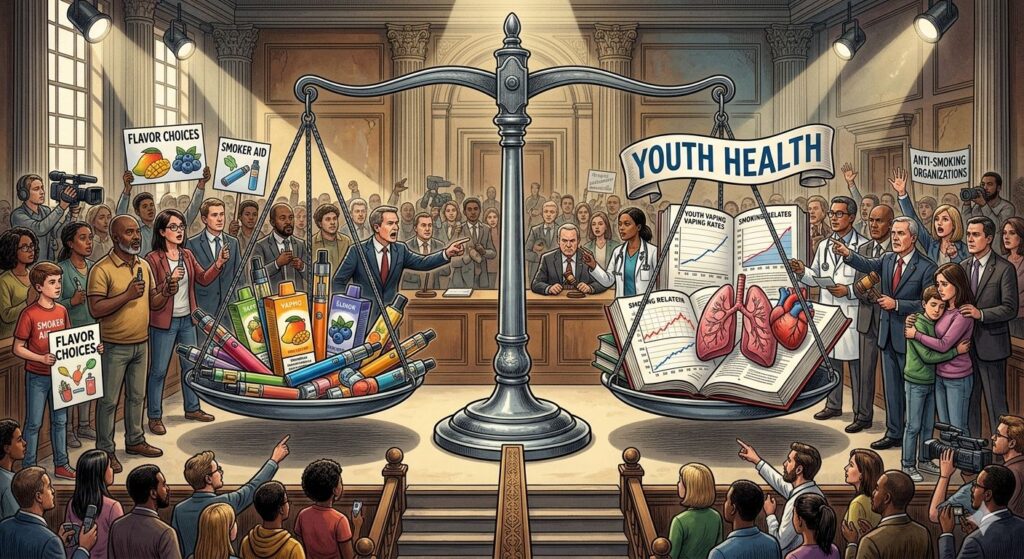
It’s become a debate about public health, regulation, corporate influence, and personal freedom.
What Happens Next?
The FDA’s 2026 authorization does not mean every flavored vape product can suddenly return to store shelves.
Each application still undergoes individual scientific review.
The agency has repeatedly stated that authorization of one product does not automatically apply to other products or companies.
However, the decision clearly signals a potential shift.
For years, approval of fruit-flavored vaping products seemed nearly impossible.
Today, that assumption is no longer true.
Companies across the vaping industry are watching closely.
So are public health organizations.
And so are lawmakers.
Final Thoughts
The latest FDA decision represents one of the most significant turning points in U.S. vaping regulation since the youth vaping crisis began.
Supporters see a science-based victory for adult smokers looking for alternatives to cigarettes.
Critics see a dangerous step backward that could increase youth nicotine exposure.
The truth is that both sides are focused on real concerns.
One side worries about millions of smokers who still use combustible cigarettes.
The other worries about millions of young people who could be exposed to products designed with appealing flavors.
Whether this decision ultimately improves public health or creates new problems will likely depend on one thing:
Can regulators successfully keep these products away from teenagers while making them available to adult smokers?
Sources
FDA Expands Market Access, Authorizes New ENDS Products
FDA Authorizes Menthol E-Cigarette Products
Reuters Coverage of FDA Fruit-Flavored Vape Decision
Reuters Coverage of NJOY Authorization
American Lung Association Statement on FDA Flavored Vape Decision
American Heart Association on Supreme Court Vape Ruling
Reddit Discussion on FDA Flavored Vape Authorization
Reddit Community Reactions to Flavored Vape Policy Debate
Washington Post Analysis of FDA Vape Policy Shift
Disclaimer: This content is for informational purposes only and is not intended as medical advice, diagnosis, or treatment. Always seek the advice of a qualified healthcare provider with any questions you may have regarding a medical condition.