
Have you ever wondered why you feel chronically fatigued, suffer from unexplained headaches, or experience sudden skin flare-ups?
The answer might not be in your DNA or your diet—it might be in the very walls, floors, and air of your home.
While we consider our homes a sanctuary, modern living has introduced an invisible cocktail of chemicals into our private spaces.
From the “new car smell” of a sofa to the non-stick coating on your favorite pan, our environment is speaking to our biology in ways we are only beginning to understand.
1. The Invisible Guests: VOCs and Indoor Air Quality
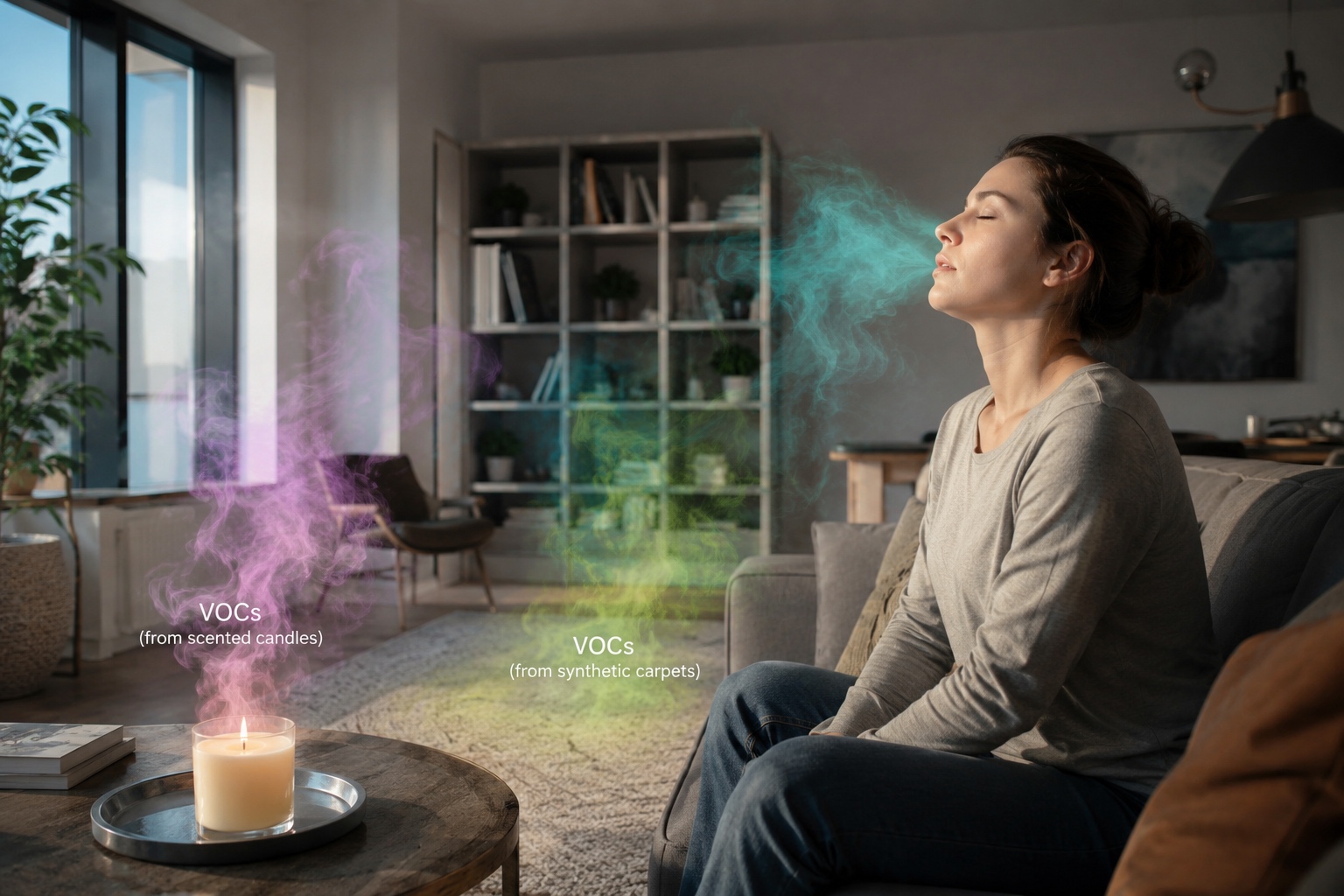
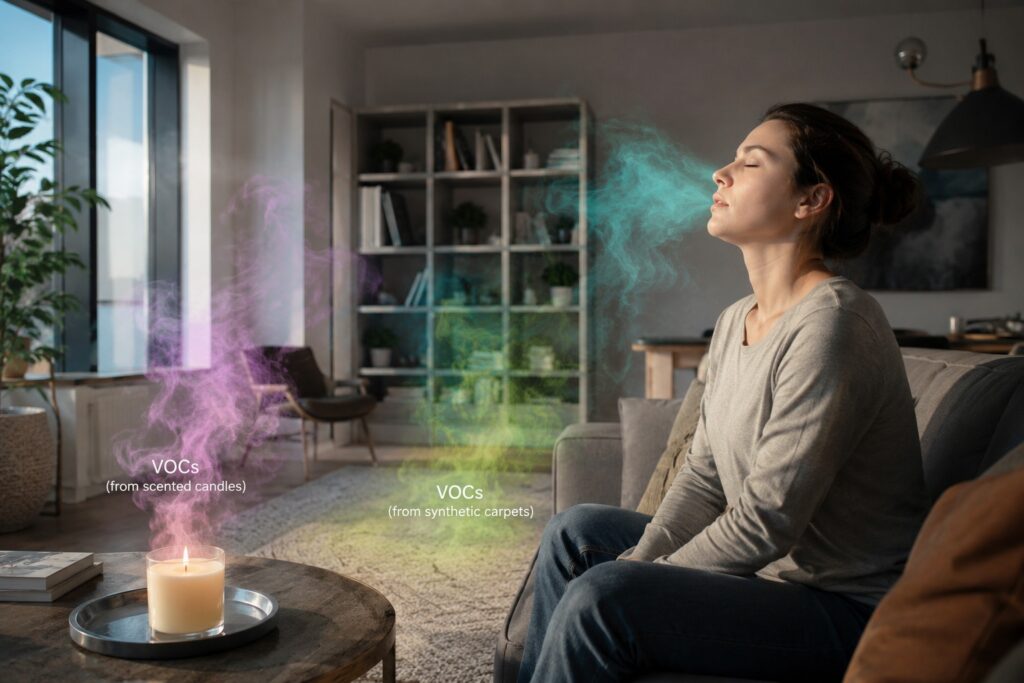
According to the U.S. Environmental Protection Agency (EPA), indoor levels of pollutants may be two to five times higher than outdoor levels.
Given that the average person spends about 90% of their time indoors, this is a significant health concern.
The primary culprits are Volatile Organic Compounds (VOCs). These are emitted as gases from certain solids or liquids, including paints, cleaning supplies, and even “air fresheners.”
Statistical Insight: A study published in Science of The Total Environment found that everyday household products now contribute as much to atmospheric air pollution as motor vehicles do.
2. The “Forever Chemicals” in Your Kitchen
Recently, the global community has been buzzing about PFAS (Per- and polyfluoroalkyl substances). Often called “forever chemicals” because they don’t break down in the environment or the human body, these are found in non-stick cookware, stain-resistant fabrics, and food packaging.
Recent News Highlight: In 2024, several U.S. states and EU countries have moved to implement stricter bans on PFAS in consumer products after research linked exposure to hormonal disruptions and increased cancer risks.
On platforms like Reddit (r/Biohacking and r/ZeroWaste), users are increasingly sharing their “swaps.”
- “I ditched my Teflon pans for cast iron and stainless steel, and my chronic inflammation markers actually went down,” one user shared in a viral thread.
3. The Microplastic Menace Under Your Feet
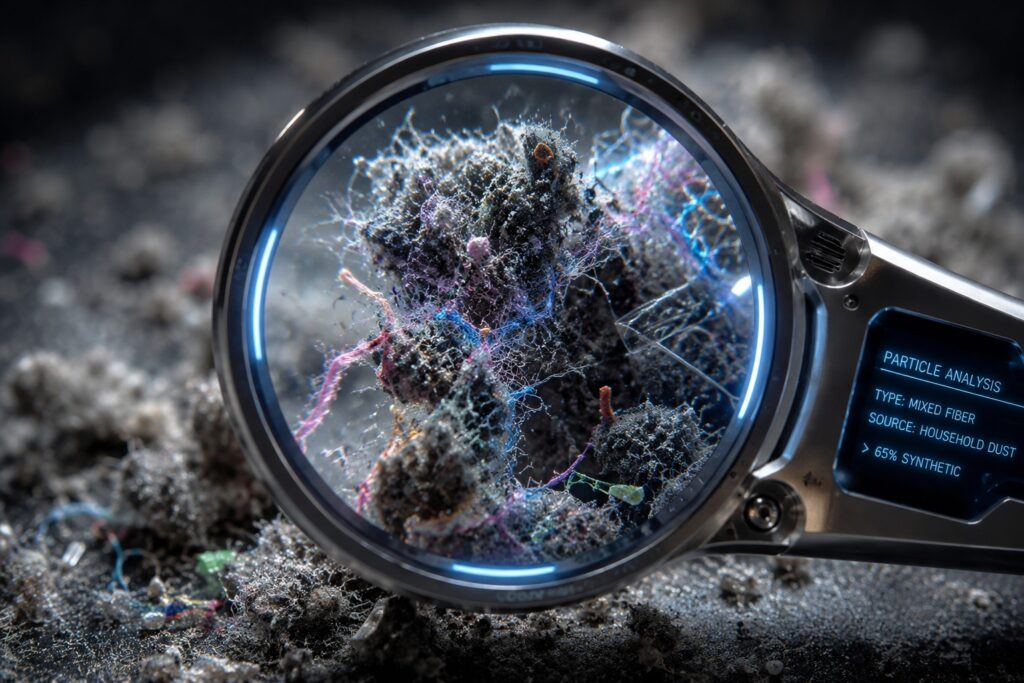
It’s not just chemicals; it’s physical particles. Microplastics are now being found in indoor dust at alarming rates. Synthetic carpets and polyester clothing shed thousands of tiny fibers that we unknowingly inhale.
The Data: Research from the University of Newcastle suggests that humans could be ingesting or inhaling up to 5 grams of plastic every week—the equivalent of a credit card.
4. How to Start Your Toxic-Free Journey
Transitioning to a “Toxic-Free Lifestyle” isn’t about achieving perfection overnight; it’s about making “Conscious Swaps.”
- Open Your Windows: The simplest way to reduce VOC concentrations is ventilation. Aim for 10-15 minutes of cross-breeze daily.
- Choose “Fragrance-Free”: In the world of labeling, “Fragrance” is often a loophole for thousands of undisclosed chemicals (phthalates).
- Invest in an Air Purifier: Look for units with HEPA and Activated Carbon filters to trap both particles and gases.
Your Home, Your Health
The trend toward “Clean Living” is more than just a marketing buzzword; it’s a necessary response to an increasingly synthetic world.
By understanding what is secretly affecting your health, you take back control of your sanctuary.
Is it time to audit your home? Start with one room at a time today!
Sources & References
- EPA (Environmental Protection Agency): Technical Overview of Volatile Organic Compounds
- Harvard Health Publishing: The danger of “forever chemicals”
- The Guardian News: PFAS ‘forever chemicals’ explained and recent global bans
- Science of The Total Environment: Study on Household Chemical Emissions (2023/2024)
- Reddit Community: Trends from r/HealthyHome and r/NonToxic
Disclaimer: This content is for informational purposes only and is not intended as medical advice, diagnosis, or treatment. Always seek the advice of a qualified healthcare provider with any questions you may have regarding a medical condition.