
Modern wellness has transformed your bedroom into a high-tech laboratory where sleep is no longer just rest—it is a competitive sport.
The New Bedtime Obsession: What is Sleepmaxxing?
Tonight, millions of adults will go to bed wearing mouth tape, special blue-light blocking glasses, and a ring that tracks their every heartbeat.
This isn’t a sci-fi movie; it is the reality of Sleepmaxxing, the latest viral phenomenon taking over TikTok and tech-wellness circles.
According to a recent 2026 Amerisleep survey, nearly 48% of Gen Z and 43% of Millennials are actively reshaping their lives around this new trend.
But is buying hundreds of dollars worth of gadgets truly the key to unlocking perfect rest?
The answer isn’t found in a checkout cart, but rather in how you train your body clock. While social media influencers showcase 4-hour evening wind-down routines, real data shows that consistency outpaces luxury.
If you want to maximize your deep sleep phases without losing your mind, you need to master the core principles of scientific Sleep Optimization.
Let’s dive into the five non-negotiable rules of Biohacking Sleep that will actually change your nights.
Rule 1: The Cold-Room Mandate (16–19°C)
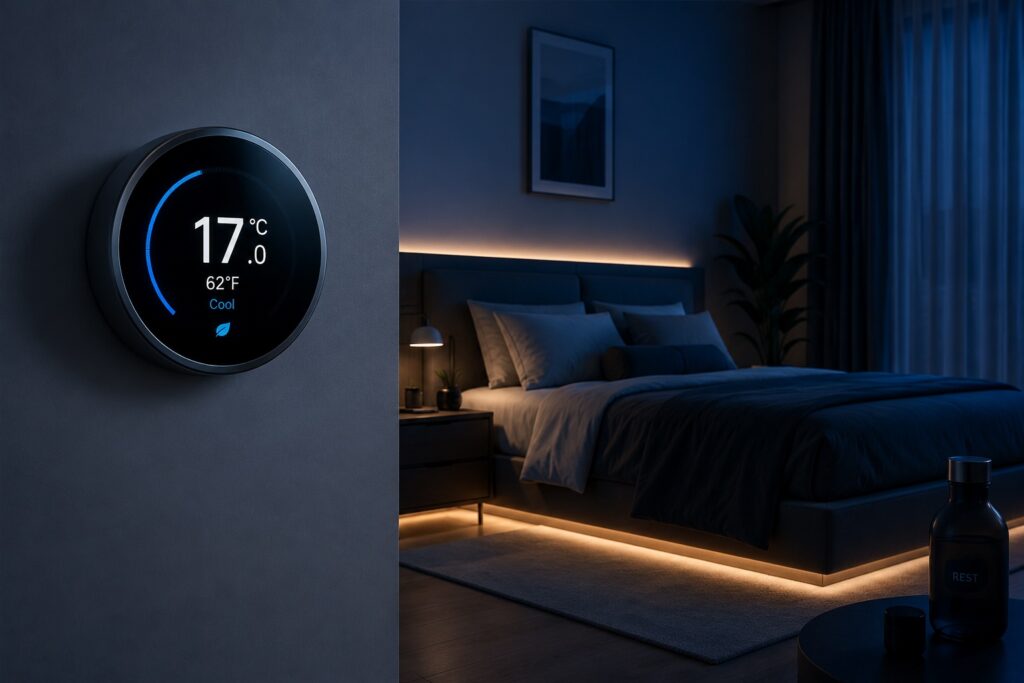
Your body cannot enter deep, restorative sleep if your bedroom feels like a sauna. To initiate sleep, your core body temperature must naturally drop by approximately 1°C.
Setting your thermostat between 16°C and 19°C (60–66°F) signals your brain that it is time to rest. This simple temperature shift reduces midnight tossing and turning drastically.
Rule 2: The 3-2-1 Lifestyle Cutoff
One of the most effective frameworks born from the online community is a simple countdown before bed.
Three hours before bed, you stop eating heavy meals; two hours before, you stop working; and one hour before, you shut off all screens.
This rule directly protects your natural melatonin production from being crushed by blue light and late-night stress.
It turns sleep preparation into a passive, natural transition instead of a forced event.
Rule 3: The Magnesium Glycinate Hack
If you scroll through any wellness forum, you will see thousands of comments praising magnesium glycinate as the holy grail of deep sleep secrets. This specific mineral helps regulate your nervous system and binds to GABA receptors, which quiet down brain activity.
A clinical study published in the Journal of Research in Medical Sciences proved that magnesium supplementation significantly improves sleep efficiency and insomnia scores.
However, it works best if you are already deficient, so focus on rich dietary sources like pumpkin seeds and spinach first.
Rule 4: Protect Your Wake-Up Time, Even on Weekends
Many people believe that sleeping in until 10:00 AM on a Sunday helps them “catch up” on lost sleep from a busy work week.
However, data shows that a 90-minute weekend lie-in does more damage to your Monday morning energy than skipping a sleep supplement would. Your circadian rhythm thrives on absolute predictability.
Waking up at the exact same time every day stabilizes your body’s internal master scheduler.
Rule 5: Don’t Let Your Sleep Tracker Trigger “Orthosomnia”
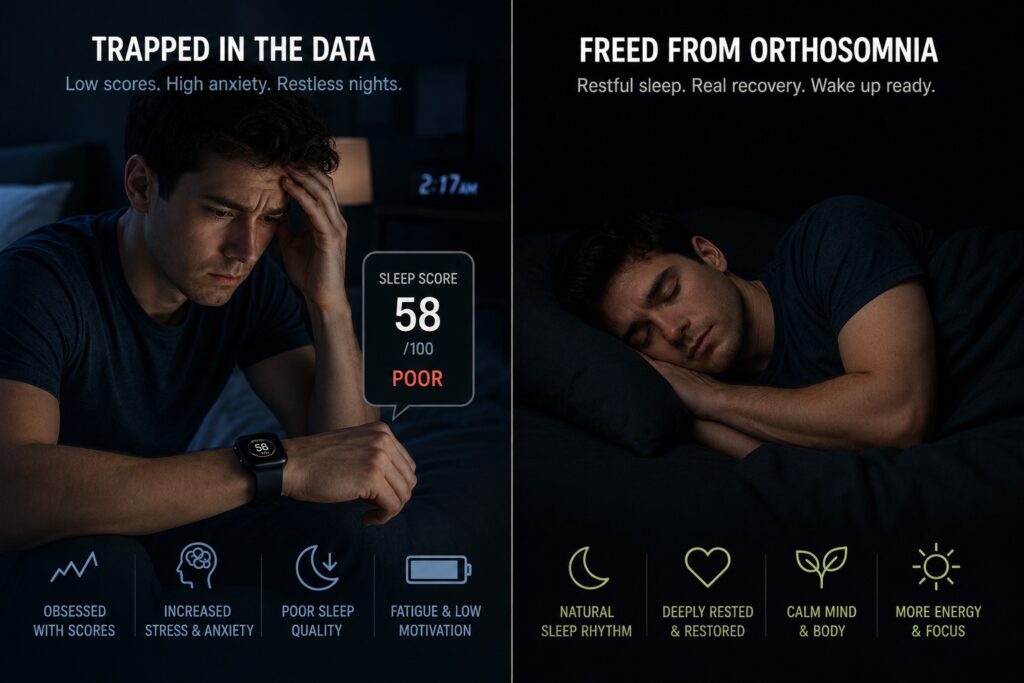
The rise of Sleep Tracking Technology has given us unprecedented data, but it has also created a dark side. The American Academy of Sleep Medicine (AASM) revealed that nearly half of US adults now use a wearable tracker, yet 29% of them say that seeing a low sleep score actually makes them feel worse.
This text-fueled condition is known as orthosomnia—an unhealthy obsession with achieving perfect sleep metrics.
[Traditional Insomnia] ---> Inability to fall asleep due to stress/anxiety
[Orthosomnia]           ---> Inability to sleep due to anxiety ABOUT sleep data
But Wait… Isn’t Deep Sleep the Only Metric That Matters?
You might think that a perfect night means maximizing your deep sleep score on your smartwatch above all else.
In reality, sleep psychologists point out that healthy sleep is naturally cyclical, and humans spend 45% to 55% of the night in lighter Non-REM2 sleep. Forcing yourself to hit an arbitrary statistical goal on an app will only raise your cortisol levels.
The true secret of How to Improve Sleep Quality lies in building simple, stress-free habits.
Optimize your room, set a firm wake-up time, and let your body do the rest naturally.
Sources & References
- Amerisleep (2026): The Rise of Sleepmaxxing: How Americans Are Perfecting Their Sleep Routines (Survey of 1,000 U.S. Adults).
- American Academy of Sleep Medicine (AASM) Survey: Data on the Rise of Sleep Tracking Devices and Orthosomnia Anxiety.
- Journal of Research in Medical Sciences: Randomized Controlled Trial on the Effects of Magnesium Supplementation on Insomnia.
- Expert Commentary: Dr. Chelsea Perry (Sleep Solutions) & Dr. Nerina Ramlakhan (Neurophysiologist).
Disclaimer: This content is for informational purposes only and is not intended as medical advice, diagnosis, or treatment. Always seek the advice of a qualified healthcare provider with any questions you may have regarding a medical condition.