If you have soft cheese in your fridge right now, you need to check its label immediately because a massive safety recall has expanded to all cheese products from a major dairy after being linked to hospitalizations and a tragic death.
The Cold Truth in Your Fridge
Imagine opening your refrigerator on a warm summer afternoon to make a fresh salad. You reach for that smooth, creamy ricotta or some traditional cuajada to crumble over your dish. It looks perfect, smells fresh, and tastes delicious, but a hidden danger might be lurking inside.
A quiet but serious food safety emergency is unfolding across multiple states right now. The U.S. Food and Drug Administration (FDA) and the Centers for Disease Control and Prevention (CDC) have sounded a major alarm. What started as a limited warning has officially exploded into a full-scale recall of every single cheese product made by a well-known regional manufacturer.
This means your favorite taco night ingredient or lasagna filling could be part of a major federal investigation. The culprit behind this mess is a microscopic troublemaker called Listeria monocytogenes. It is a type of bacteria that loves cold spaces and can make people incredibly sick.
The Investigation: What is Happening?
On June 18, 2026, the Clover Hill Dairy recall took a dramatic turn when the company officially expanded its voluntary recall. Initially, the warning only applied to specific batches of their soft ricotta and requesón cheese, which is a popular Spanish-style soft cheese. However, investigators soon realized that the problem was much larger than they first thought.
The Maryland Department of Health stepped in and officially suspended the facility’s operating license on May 30, 2026. This drastic measure was taken after environmental testing confirmed that the dangerous bacteria was present inside the Mechanicsville, Maryland manufacturing plant. State health officials found that the contamination matched an active outbreak strain that has been making people sick.
The scale of this Soft cheese recall 2026 is truly alarming because of how the cheese is sold. Clover Hill Dairy did not just sell cheese under its own name at local farmers markets and retail stores. Instead, they shipped massive bulk buckets—specifically 2-gallon and 5-gallon sizes—to various third-party distributors who repackaged the cheese under completely different brand names.
The Brands and Stores You Need to Watch
Because of this bulk distribution system, you cannot simply look for the words “Clover Hill Dairy” on the front of your cheese package. The contaminated cheese was redistributed and sold under several popular brand names that line the shelves of major grocery chains. Some of these include Target cheese recall brands and popular Hispanic food labels like Kesso cheese recall, Quesos La Ricura, Izalco, De Mi Pueblo, and Rio Lindo.
Additionally, other distributors like La Ceiba Foods Latin Market and Nelson & Isa Lacteos have issued their own urgent recalls for requesón cheese tied to this exact source. These products were sold in convenient 10-ounce, 12-ounce, and 14-ounce plastic clamshell containers. They flooded retail locations, supermarkets, and restaurants across Maryland, Virginia, Washington D.C., New York, New Jersey, and North Carolina.
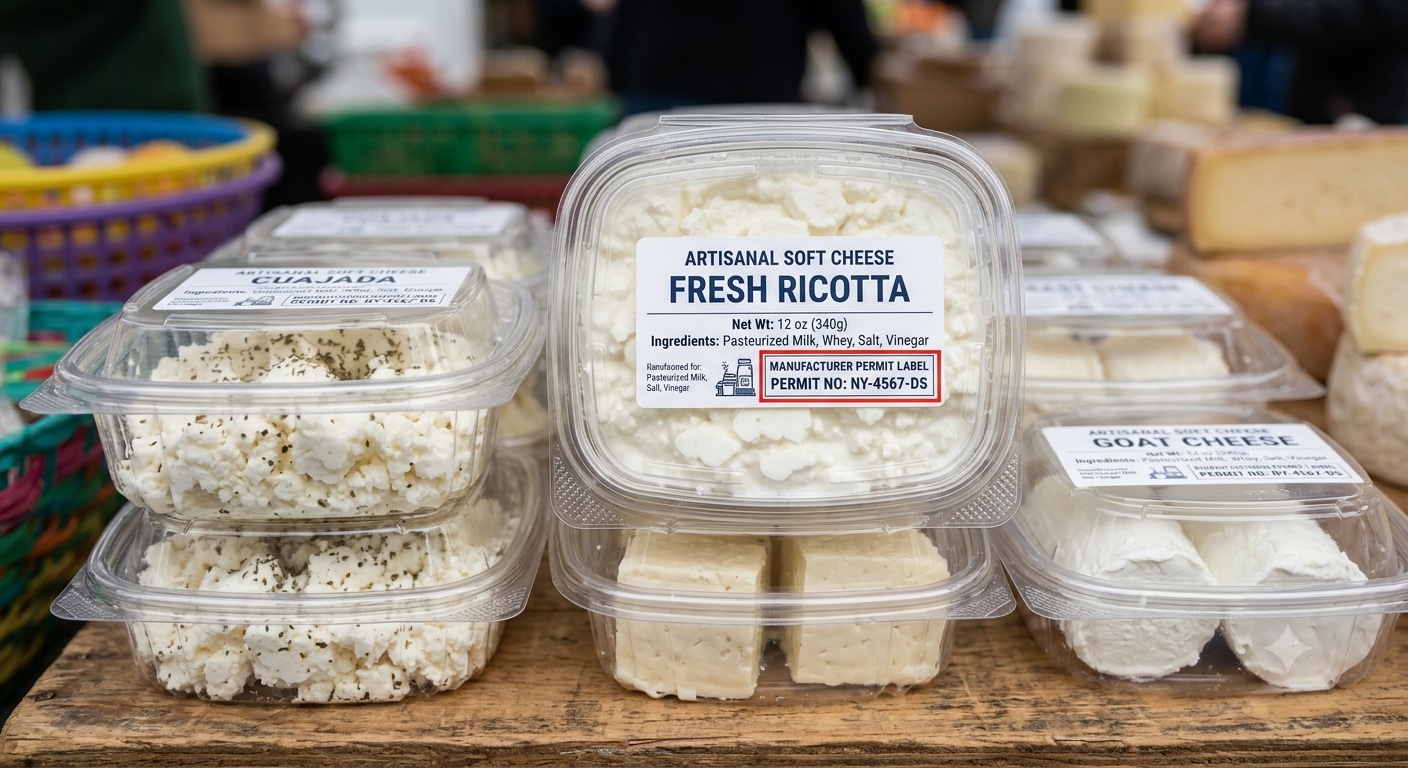
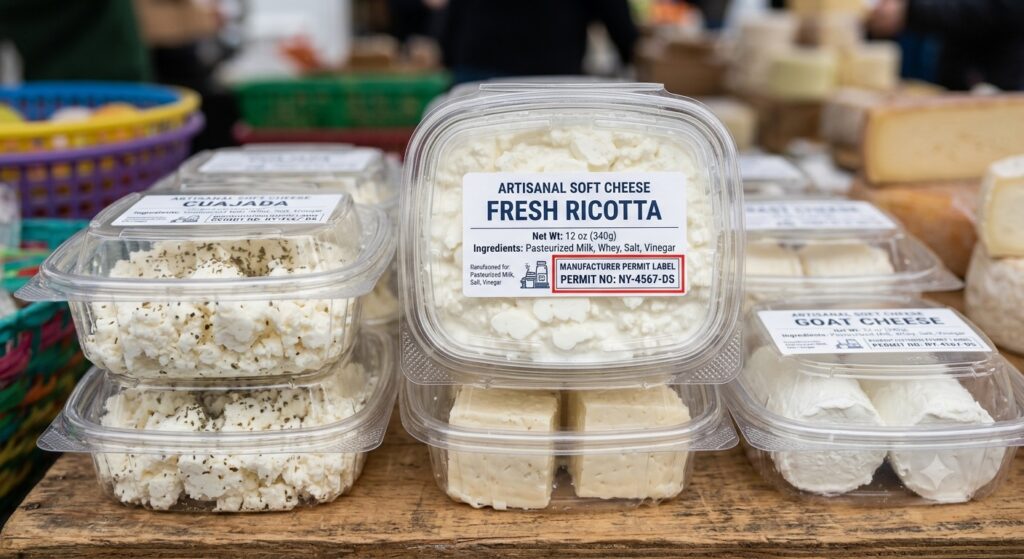
The real danger is that retail stores often slice, wrap, or repackage these cheeses locally. This means your cheese might arrive in a plain plastic container with only a basic store label. If you are unsure, federal officials urge you to look closely at the fine print on the package for the manufacturer permit or plant number “24-128”, which is the unique code for the compromised facility.
By the Numbers: The Human Impact
This is not just a theoretical warning or a minor paperwork issue; the real-world data shows a severe impact on families. According to the official CDC investigation data, a total of 12 people have been infected with this specific outbreak strain across 4 different states. Out of those cases, 10 people required immediate hospitalizations due to the severity of their illness.
Tragically, health officials have also confirmed 1 death linked directly to this outbreak in Maryland. What makes this case even more complicated is its timeline. The CDC has traced infected patient samples dating all the way back from March 6, 2023, to June 2, 2026.
This multi-year data proves that the bacteria has been quietly persisting in the food supply chain for a long time. When epidemiologists interviewed the sick individuals, 90% of them reported eating cheese shortly before falling ill. Two specific individuals explicitly remembered eating the exact requesón cheese produced by Clover Hill Dairy.
But My Cheese Smells Fine! (Answering Your Doubts)
You might be looking at your cheese right now and thinking, “Well, it smells perfectly fine, it isn’t slimy, and it expires next month, so it must be safe.” This is a very common and dangerous misconception when it comes to foodborne bacteria. Unlike typical mold or spoilage yeast, Listeria does not change the flavor, smell, or appearance of your food at all.
You could eat a highly contaminated piece of cheese, think it tastes absolutely wonderful, and have no idea you just ingested a dangerous pathogen. Another common point of confusion is the pasteurization myth. Many people believe that if a cheese is made from pasteurized milk, it is 100% immune to bacteria.
While pasteurization kills bacteria during the initial milk processing, contamination can easily happen afterward during the cutting, packaging, or storing phases in an unsanitary facility. Once the bacteria enters a package of soft cheese, the moisture levels create an absolute paradise for it to multiply.
The Science of Listeria: Why It’s Different
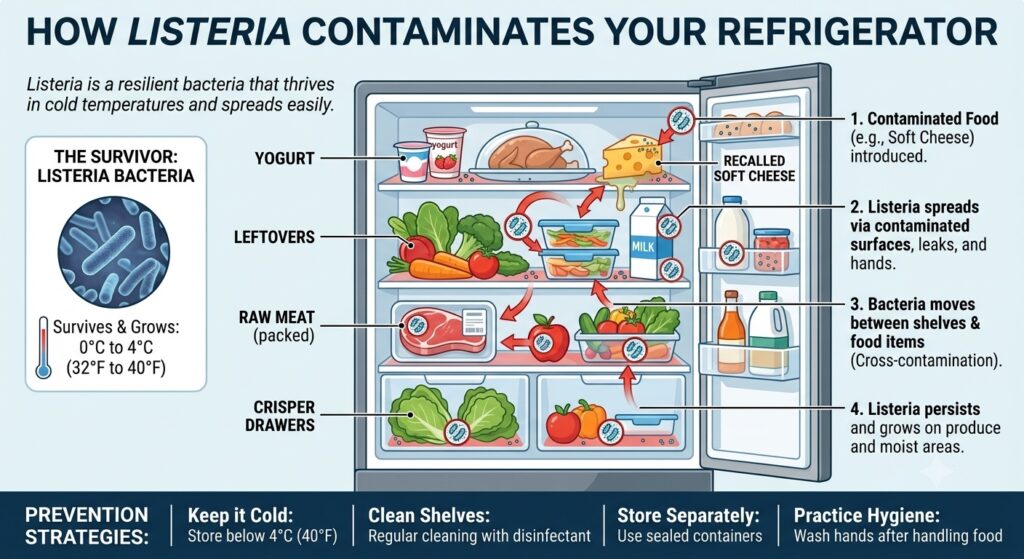
To protect your family, it helps to understand what makes this specific bacteria a unique threat compared to others like Salmonella. Most food bacteria hate the cold and stop growing when you put them inside a chilled environment. Listeria monocytogenes, however, is a psychological exception because it is psychrotrophic, meaning it can actively grow and multiply at standard refrigerator temperatures of 40°F (4°C) or lower.
Because it survives and thrives in the cold, a tiny amount of bacteria on a processing line can turn into a massive colony inside a closed grocery package. Furthermore, it easily hitches a ride onto other objects. If you touch infected cheese and then grab your refrigerator door handle, the bacteria can transfer to the handle and live there for days.
This creates a high risk of cross-contamination, where the bacteria spreads to your fresh vegetables, fruits, or lunch meats. It essentially turns your refrigerator into a cold ecosystem where the pathogen can move from shelf to shelf.
Spotting the Signs: Listeriosis Symptoms
When someone consumes contaminated food, they can develop an infection known as listeriosis. For a healthy adult with a strong immune system, the Listeriosis symptoms from cheese might feel like a typical, unpleasant case of food poisoning. You might experience a sudden high fever, severe headache, muscle aches, nausea, abdominal cramps, and diarrhea.
However, the bacteria becomes incredibly dangerous for specific high-risk groups. This includes adults aged 65 and older, individuals with weakened immune systems, and pregnant women. In fact, pregnant women are roughly 10 times more likely to get a Listeria infection than the general public.
While a pregnant woman might only experience mild, flu-like symptoms, the infection can pass through the placenta. This can lead to devastating consequences, including premature birth, severe newborn infections, miscarriage, or stillbirth. For older adults, the bacteria can enter the bloodstream or nervous system, causing stiff necks, loss of balance, confusion, and life-threatening convulsions.
The 70-Day Ticking Clock
Here is another fact that catches almost everyone off guard: the incredibly long incubation period of this illness. If you eat food contaminated with E. coli, you will usually feel sick within a couple of days. With Listeria, symptoms can take anywhere from a few days up to 70 days to fully appear.
This means if you ate a contaminated Ricotta listeria outbreak cheese package back in May, you could still potentially fall ill in July or August. This long delay makes it very difficult for doctors to diagnose the root cause of an illness without specific laboratory tests.
If you know you have consumed any of the recalled products over the past few weeks, you need to monitor your health closely. Do not hesitate to contact a healthcare provider immediately if you start developing unexplained fevers or severe headaches during this window.
Your Action Plan: What To Do Right Now
Now that you know the facts, it is time to take immediate action to secure your kitchen. Go to your refrigerator right now and look through your cheese drawer. Check every piece of soft or semi-soft cheese, including ricotta, requesón, cuajada, monterey jack, and cheddar.
If you find any product matching the recalled brands or bearing the plant number “24-128”, do not take a bite, do not feed it to your pets, and do not taste test it. Wrap it securely in a plastic bag so it cannot leak, and throw it directly into an outdoor trash can, or return it to the store for a full refund. If you threw away the original packaging weeks ago but suspect it might be part of the recall, err on the side of caution and discard it.
Your job does not end with throwing the cheese away; you must sanitize the entire area. Because the bacteria survives on cold surfaces, you need to thoroughly wash and sanitize your refrigerator shelves, drawers, and any kitchen counters that the cheese packaging touched. Use a solution of hot, soapy water followed by a diluted bleach rinse to ensure your fridge is completely safe.
Sources
- U.S. Food and Drug Administration (FDA): Outbreak Investigation of Listeria monocytogenes: Soft Cheese (June 2026)
- Centers for Disease Control and Prevention (CDC): Listeria Outbreak Linked to Soft Cheese – June 2026 Investigation
- FDA Safety Recalls: Clover Hill Dairy Expands Recall to Include All Clover Hill Dairy Brand Cheese
Disclaimer: This content is for informational purposes only and is not intended as medical advice, diagnosis, or treatment. Always seek the advice of a qualified healthcare provider with any questions you may have regarding a medical condition.
Great content! Keep up the good work!