


Ever wonder why your hospital bill feels like it was written in a secret language, and why it’s always… a lot? Well, buckle up, because there’s a pretty big story happening right now that could actually help bring those numbers down. The U.S. Department of Justice (DOJ) just took on one of the biggest hospital systems in Ohio — and won. Let’s break it down in plain English, no law degree required.
So What Actually Happened?
Back in February 2026, the DOJ and the Ohio Attorney General’s office filed a lawsuit against OhioHealth, a massive nonprofit hospital system that runs 16 hospitals and more than 200 outpatient clinics across Ohio. According to the lawsuit, OhioHealth is such a dominant player in the Columbus area — controlling around 35% of general hospital services there — that insurance companies basically had to include OhioHealth in their networks if they wanted to sell a health plan people would actually buy.
Here’s where it gets shady. The complaint says OhioHealth used that leverage to force insurers into what’s called an “all-or-nothing” contract.
Think of it like this: imagine a school cafeteria where one company supplies all the food, and they tell the school “you either buy everything from us — even the stuff you don’t want — or you get nothing at all.” That’s basically what OhioHealth allegedly did to insurers. If an insurance company wanted access to any OhioHealth hospital, they had to include all of them, even the pricier ones, in every single insurance plan they offered.
This made it nearly impossible for insurers to create cheaper, “budget-friendly” plans — like narrow networks (smaller lists of hospitals) or tiered networks (where you pay less if you pick a cheaper, still-good hospital). Basically, patients and employers lost the option to save money, and prices stayed high.

The Settlement: What’s Actually Changing
On June 16, 2026, OhioHealth and the DOJ filed a proposed settlement (also called a consent decree) in federal court. Here’s what it means in real terms:
- OhioHealth has to stop using “all-or-nothing” contract terms. Insurers will now be able to design plans that don’t have to include every single OhioHealth facility.
- The old contract clauses get voided. Any existing agreement with these restrictive terms gets wiped clean.
- OhioHealth can’t punish insurers for trying to offer cheaper, more competitive health plans going forward.
- A independent monitor will watch OhioHealth for five years, and the company has to send regular compliance reports to make sure they’re actually following through.
Interestingly, OhioHealth didn’t have to pay a single dollar in fines or penalties, and they didn’t admit to doing anything wrong. In their own statement, OhioHealth said these contract terms dated back nearly two decades and were originally meant to protect them from unfair insurance company practices — but that the healthcare and insurance world has changed a lot since then, so they’re moving on rather than fighting a long legal battle.
Acting Assistant Attorney General Omeed A. Assefi put it simply: this settlement is about restoring real competition so prices can actually come down for people living in the Columbus area.
Why This Isn’t Just an Ohio Story
Here’s the part that makes this way more interesting than just “one hospital in Ohio got in trouble.” This settlement seems to be part of a much bigger pattern.
Just weeks before the OhioHealth case wrapped up, the DOJ filed a nearly identical lawsuit against NewYork-Presbyterian, a huge hospital system in New York City, accusing it of the exact same “all-or-nothing” playbook — even though NewYork-Presbyterian has a smaller market share (around 25-35%) than people might expect for this kind of legal action. That detail is a big deal, because it suggests the DOJ isn’t just going after hospitals with total market domination anymore — they’re willing to challenge hospital systems even with moderate market power if the contract terms look anti-competitive.
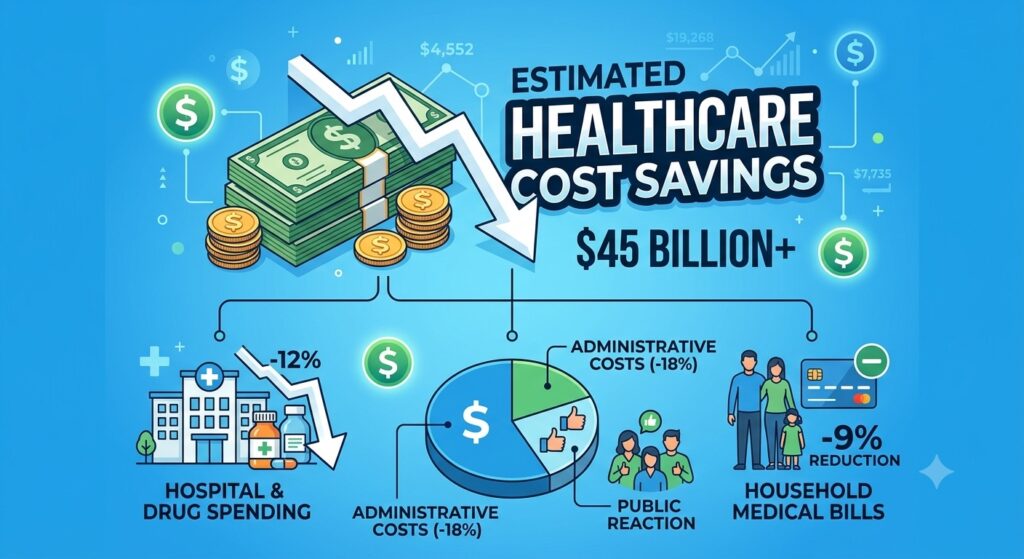
On top of that, just two days after the OhioHealth settlement, the White House Council of Economic Advisers (CEA) released a report estimating that banning these all-or-nothing, anti-steering, and anti-tiering contract practices nationwide could cut hospital prices by roughly 18% and save around $45 billion. That’s not pocket change — that’s a serious dent in the American healthcare bill.
Legal experts are already saying other hospital systems should be nervous. Katie Keith, director of Georgetown University’s Center for Health Policy and the Law, noted that hospital lawyers everywhere are probably scrambling right now to review their own insurer contracts, just in case they’re next.
What People Are Actually Saying About This
Public reaction has been pretty split along predictable lines, but there’s a common thread: people are tired of feeling powerless against huge medical bills.
On the more skeptical/critical side, some conservative commentary framed the settlement as a rare win worth highlighting. One opinion piece from RedState described it almost gleefully, essentially saying that while people have been complaining the government isn’t doing enough about high prices, this settlement shows the DOJ actually going after a system accused of “ripping off” insurers — and by extension, everyday people who pay for insurance one way or another, whether through paycheck deductions, ACA marketplace premiums, or Medicare Advantage plans.
On the consumer advocacy side, the general sentiment lines up with something a lot of us have probably said out loud before: when one hospital system controls too much of the market, they can basically set their own prices, and everyone else just has to pay up. Breaking that kind of monopoly power is seen as a direct path toward lower premiums and more choices for regular families.
It’s worth noting, though, that this settlement doesn’t guarantee your insurance bill drops next month. It removes a legal roadblock that was stopping insurers from designing cheaper plans — but insurers still have to actually build and offer those cheaper plans for you to see the benefit. Change like this tends to roll out slowly.
What Happens Next?
This settlement isn’t finalized yet. Under federal rules (called the Tunney Act), the proposed deal has to be published for public comment for 60 days before a judge in the Southern District of Ohio can approve it. Meanwhile, the DOJ’s case against NewYork-Presbyterian is still working its way through court, and it could set an even bigger precedent depending on how it turns out.
If you’re the type who likes to keep an eye on this stuff, this is really just chapter one. With the CEA report backing a potential nationwide policy shift, and the DOJ clearly signaling they’re open to going after hospitals even without massive market share, we could see similar lawsuits pop up against other regional hospital giants across the country.
The Bottom Line
Big hospital systems having “must-include-us-or-nothing” power over insurance companies has quietly been driving up healthcare costs for a long time. This OhioHealth settlement is the government’s clearest move yet to break that pattern, and it’s part of a bigger wave that includes a similar case in New York and a White House economic report pushing for a nationwide ban on these practices.
It won’t lower your bill overnight, but it’s a real crack in a system that’s needed one for a while.
Sources
- Justice Department press release – OhioHealth settlement
- Healthcare Dive – OhioHealth settles antitrust suit with the DOJ
- Fierce Healthcare – OhioHealth reaches settlement with DOJ, Ohio AG
- Goodwin Law – White House and DOJ Gain Early Traction Against Restrictive Hospital-Payor Contract Terms
- Crowell & Moring – OhioHealth Settlement and CEA Report Signal Broad Hospital Contracting Crackdown
- Morgan Lewis – CEA Report, OhioHealth Settlement Continue White House and DOJ Focus
- Morgan Lewis – DOJ Lawsuit Against OhioHealth Alleges Anticompetitive Contract Restrictions
- STAT News – DOJ’s swift win in OhioHealth case should have hospitals studying their contracts
- HFMA – DOJ’s OhioHealth antitrust settlement limits contract terms
- RedState – Trump DOJ Forces OhioHealth to Settle Price-Gouging Lawsuit (public commentary example)
- OhioHealth Newsroom – Official statement on the settlement
Disclaimer: This content is for informational purposes only and is not intended as medical advice, diagnosis, or treatment. Always seek the advice of a qualified healthcare provider with any questions you may have regarding a medical condition.