
Meta description (SEO): Discover how ultra-processed foods (UPFs) affect gut bacteria, cause inflammation, and may lead to leaky gut — and simple ways to protect your microbiome.
Let’s be honest — life is busy. Between school, work, and everything in between, it’s just easier to grab a bag of chips or throw a meal kit in the microwave than to cook something from scratch. No judgment here. Most of us do it every single day.
But here’s the thing: your gut might be paying a hidden price for all that convenience. Over the last few years, scientists have been digging into what’s really happening inside your stomach and intestines when you eat a diet full of ultra-processed foods (UPFs) — and honestly, the findings are kind of wild. We’re talking about ultra-processed foods gut bacteria damage, inflammation, and even something called “leaky gut.” Let’s break it all down in plain, simple language — no science degree required.
What Even Is an “Ultra-Processed Food”?
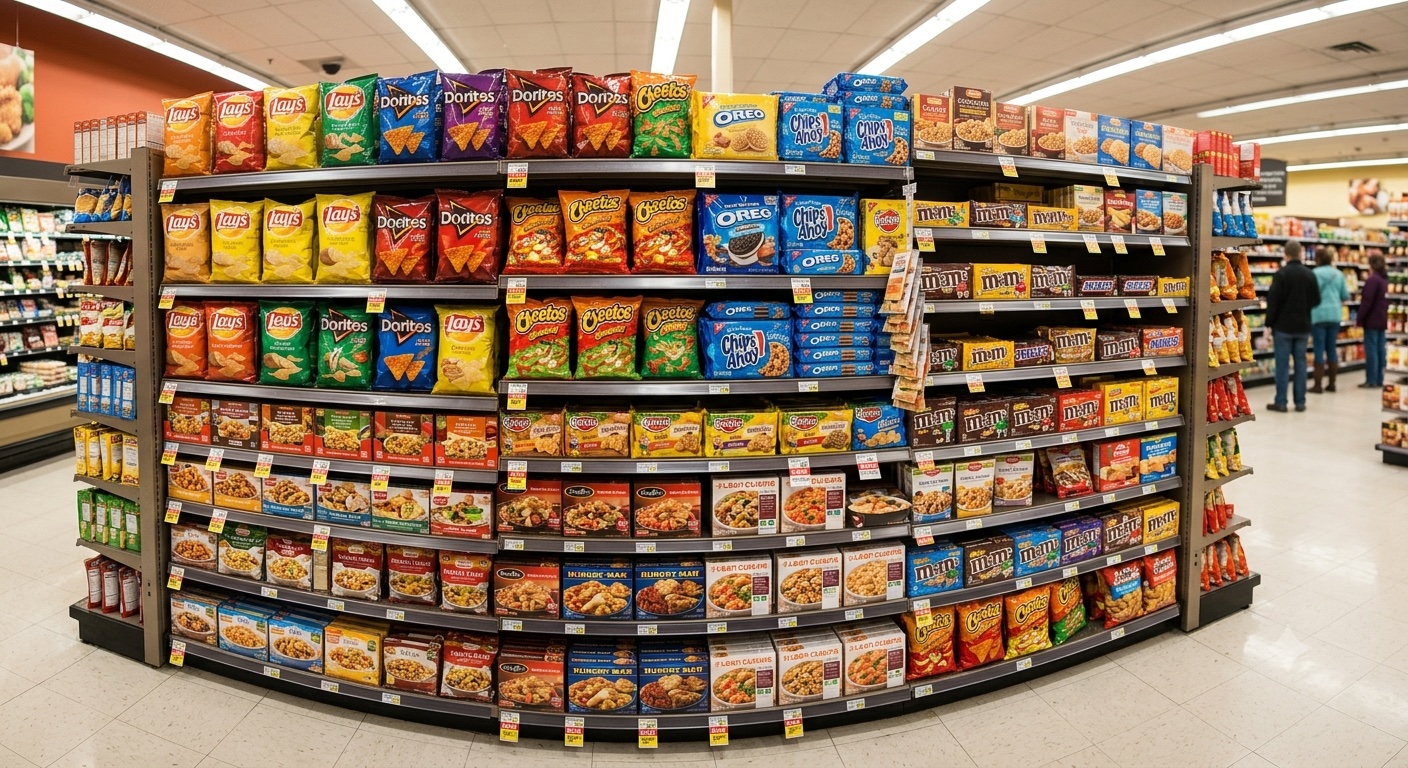
Okay, quick refresher. Not all processed food is bad — even frozen veggies or canned beans count as “processed” and they’re totally fine. The category we’re talking about here is ultra-processed. Think: instant noodles, packaged cookies, sugary cereals, frozen pizza, soda, and yes — a lot of meal kits and grab-and-go snacks.
Scientists use something called the NOVA classification system to sort foods by how much they’ve been industrially altered. UPFs are basically foods built in a factory using ingredients you’d never find in your kitchen — things like emulsifiers, preservatives, artificial flavors, and modified starches — combined to make something cheap, shelf-stable, and almost impossible to stop eating.
And here’s a wild stat: in places like the US and UK, ultra-processed foods now make up more than half of all the calories people eat in a day.
UPF Gut Microbiome Effects: What’s Actually Happening Inside You
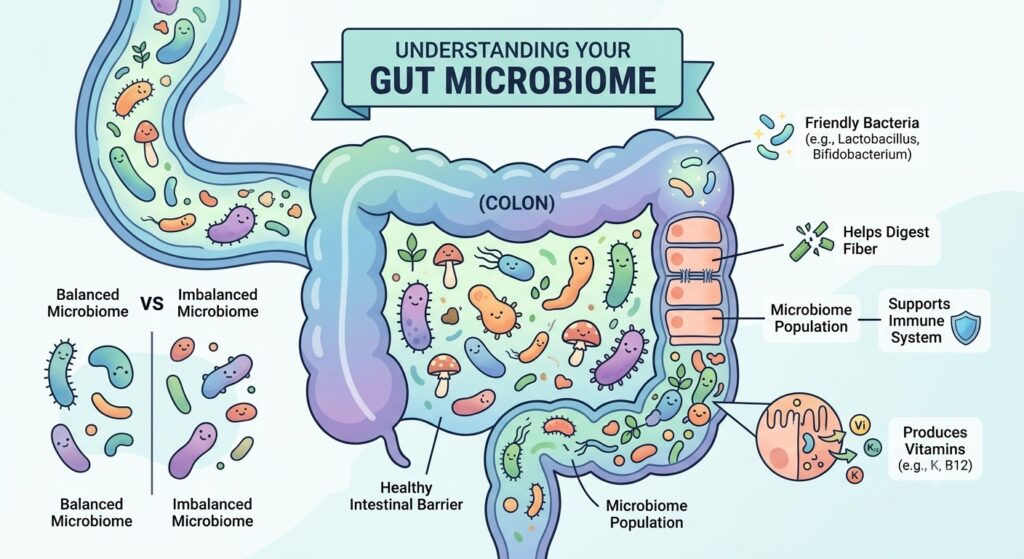
So what does “UPF gut microbiome effects” actually mean in real life? Your gut isn’t just a food tube — it’s home to trillions of bacteria that help you digest food, fight off germs, and even affect your mood. This whole community is called your gut microbiome, and it’s surprisingly picky about what it eats.
A detailed 2025 review published in the journal Nutrients looked at exactly this question, and the results weren’t great news for chip lovers. Researchers found that UPFs are linked to lower microbial diversity (basically, fewer “good” species living in your gut), a drop in beneficial bacteria like Akkermansia muciniphila and Faecalibacterium prausnitzii (two bacteria known for calming inflammation), and an increase in the more troublesome, pro-inflammatory bacteria.
Basically, imagine your gut as a garden. Whole foods — veggies, fruits, whole grains — are like fertilizer for the “good” plants (bacteria). UPFs, on the other hand, starve the good plants and let the weeds take over.
Do Ultra-Processed Foods Cause Inflammation? Here’s the Science
Short answer: yes, there’s growing evidence they do. A 2024 review in Nature Reviews Gastroenterology & Hepatology connected high UPF intake to a range of gut-related problems, including inflammatory bowel disease, irritable bowel syndrome, and even colorectal cancer risk.
Here’s the mechanism in simple terms: UPFs are usually very low in fiber. Fiber is basically food for your gut bacteria — without it, researchers at Stanford Medicine explain, the microbes in your large intestine literally start to “starve.” When that happens, some bacteria get desperate and start nibbling on the protective mucus lining of your gut instead. That lining is like a security wall keeping bacteria and toxins where they belong. Damage that wall, and you get more inflammation, more pathogen exposure, and a gut that’s basically under constant low-grade stress.
Processed Food and Leaky Gut: The Connection Everyone’s Talking About
If you’ve spent any time in wellness communities online, you’ve probably seen the term “leaky gut” thrown around a lot — and it turns out there’s real science behind the buzz (even if the term itself started as more of a community phrase than an official medical diagnosis).
“Leaky gut,” more formally called increased intestinal permeability, happens when the tight junctions between your gut lining cells loosen up, letting stuff leak through into your bloodstream that shouldn’t be there. And UPFs seem to play a direct role.
A 2025 clinical trial published in Clinical Gastroenterology and Hepatology tested five common dietary emulsifiers on real people and found that they lowered levels of short-chain fatty acids (a byproduct healthy gut bacteria make that keeps your gut lining strong) and, in the case of carrageenan, even increased gut permeability directly.
One popular science book on this exact topic, Ultra-Processed People by Dr. Chris van Tulleken, has become something of a community reading staple — readers on Goodreads frequently highlight the same passage, noting that emulsifiers, preservatives, and modified starches damage the microbiome, which can let inflammatory bacteria flourish and cause the gut to “leak.” It’s a great example of how this science has jumped from research journals straight into everyday conversation.
Emulsifiers and Gut Health: The Sneaky Additive You’ve Never Heard Of
Let’s zoom in on one specific culprit: emulsifiers. You’ve eaten them today, probably without knowing it. Emulsifiers are additives used to keep things like mayonnaise, ice cream, salad dressing, and baked goods smooth and stable instead of separating into oil and water. Common ones include carboxymethylcellulose (CMC), polysorbate 80 (P80), carrageenan, and various gums.
A narrative review in Nutrients explains that several of these emulsifiers — especially CMC and P80 — have been shown in lab and animal studies to reduce the diversity of gut bacteria and increase inflammatory potential. Human research is still catching up, but the early clinical trial data mentioned above is a pretty strong signal that these aren’t totally harmless.
The tricky part? Emulsifiers aren’t always obvious on a label. They can hide under names like “soy lecithin,” “xanthan gum,” or “polysorbate 80.” That’s part of why UPFs are so sneaky — you often can’t tell just by looking.
Snacks and Gut Microbiome: Why Your Favorite Chips Are the Worst Offender
If there’s one category of UPF doing the most damage, it’s probably snacks. Chips, cookies, candy, sugary cereal bars — these are almost always ultra-processed, low in fiber, and loaded with a cocktail of additives, sugar, and refined oils all at once.
A large study out of the Sorbonne in France, analyzing nearly 105,000 people’s diets and medical records, found that just a 10% increase in the proportion of UPFs in someone’s diet was linked to a 12% higher risk of certain cancers — including an 11% higher risk of breast cancer specifically. That’s not a small number for something as small as an extra snack or two a day.
And it’s not just old research — the concern keeps growing. A 2026 study covered by ScienceDaily found that higher UPF intake was linked to poorer attention and slower mental processing, even in people who otherwise ate a healthy diet, along with increased dementia risk factors.
Meanwhile, another major 2026 U.S. study reported that people with the highest UPF intake had a 47% higher risk of cardiovascular disease. This isn’t just a “gut” issue anymore — scientists increasingly think a damaged microbiome might be one of the hidden links connecting UPFs to problems all over the body, including the brain and heart.
Ultra-Processed Food vs. Whole Food Gut: What’s the Real Difference?
So how does a whole food actually compare to a UPF version once it hits your gut? Let’s put it side by side in the simplest way possible:
- Whole food (like an apple or oats): High in fiber, feeds your good gut bacteria, keeps your gut lining strong, low in additives.
- Ultra-processed food (like a fruit snack or flavored cereal): Low in fiber, often loaded with emulsifiers and added sugar, can starve good bacteria and damage the gut lining over time.
It’s not that one apple will ruin your gut, or that one bag of chips will send you to the hospital. The science is clear that this is about patterns over time — a diet where UPFs make up the majority of your calories (which, remember, is now the norm for a lot of people) is where the real risk shows up.
How to Reduce Ultra-Processed Food Intake for Gut Health (Without Losing Your Mind)
Okay, so now the important part — what can you actually do about this? You don’t need to throw out every packaged food in your kitchen. Here are some realistic, sustainable swaps:
- Read the ingredient list, not just the nutrition label. If you see a long list of things you can’t pronounce (emulsifiers, artificial colors, preservatives), that’s a UPF red flag.
- Prioritize fiber. Add beans, whole grains, fruits, and vegetables wherever you can — your gut bacteria will thank you.
- Cook simple meals more often, even just a few times a week. You don’t need to be a chef. Rice, eggs, and vegetables beat a heavily processed frozen meal nutritionally almost every time.
- Swap one snack a day. Instead of chips, try nuts, fruit, or plain yogurt. Small changes add up.
- Don’t panic over every meal kit or packaged item. As health experts frequently point out, the goal isn’t perfection — it’s reducing your biggest, most repeated sources of UPFs, not eliminating convenience food completely.
Conclusion
The convenience of ultra-processed foods is real, and honestly, nobody expects you to meal-prep every single day. But the growing pile of research — from gut microbiome studies to 2026’s newest findings on inflammation, cognition, and heart health — makes it pretty clear that what’s in your snack cabinet is talking directly to the trillions of bacteria living in your gut.
The good news? Your microbiome is surprisingly responsive. Small, consistent changes toward more whole foods and fiber can start shifting things in a healthier direction — no extreme diet required.
Sources
- Rondinella, D. et al. (2025). The Detrimental Impact of Ultra-Processed Foods on the Human Gut Microbiome and Gut Barrier. Nutrients, 17(5), 859. https://pmc.ncbi.nlm.nih.gov/articles/PMC11901572/
- Whelan, K. et al. (2024). Ultra-processed foods and food additives in gut health and disease. Nature Reviews Gastroenterology & Hepatology. https://www.nature.com/articles/s41575-024-00893-5
- Ultra-Processed Food and Gut Microbiota: Do Additives Affect Eubiosis? A Narrative Review. (2024). Nutrients, 17(1), 2. https://www.mdpi.com/2072-6643/17/1/2
- Effect of Five Dietary Emulsifiers on Inflammation, Permeability, and the Gut Microbiome: A Placebo-controlled Randomized Trial. (2025). Clinical Gastroenterology and Hepatology. https://www.cghjournal.org/article/S1542-3565(25)00698-6/fulltext
- Stanford Medicine (2025). Ultra-processed food: Five things to know. https://med.stanford.edu/news/insights/2025/07/ultra-processed-food–five-things-to-know.html
- Bose, P. (2025). Eating ultra-processed foods harms your gut—here’s how inflammation takes hold. News-Medical.net. https://www.news-medical.net/news/20250306/Eating-ultra-processed-foods-harms-your-gute28094heree28099s-how-inflammation-takes-hold.aspx
- Gulf News. Are you eating yourself sick? https://gulfnews.com/lifestyle/health-fitness/are-you-eating-yourself-sick-1.2289610
- ScienceDaily (June 2026). Ultra-processed foods may be stealing your focus even if you eat healthy. https://www.sciencedaily.com/releases/2026/06/260608040017.htm
- ScienceDaily (Feb 2026). Ultra-processed foods linked to 47% higher risk of heart attack and stroke. https://www.sciencedaily.com/releases/2026/02/260210040602.htm
- Tufts Now (June 2026). It May Not Just Be What’s in Ultra-Processed Foods, but How They’re Made. https://now.tufts.edu/2026/06/03/it-may-not-just-be-whats-ultra-processed-foods-how-theyre-made
- van Tulleken, C. Ultra-Processed People. Reader discussion excerpt via Goodreads. https://www.goodreads.com/notes/74843812-ultra-processed-people/110210127-adrian-albert/35a34c18-e484-411d-9475-38f021f0c10a
Disclaimer: This content is for informational purposes only and is not intended as medical advice, diagnosis, or treatment. Always seek the advice of a qualified healthcare provider with any questions you may have regarding a medical condition.